
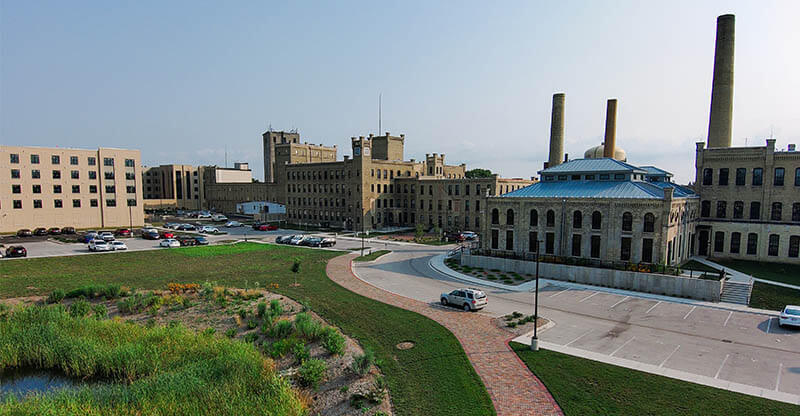
REVIVE. RENEW. REVITALIZE. AG relishes the chance to reimagine the possibilities of a historic site. Adaptive reuse projects are prime opportunities for Bright Vision. Bold Communities.
J. Jeffers & Company, based in Milwaukee, Wisconsin, is known for reinvigorating historic properties—bringing them “up to par with modern-day business and community needs.” The company embraces the development challenges of these sites and sees each as a valuable investment in community building. The organization believes “through the power of their developments—historic preservation, adaptive reuse, along with architecturally sensitive new construction—they can build lasting value and deliver catalytic impact to the communities they work in.”
This is exemplified in the company’s investment in the revitalization of the historic Horlick Malted Milk Company in Racine, Wisconsin. Once one of the City of Racine’s largest employers, the site offered a complex of buildings on nearly 16 acres to be redeveloped and adapted to new uses. Now known as Belle City Square, the intent of this mixed use development was to create a town center and draw people into a hub of activity while providing a sense of safety and security for residents in new market rate and affordable living spaces. The ambitious development company with the support of the city wanted to reenergize this area of Racine, Wisconsin with a renewed sense of community. And phase by phase the bright vision for Belle City Square is becoming a reality.
Where to begin?
J. Jeffers & Company enlisted the services of AG Architecture in 2018 to help bring their vision to life. The first step was developing a master plan for the entire site. The team carefully considered the components of a vibrant lifestyle district and strategically planned for a combination of residential, commercial office, retail, and incubator space within existing structures. Opportunities for integrating new construction to complement the historic renovations were also identified.
“We created uses for each of the buildings that related to the greater context of the neighborhood,” says AG Chief Design Officer Eric Harrmann. “We also took advantage of the existing building configurations in order to maintain the integrity of the historic structures. We wanted to positively transition each to a new use, honoring the building’s history without adding challenging or obtrusive elements.”
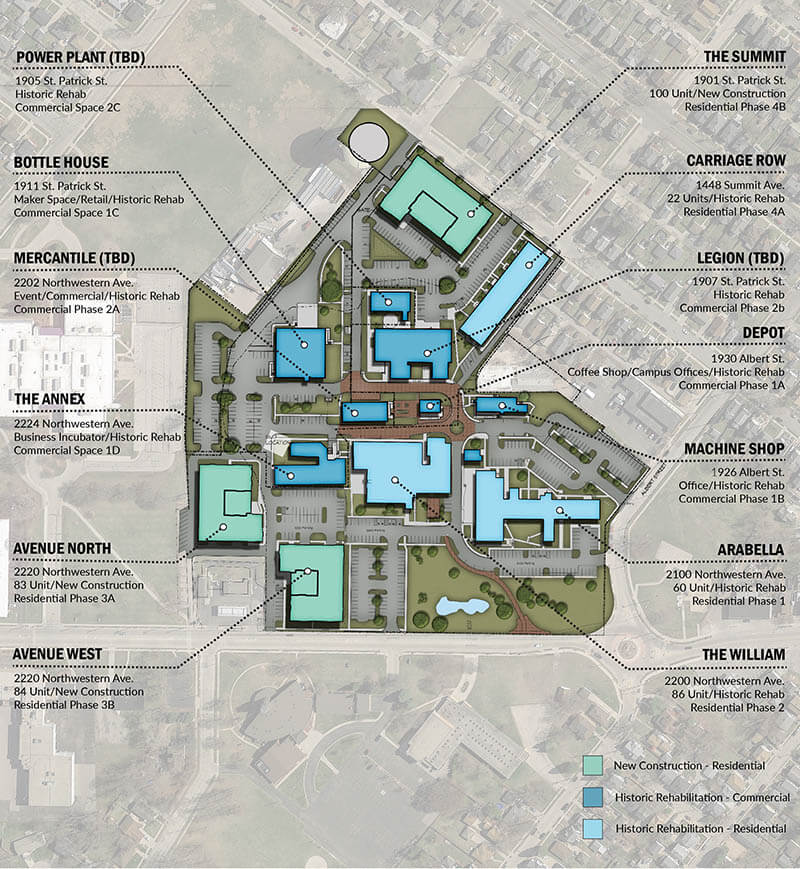
In conjunction with the master planning effort, a thorough analysis of the site and existing structures was conducted. The historic preservation consultants were collecting data and working with the State Historic Preservation Office (SHPO) and the National Park Service to list the property as a historic district on the State and National Registers of Historic Places. Being listed is a requirement to receive both state and federal historic income tax credits to support rehabilitation efforts.
Meanwhile, AG in collaboration with construction partner CG Schmidt worked to determine the appropriate future uses for each of the buildings, including which were best suited for residential layouts. The development strategy for Belle City Square was to introduce residential units in the first phase to rejuvenate the site and provide the increased density needed to support future commercial office, industrial, and retail phases. AG and CG Schmidt studied the building options to find the most efficient use and rhythm of units to meet the developer’s residential goals for the comprehensive project.
Notable Historic Details
The Horlick Malted Milk Factory Complex was listed on the State Register of Historic Places in 2019 and on the National Register of Historic Places in 2020. The period of significance of this historic district is from 1885 (with the construction of Factory 1) to 1951 (when Horlick sold Factory 2 to an unrelated company). There are ten buildings (ranging in height from one to seven stories) that contribute to the significance of this historic district.
“The Horlick Malted Milk Historic District is a beautiful and in-tact example of our early industrial history in Southern Wisconsin,” says Jen Davel, Vice President and Midwest Regional Director of Heritage Consulting Group. “To see these buildings rehabilitated with new uses is a win for all of us today and for future generations.”
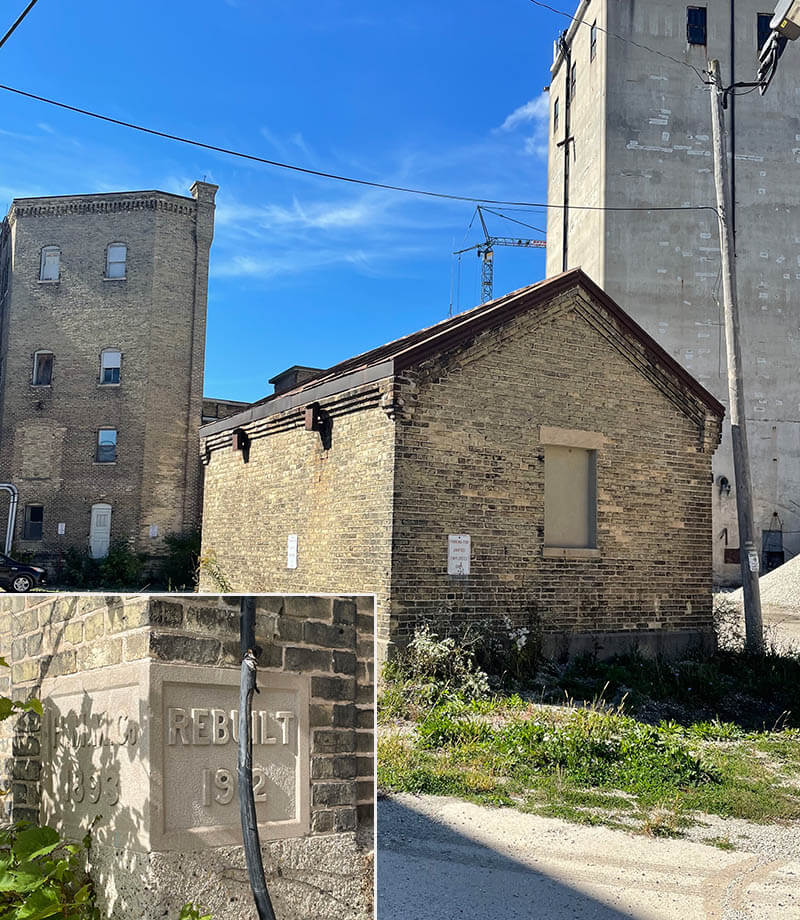
The earliest buildings were designed in the Gothic Revival style. Identifiable architectural details include decorative brick corbeling, crenelated parapets and rooftops, and projecting corner turrets. The collection of interesting structures on the site includes warehouses, factories, a malt mill, a machine shop, a pattern storehouse, a depot, and a garage. The buildings are a mix of wood and steel structures with predominantly exposed cream city brick. Depending on the use of the building the flooring was either concrete or tongue and groove hardwood. Some of the noteworthy details include a clock tower, metal bridge, metal catwalk, smokestacks, and arched windows.
“One of the greatest challenges in redeveloping these historic properties is following the old ‘less is more’ proverb,” says AG Senior Associate and Team Lead Mike Miller. “Successful adaptive reuse projects take a minimalist approach, incorporating necessary improvements to support new uses while allowing the historic character and elements of the existing buildings to shine.”
A Sustainable Mindset
In addition to working within preservation guidelines, the team prioritized sustainability. The most significant green feature is the rehabilitation of the existing buildings and the preservation of the historic character. By utilizing existing structures there is reduced impact on the environment, including both waste reduction and the amount of new construction resources needed. Other green-minded initiatives were focused on energy conservation, including Focus on Energy strategies and an increased SEER rating for the HVAC systems.
Project-by-project decisions are guided by LEED Neighborhood criteria for the entire development, with goals to achieve the highest LEED rating possible for each building. The development is Certified Wisconsin Green Built as part of the Wisconsin Environmental Initiative.
A Community-Focused Project
An ambitious endeavor requires collaboration, commitment, and passion for the vision. J. Jeffers & Company partnered with multiple stakeholders during the planning and development of this historic rehabilitation project, including the City of Racine (neighborhood, business, civic leaders), Lutheran Social Services of Wisconsin (LSS), Wisconsin Housing and Economic Development (WHEDA), State Historical Preservation Office (SHPO) and the National Park Service.
The community focus of the development includes supporting the local workforce. Hundreds of local and regional construction jobs have been supported throughout this phased construction process. This project continues the legacy of the community, including the history of skilled craftsmanship.
Implementing the Master Plan
The strategy for implementing the master plan began with the renovations needed to adapt existing buildings for residential uses. The development could gain the traction needed to support the additional building types by introducing apartment living options first.
Phase One of construction at Belle City Square included the site’s two largest buildings—Factory #1 & Factory #2.
Factory #2 was identified as the starting point for this transformation and the result was the introduction of Arabella. Factory #1 was slated for the second project, The William.
Phase I
Historical Data: Factory #2 was constructed in 1904 with five additions between 1907 and 1963, a total of approximately 126,000-sq.ft. varying between one and four stories.
This debut project, called Arabella, was developed to address Racine’s high demand for affordable housing.
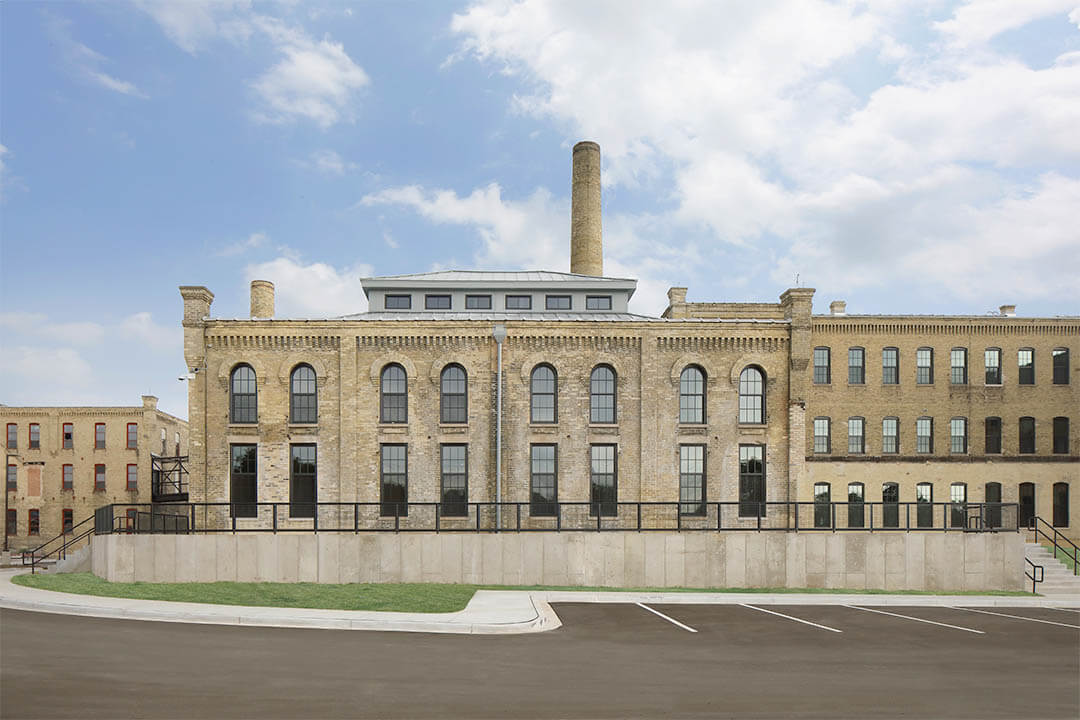
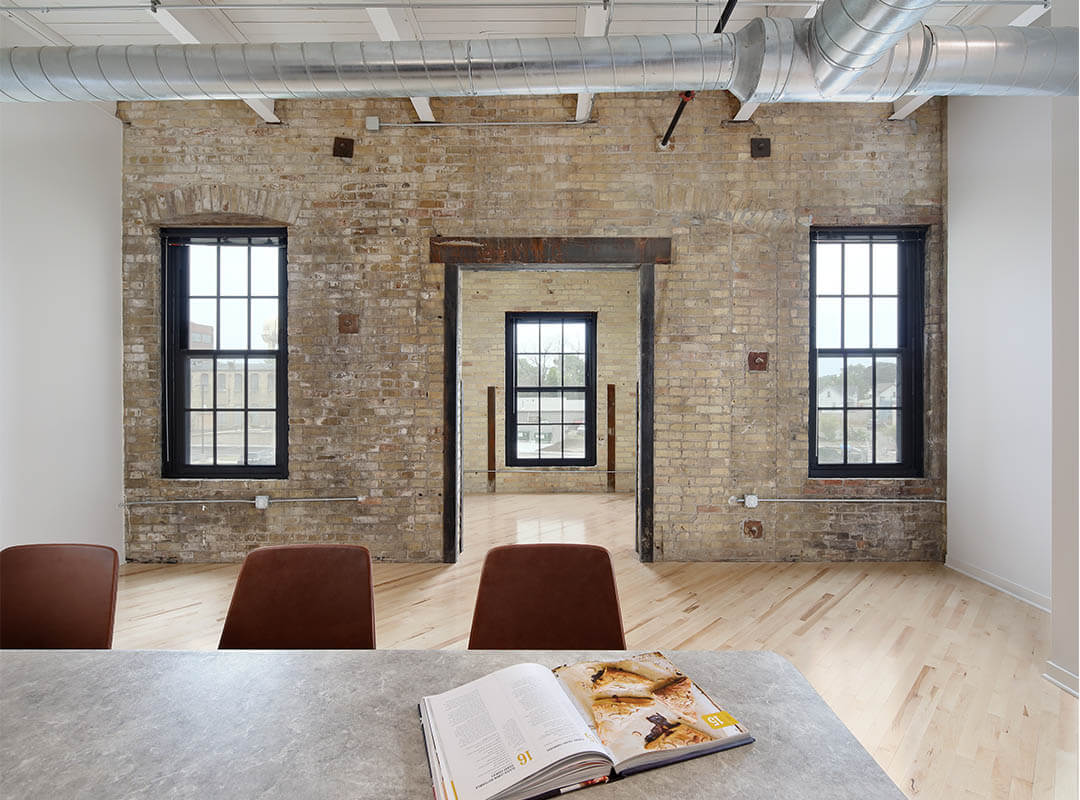
This 60-unit complex offers a mix of market-rate/affordable apartments ranging from studios to three bedrooms for maximum variety and livability. Providing amenities and common areas normally associated with market rate housing was a priority while aligning the associated costs with affordable rental rates. The units and a communal atrium feature unique architectural elements original to the historic facility.
Architecture & Interior Design Highlights
- Cream City brick façade. (Restored to original architectural appearance and structural integrity.)
- Original features include a smokestack, exposed metal trusses, and raised monitor skylights.
- First-floor units with private exterior entries.
- Unit plans that incorporate the building’s already-existing arched openings and other elements such as concrete, exposed tongue-and-groove wood flooring, and steel girders incorporating old-school hand-pounded rivets.
- An old elevator shaft was repurposed into a small alcove in a number of the units.
- Exposed historic column profiles (cast iron, steel, and wood) within living units and common spaces.
- The transformation of a vaulted single-floor factory space (a milk condensing room addition built in 1904) into a communal atrium. A second floor was needed to create an accessible corridor connection between two wings of apartments. The atrium design solved this circulation needs while highlighting the volume of the historic space. The added benefit was incorporating an enticing amenity— flexible gathering and work areas on two levels.
Amenities
- Fitness room
- Community laundry room
- Indoor mail and package room
- Individual resident storage compartments
- Gathering and work areas
- Pet friendly
Recognition
- MHN Gold winner in the Adaptive Reuse Category
- Multifamily Executive Finalist
- NAHB: Best in American Living Awards: Adaptive Reuse
- CEDA Award by the Wisconsin Economic Development Association for Real Estate Redevelopment and Reuse
The successful completion and leasing of Arabella served as the catalyst to gain the momentum needed for the redevelopment of the entire site.
The William
Historical Data: Factory #1 was constructed circa 1885 with several additions between approximately 1890 and 1911, totaling 108,500-sq.ft. varying between one and four stories.
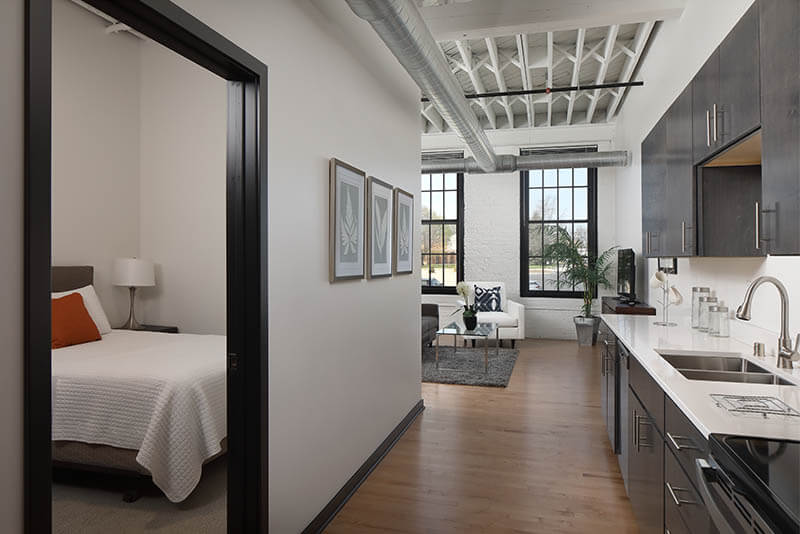
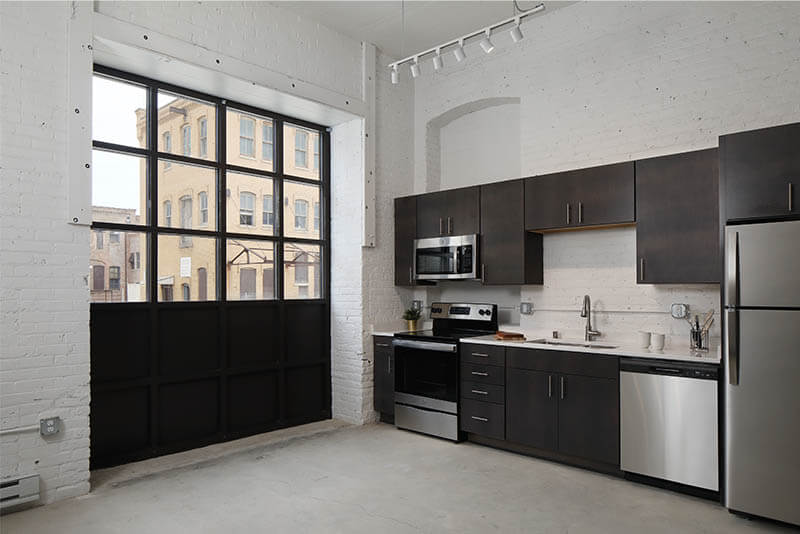
The William was brought to market in 2022 following the successful completion and occupancy of Arabella. The 90-unit market-rate complex continues to leverage the historic details of the existing building to create an offering of unique living spaces.
Architecture & Interior Design Highlights
- Signature features include the historic clock tower, smoke stacks and the preservation of an original staircase.
- A vault structure on each floor of the building with heavy historic masonry walls was repurposed to become the elevator shaft in order to create a distinct entry experience for residents and visitors.
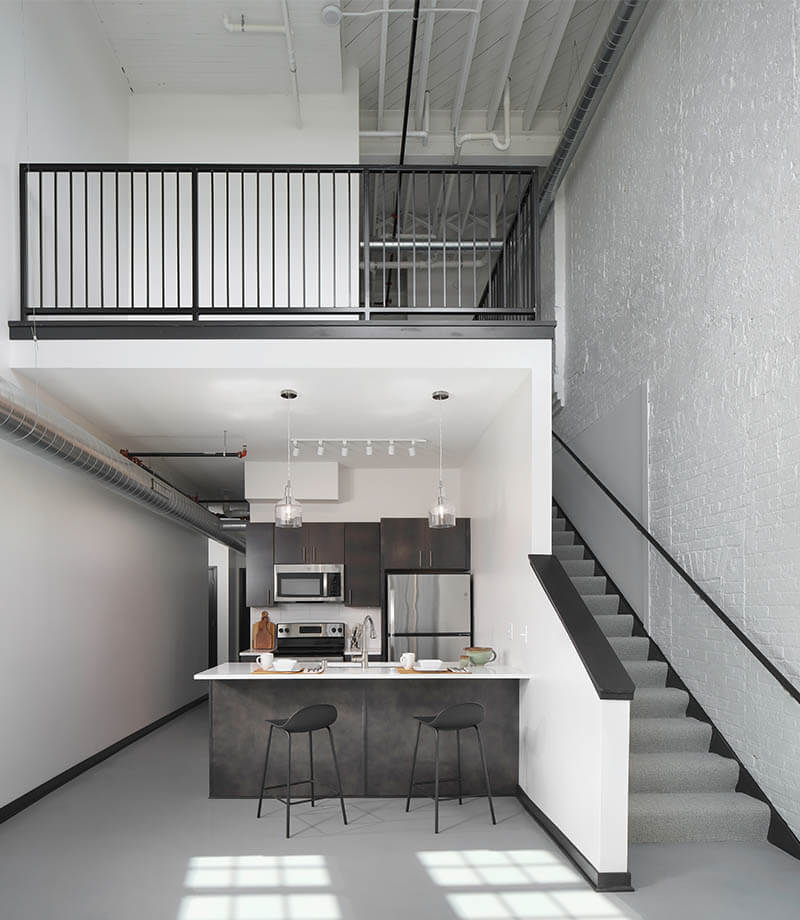
- Two-story lofted units take advantage of a higher volume of space within the existing first floor. The layouts provide general living space on the first floor and bedroom and office space on the second floor.
- This design maximizes the amount of natural daylight penetrating the interior through the historic windows.
- A two-story commons area highlights existing metal catwalks that were used to circulate around the factory equipment.
- The catwalk also provides a visual connection between the second-floor fitness area and the lounge space below.
- By removing the center of the building and roof structure, a large skylight and light well were integrated allowing natural daylight into the core of the building.
- A collection of units looked out into the light well. This design increases the efficiency of the historic footprint. It converts the ideal footprint from its previous use to meet the needs of a residential layout.
Amenities
- Cyber lounge social space
- Club room
- Outdoor spaces
- Fitness center
- Indoor mail and package room
- Pet friendly
Recognition
- LEED GOLD Certified
- Business Journal Real Estate Award – Best Renovation/Residential
PHASE II
As construction on the historic buildings in Phase I wrapped up, the team moved forward with the master plan and new construction opportunities. The team continued to stay focused on integrating enticing living options into the site to best serve the Racine community.
Avenue North & Avenue West
New Construction
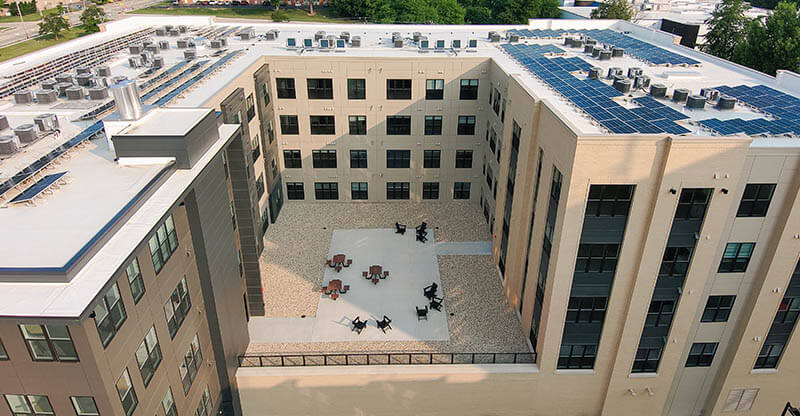
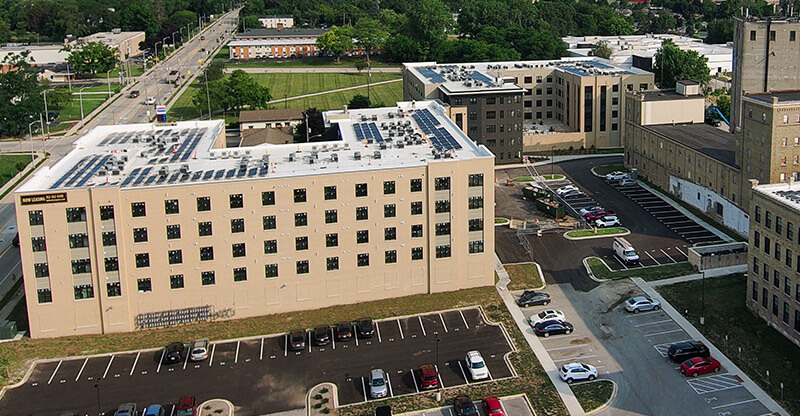
In 2023, construction will be completed on two new buildings. Avenue North will offer 83 units of market-rate housing and Avenue West will introduce an additional 84 units. The design takes cues from the existing historic architecture while providing a modern apartment option. The new construction allowed the development team to quickly increase the density of the campus and revitalize portions of the campus that were burdened by existing warehouse buildings not related to the historic malted milk factory. Access to and across the campus was improved with the demolition of the under-utilized warehouse building and provided the new apartments with unobstructed views of the historic campus.
Architecture & Interior Design Highlights
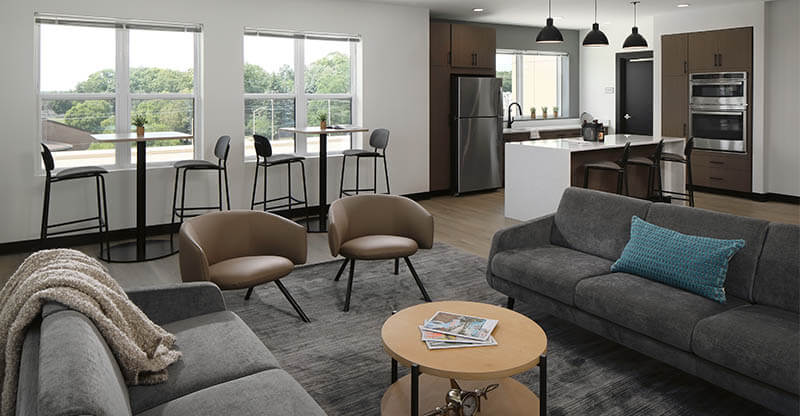
- The exterior design respects and complements the historic context while integrating a modern aesthetic.
- The interior reinforces the modern aesthetic with industrial chic influences.
Amenities
- Fourth floor club room
- Rooftop plaza decks
- Coffee lounges
- Pet wash area
- Fitness room
- Remote work/collaboration suite
PHASE III
Due to the success and marketability of the first two phases, this exciting revitalization effort continues with work in progress on the commercial and retail aspects of the master plan. Additional historic structures are being adapted to new uses, including a signature café, unique workspaces, and a designated maker’s space.
The Inclusive Bean
Historical Data: The Depot is a three-story approximately 6100-sq.ft. building with lower floors constructed in 1914 and a top story built in 1920.
From a train depot to a coffee shop this centrally located building continues to be the hub of the complex. A women-led, high-end coffee shop called Inclusive Bean is reinforcing the commitment to the community that is at the heart of this redevelopment effort. The owners advocate for inclusion and neurodiversity and their business “provides individuals with various cognitive, developmental, and physical disabilities a place where they are coached, empowered, trained, and over time placed into a fully integrated work environment.”
The Depot stands out amidst the collection of historic buildings due to its distinct brick color. It is the only contributing building constructed of different brick, not cream-city brick. Another notable detail is its projected steel canopy frame.
Architecture & Interior Design Highlights
- Original features include a brick façade, steel canopy feature, and plaster interior.
- The original train platform has been restored and made accessible to be used as an outdoor patio dining space.
- The 600-sq. ft. dining area preserves the character of the original building.
The Annex
Historical Data: The Malt Mill was built in 1893 with additions in 1910 and 1912, totaling 42,000-sq. ft. The structure includes a basement plus three levels with ‘goal posts’ extended up to seven levels. It has recently been used as rentable storage on the first floor, offices on the second and third floors, and a Halloween warehouse in the 1910 addition. The building is being transformed into an incubator office space with 64 office suites, two reservable conference rooms, and a spacious lounge.
Architecture & Interior Design Highlights
- Cream City brick façade. (Restored to original architectural appearance and structural integrity.)
- Original features include concrete floors, beams, and columns, and the preservation of the main elevator.
1500 Summit – Carriage Row
Historical Data: The Garage is approximately 25,000-sq.ft. The original one-story building was constructed in 1916 with a two-story addition built in 1923 and a one-story addition built in 1960.
This phase of the project, with construction beginning in August of 2023, will introduce two-story townhome configurations. Building upon the success of Arabella’s first-floor access units, the design of Carriage Row will continue to diversify the housing product offering at Belle City Square. The layouts will take advantage of the building height provided within The Garage and offer another unique experience. Notable details will include exposed metal trusses designed into the layout of second-floor lofted spaces, exposed brick, and concrete floors.
Architecture & Interior Design Highlights
- Cream City brick façade. (Restored to original architectural appearance and structural integrity.)
- Original features include exposed metal trusses, 12-foot windows, brick pilasters, and two-story double swing and sliding doors.
- First-floor units with private exterior entries.
- Unit plans with lofts that look through the 7-foot-deep steel trusses to the double-height kitchen and living space below.
The Machine Shop
Historical Data: The Machine Shop is a two-story, approximately 7,600-sq.ft. unreinforced masonry building constructed circa 1900. It has proven to be one of the most challenging buildings on the campus due to time, neglect, water damage, and a partial roof collapse. The renovation efforts include restoring the original wood floor, beadboard ceiling, and ship-lap walls on the second floor as well as the original 8-foot high windows and collapsing structure. The team is also providing an accessible entrance and lift to the previously inaccessible building.
The building is being transformed into a service-based office space with four business suites.
Architecture & Interior Design Highlights
- Cream City brick façade. (Restored to original architectural appearance and structural integrity.)
- Original features include steel columns and beams on the ground floor, wood floors, and beadboard ceilings on the second floor.
- Concrete ramp and patio at the main entrance.
The Bottle House
Historical Data: Warehouse 2 is a 72,500-sq.ft. structure with a basement plus four floors. It supports an active manufacturing business on the first, second, and third floors. A makers space with 20 suites is being incorporated into the fourth floor.
Architecture & Interior Design Highlights
- Red brick façade.
- Original features include concrete floors and columns and the preservation of the elevator and stairs.
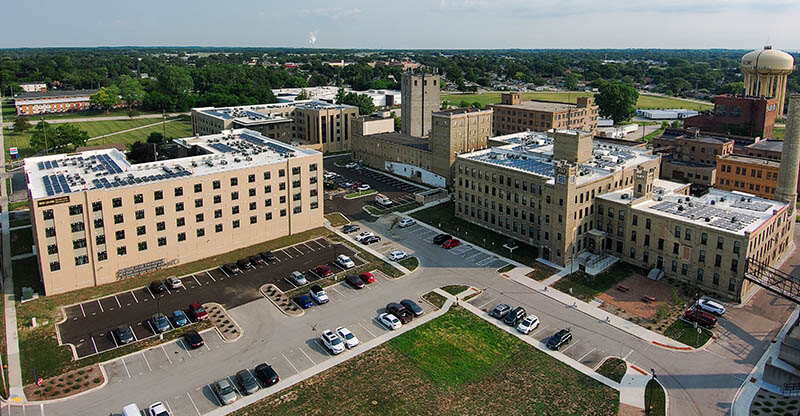
Thank you to CG Schmidt for providing aerial photography for this story.
Learn more about the Belle City Square Master Plan.
Explore Belle City Square.