
As older adults contemplate a transition from their cherished home to the lifestyle of senior living communities, they often face a limited choice of available housing options: cottages or corridor buildings. While a cottage offers the residential feel of their homes, these products typically lack the desired shared social spaces and require effort to engage in activities located at the heart of the community. On the other hand, the long corridors of the apartment buildings are a drastic contrast that can be perceived as institutional. From a development perspective, cottages are low-density offerings, while the apartment buildings provide high-density solutions good for the bottom line.
There has to be a better option, right? Architects, developers, and owners are now saying, YES. Hybrid homes are the design solution being embraced and gaining traction in communities across the country.
What is a Hybrid Home?
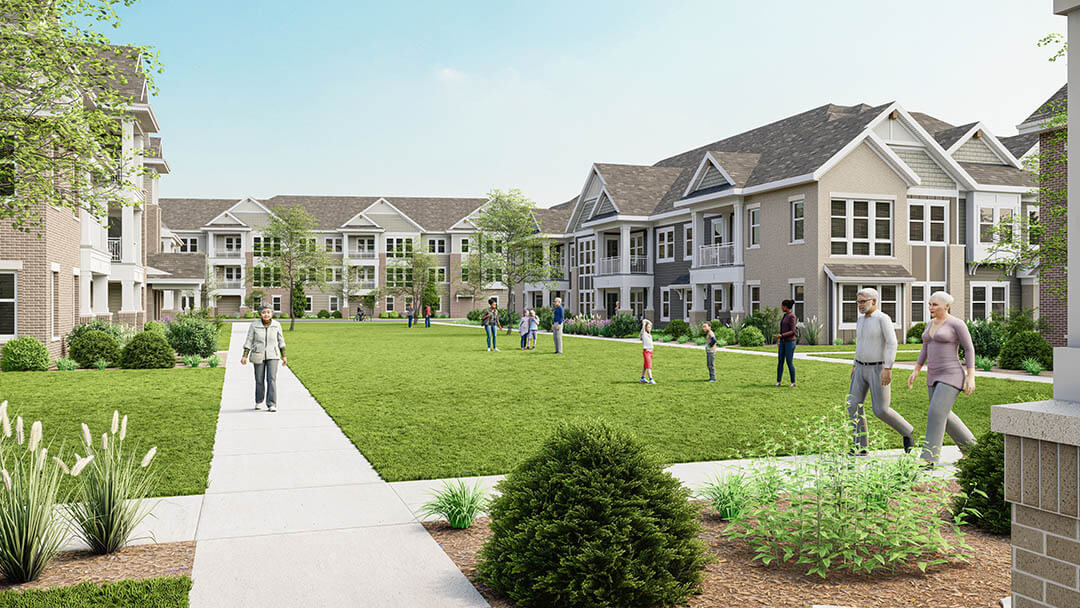
A hybrid home is a freestanding, multi-unit residence—sometimes referred to as “big house” or “grand villa”—emerging as the market’s middle ground. This housing option combines the autonomy and character of cottages with the efficiency and density of corridor-style buildings. The design creates independent, residential-feeling units, often with the front-door appeal of a cottage, but groups them to achieve greater density and integrates desirable amenities. In fact, the more it feels like your front door, the more successful the design. And from a development perspective, the result is a housing option that achieves a more efficient use of land and resources.

AG’s Hybrid Home Design Principles
The AG Design Team has created hybrid home solutions for communities such as Lakeside at Waterman Village in Mount Dora, Florida, and Plymouth Place in La Grange Park, Illinois. We continue to have design conversations with providers and residents around the country about the benefits of this housing option. During our focus groups and master planning process, we explore the possibilities and configurations that best suit the unique needs of the community and the complexities of the site with these principles in mind.
1. A Social Anchor at the Neighborhood Scale
The hybrid home is designed around community at a distinctly human scale. Rather than relying on oversized amenity buildings, this typology establishes an intimate social anchor within each building—spaces that feel residential, familiar, and naturally integrated into daily routines. Direct-entry living and connected parking reinforce independence and identity, while shared gathering areas support informal connection among neighbors.
2. Shared Common Space for Indoor-Outdoor Living
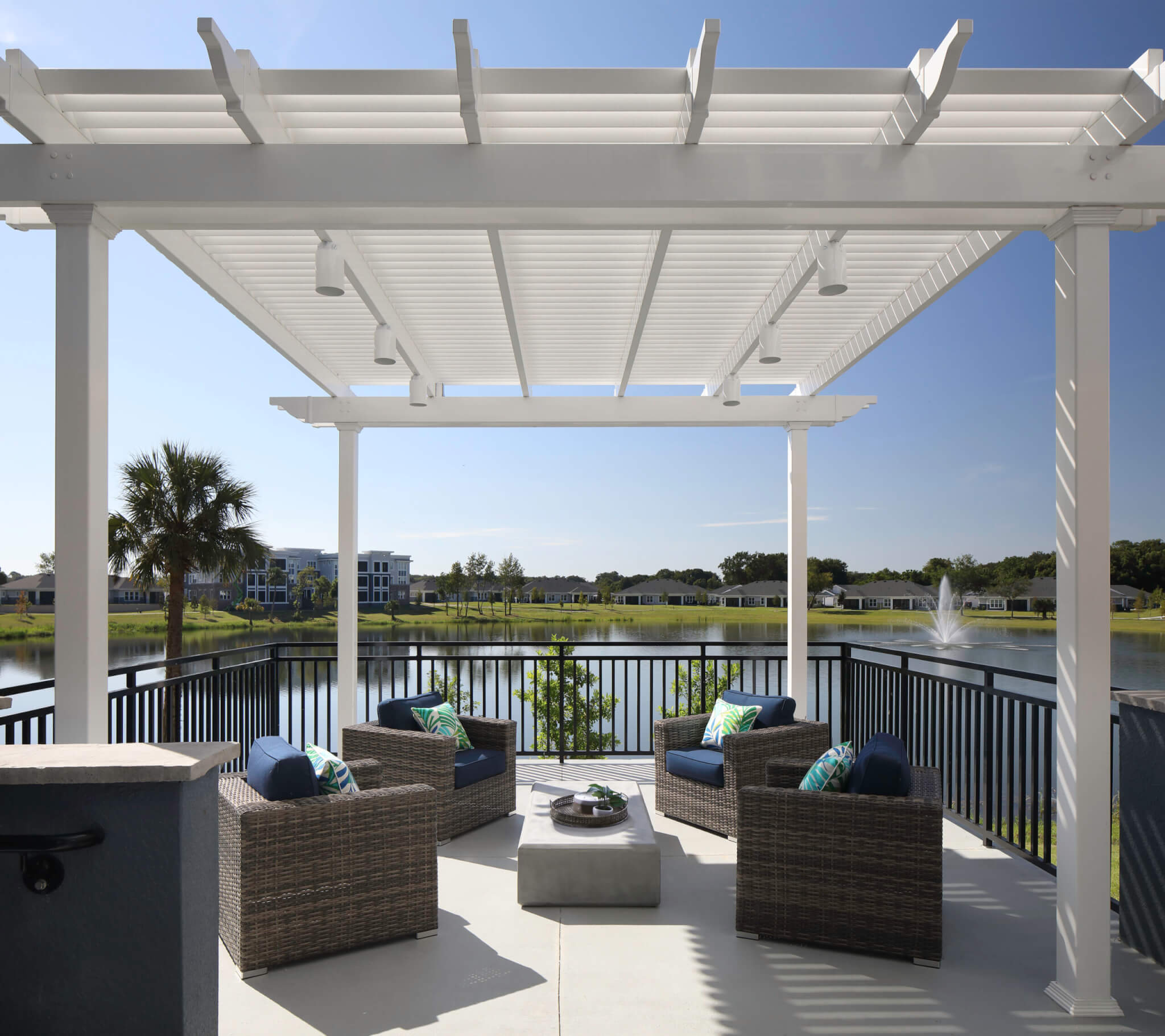
At the center of many hybrid home concepts is a shared green common, planned as both a landscape amenity and an extension of the home itself. Buildings are shaped to frame views or a central outdoor room that invites movement, rest, and everyday interaction. Interior amenity spaces, terraces, and walk-out relationships strengthen the indoor–outdoor connection, ensuring daylight, fresh air, and seasonal experience are part of daily life.
3. Residential Planning with Minimal Corridors
Hybrid homes prioritize efficient, residential planning that minimizes circulation space and maximizes livability. Shorter corridors improve orientation, reduce institutional character, and allow daylight to penetrate deeper into shared transition points. Outdoor rooms and terraces are strategically incorporated to create “eyes on the street” conditions—reinforcing safety, visibility, and an active neighborhood feel.
4. Corner Homes with Premium Views
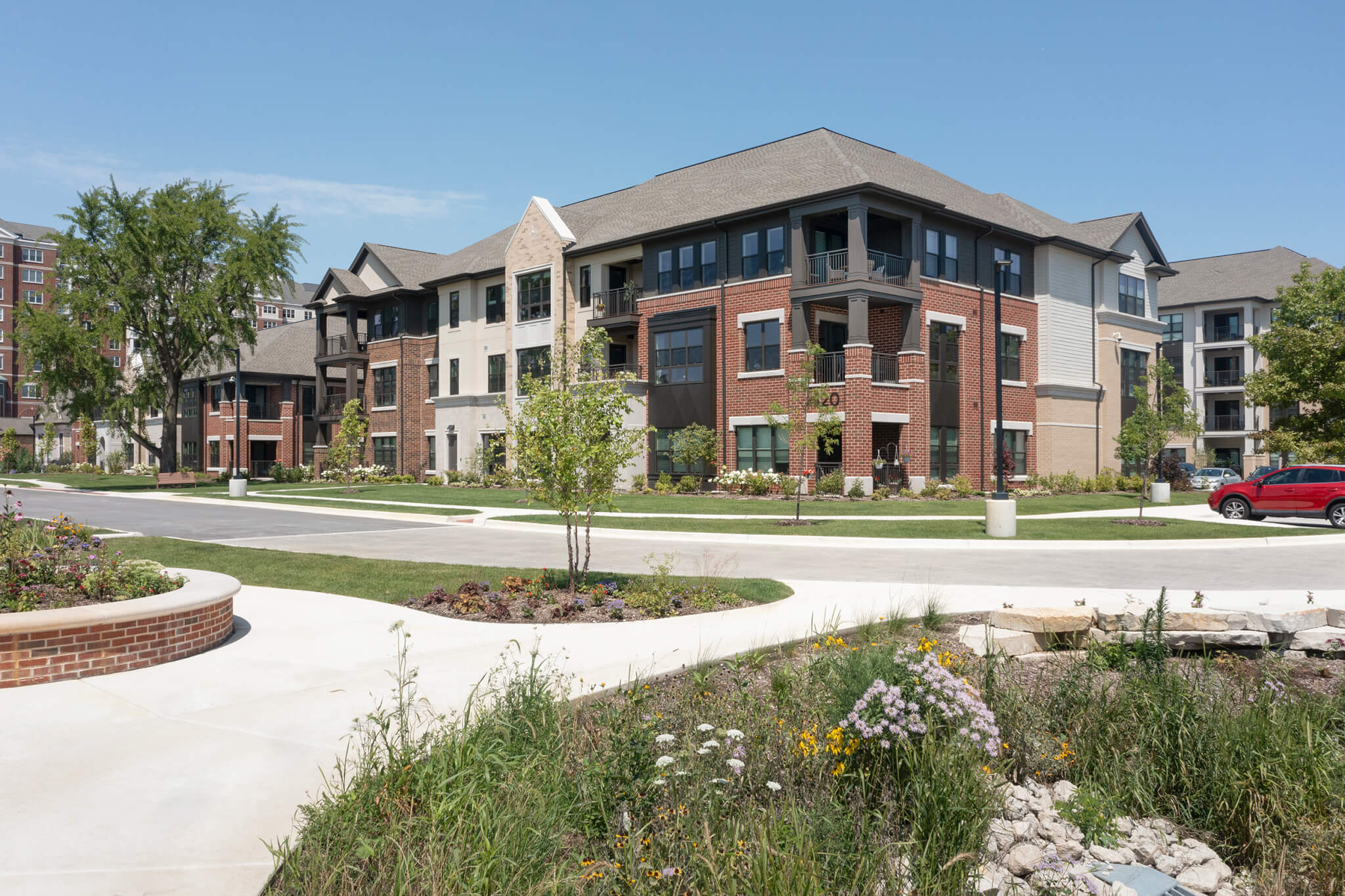
A defining advantage of the hybrid home is its ability to deliver premium, three-exposure living conditions within a compact footprint. Building massing is shaped to maximize corner residences with multiple views, generous glazing, and strong connections to the landscape. Large balconies extend daily living outdoors, while window placement frames nature and long views as a central design feature.
Why Do Residents Love Hybrid Homes?
Prospective residents continue to raise their expectations, and hybrid homes are capturing their attention. The design features they seek are:
More Light, Better Views
Due to the short corridors and corner-style units achieved in the planning process, hybrid homes offer multiple exposures for abundant natural light, larger windows and balconies, and a stronger indoor–outdoor connection.
True Front-Door Living
Where possible, hybrid homes offer at-grade front door entries and quick access from the elevator to the unit. Residents feel like they’re coming home—not entering a facility.
Community Connections Close to Home
Each floor can include small gathering spaces sized for 4–8 people, so residents can meet casually with neighbors. As a result, they can socialize without always returning to the main commons and enjoy a natural transition from private home to shared social spaces.
Why Do Providers and Developers Choose Hybrid Homes?
For providers and developers seeking both efficiency and marketability, hybrids can deliver more units per footprint while maintaining a highly residential feel. Hybrid homes offer:

A “Middle” Housing Option
Hybrid homes are ideal for campuses that currently have only long corridor buildings and cottages. They create a much-needed middle choice. They deliver more density than cottages and more character and warmth than a large apartment building.
Increased Density Without Losing Character
On cottage-heavy campuses, hybrid homes can add significant independent living units while preserving the existing residential feel. It allows some communities to avoid the visual leap to a high-rise or institutional building.
An Elevated Independent Living Experience
Hybrid home design offers features like private garages, larger balconies, and generous windows, delivering a premium independent living product that resonates with residents downsizing from single-family homes.
The Cost & Financing Benefit
The planning and phasing of hybrid homes allow leadership to introduce buildings to a campus plan with a sequenced approach. As a result, the team can test the market, ensuring the unit sizes and layouts are well-received. This strategy prevents market oversaturation. For example, for one of our clients, we integrated seven hybrid homes as part of the long-term planning strategy. With a phased approach, bringing four online provided the opportunity to analyze the market response and resident feedback. These insights then informed the design of the final phase.
The smaller footprint of these structures makes them less complicated to fund and requires fewer presales compared to other typologies. Furthermore, if a particular unit type proves challenging to market, future building design can respond accordingly with less financial impact than unit challenges in larger-scale buildings.
Transforming Your Campus with Hybrid Homes
Hybrid homes represent a strategic evolution in senior living and campus design. From new master plans to repositionings and targeted infill projects, hybrid homes give organizations a versatile housing option to grow thoughtfully while enhancing the resident experience with the comfort of home. It is a solution that expands resident choice and provides owners and developers with a compelling product that supports the efficiency of a well-designed, future-focused campus.

As Chief Design Officer of AG Architecture, Eric Harrmann, AIA, NCARB, continues the firm’s long-standing design legacy by leading the AG Team in providing vision, building consensus, and bringing certainty and predictability to the construction process. His 20 years of industry experience include master planning and designing senior living communities, multifamily complexes, and mixed-use developments. Eric guides communities through a collaborative process, using focus groups and design charrettes to generate ideas and uncover the best solutions for a project. He is committed to pushing the boundaries of design to raise the bar on senior living and has shared insights on senior living trends as a speaker, author, and quotable resource. Eric shares his knowledge and expertise with providers across the country, reinforcing AG’s commitment to Bright Vision. Bold Communities.