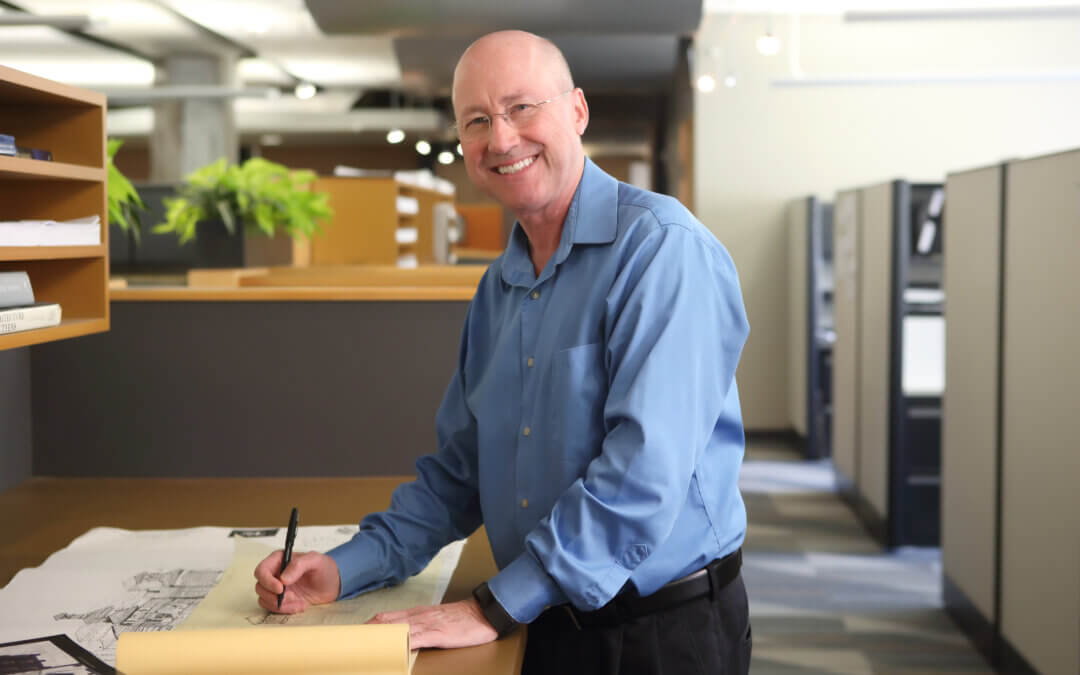
John Cronin, AIA, NCARB, has been a creative influence within the AG Design Team for 38 years. He has played an integral role in designing places where people live with contextual sensitivity, environments that foster a sense of community. As he settles into the next chapter of his well-designed life, we want to take this moment to say—Thank you & Happy Retirement!
Early Signs of Creativity and Curiosity
John’s path to architecture began long before his first drafting class. As a child, he was captivated by building things in three dimensions. His parents bought him a special set of wooden blocks—the same kind Frank Lloyd Wright famously played with. This cherished gift allowed him to experiment with shapes, forms, and structures. His love of nature and passion for projects translated into summers spent building and rebuilding tree houses. Years of scouting deepened his hands‑on education, with each experience providing early lessons about how things go together.
During high school, industrial arts and mechanical drafting classes introduced John to the discipline of drawing. From simple shop projects and advanced mechanical drawings to house plans, these assignments laid the foundation for his future in architecture.
Choosing Architecture Over Engineering
John began college at the University of Wisconsin–Madison, torn between becoming an architect or an engineer. He took architectural history courses and found himself exploring the two extensive architectural libraries on campus. His passion for the stories behind the architecture emerged; he was drawn to the role buildings play in reflecting and shaping history.
Since Madison didn’t offer a major in architecture, John transferred to UW–Milwaukee (UWM) to pursue an architectural degree and later continued to the University of Texas at Arlington (UTA) for graduate school. At UTA, studio work was heavily emphasized. Under a range of professors with differing perspectives and design philosophies, John sharpened his skills in hands‑on, project‑based studio work, preparing him for real‑world practice.
While John was offered a position as an assistant professor after serving as both a research and teaching assistant, he turned it down. He was ready to leave academia and fully immerse himself in the daily practice of architecture.
A Sketch Opens the Door
When John graduated from UTA in 1987, Texas was in the midst of a recession, and architectural jobs were hard to come by. Firms told him the same thing: they had no work now, but if they landed “the next big project,” they’d need people. After hearing that one too many times, he packed his car and headed home to look for opportunities in the Midwest.
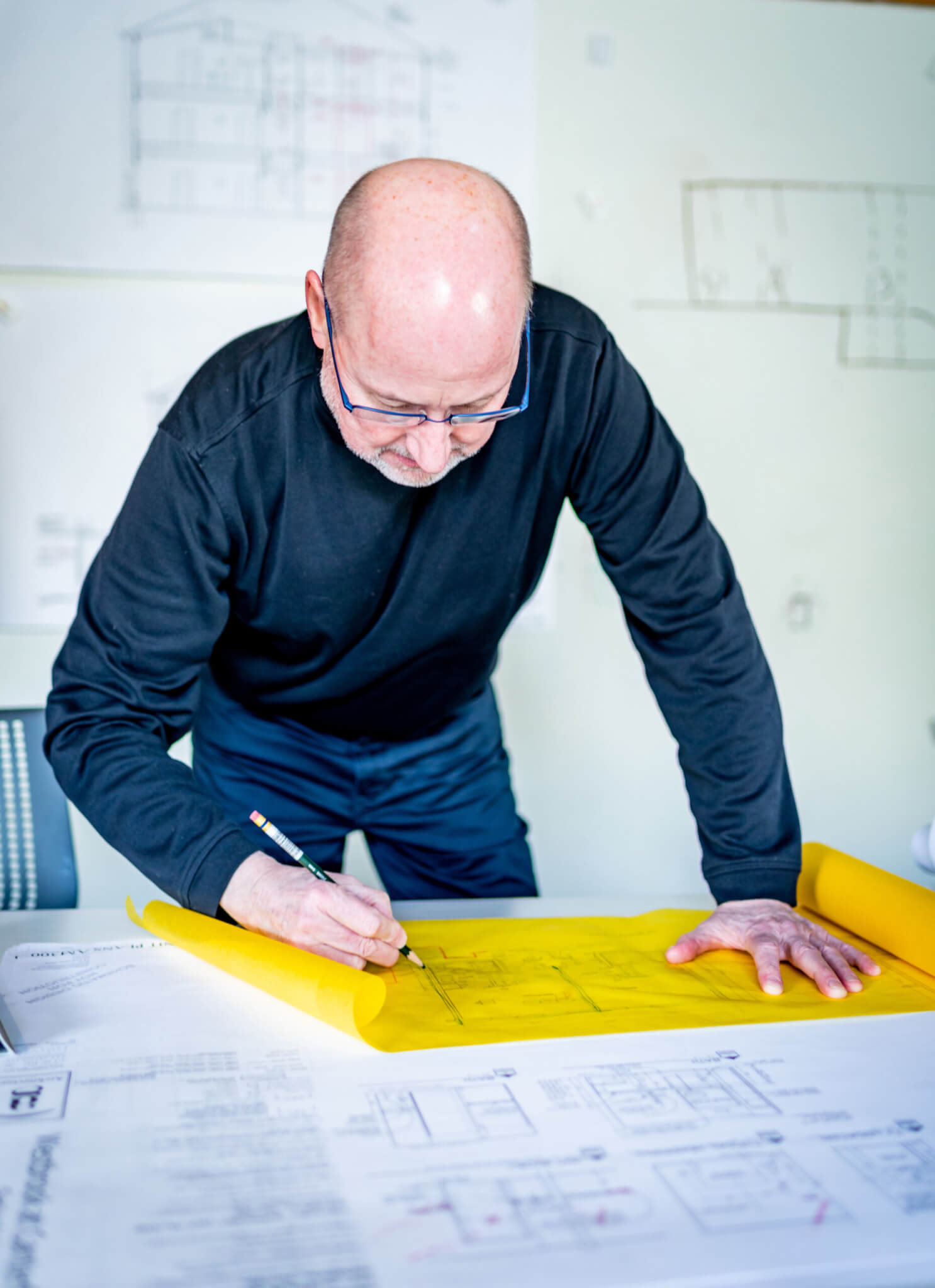
Not too far from his childhood home, John landed an interview with Jack Shepherd of Shepherd, Legan, Aldrian (SLA), the firm that laid the foundation for AG Architecture. During the meeting, John walked Jack through his projects and polished drawing packages. However, it was a quick, hand‑drawn sketch that slipped onto the table that caught Jack’s eye. John recalls sharing the story of the sketch and then Jack closing his portfolio and saying, “I need someone who can draw like that.”
It was that moment and simple sketch on yellow paper that opened the door to John’s long tenure with the firm (from SLA to Aldrian Guszkwoski to AG).
Creating A Sense of Place
Whether designing senior living or multifamily communities, John understands the importance of context and meaningful destinations. Over the years, with partners like Greystone, he helped shape places that were more than buildings—they were settings for the next chapter of people’s lives.
John’s projects often began with a search for authentic architectural themes tied to context and history. As he listened to project stakeholders and researched local architecture, he would build consensus around a vision for the community. Then he would contemplate the details and integrate the defining elements of the style into a design to support the community’s future success. Some of the hallmark projects and themes in his portfolio include:
- At Santa Marta in Kansas, he helped bring to life an Italianate “village on a hill” for the Catholic Archdiocese.
- At Eastcastle and Newcastle in the Milwaukee area, his designs referenced historic images of English villages, giving the campus its Tudor‑inspired character.
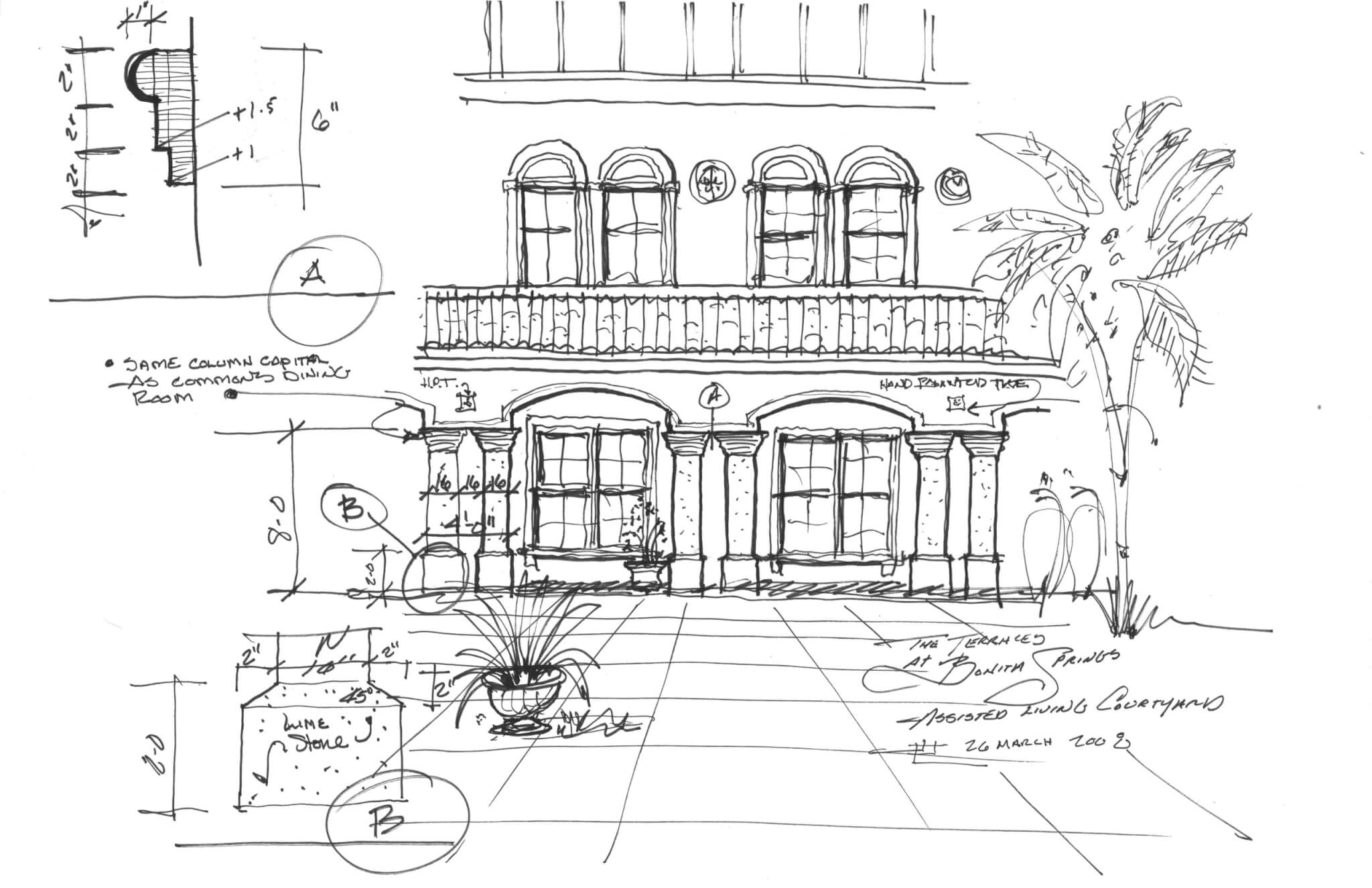
- In Bonita Springs, he dug deeply into the roots of Mediterranean and Florida architecture, studying the work of Addison Mizner.
Even an unbuilt Florida project left a mark. Tasked with choosing between Mediterranean and “Old Florida,” John immersed himself in the details of the lesser-known Old Florida Cracker-style. That research later shaped his work on Gulf Coast Village, where the architecture echoed those honest, climate‑conscious forms.
“I was fortunate to work with John on numerous projects, often becoming the one to bring his vision to life through 3D models and renderings. One of my favorite project memories was working on the exterior design for the commons entry at Meadow Active Lifestyle Community. Using his sketches for plans, elevations, and details, I was able to be one of the first to experience his vision for the project. Although early in design, we worked out details for the porte cochere, window details, even down to the custom weather vane on the top of the primary cupola that became the beacon of the community.
John always encouraged the design team to study architectural precedents to help guide design development to ensure the vernacular complemented the architectural style of the community. His knowledge of the Masonic community, which he gained through research and information gathering, guided him in creating structures that fit seamlessly into the existing campus. He even had some hidden design elements that provided engaging stories to share with the community after the project was completed.” — Justin Koeppler, Design Project Manager | AG Architecture
Across these and many other communities, John’s work reflects a consistent thread: deep research, respect for context, and a commitment to enhancing resident life.
Cronin designed the award-winning Wisconsin Evans Scholars student housing in Madison, Wisconsin.

Fully Engaged in the Process
One of John’s early projects, Beacon Hill, reinforced the importance of being fully engaged in the project process. Beacon Hill gave John the chance to walk through a building he had drawn. When contractors proposed shortcuts or pushed back on details, the project architect often turned to John and deferred to his judgment. This experience reinforced that details matter, and an architect’s job doesn’t end when the drawings go out the door. His decisions during those walk‑throughs and the insistence on building things “the right way” helped define his approach for decades to come.
Throughout his career, John made it a priority to stay involved in the process and collaborate with the production team and project managers, regularly checking in with the people turning his design concepts into construction drawings. Furthermore, as he advanced into his Senior Design Architect role, colleagues and emerging professionals often sought him out to critique their projects and offer expert advice. His ability to quickly see what a design needed—and to articulate it—made him an asset to the AG Team.
“I appreciated John’s ability to think through all design aspects when designing a building. He is a designer and problem solver who balanced creative vision with technical precision,” says AG Team Lead and Senior Associate Ann D’Acquisto. “His workspace was always filled with architecture books and inspiration images he used for precedence on projects. These resources fueled his creativity; his ability to translate ideas to paper and the knowledge and concepts behind his work always astounds me. He thought through the entire building experience inside and out, melding beauty and function into buildable structures that created a sense of home for residents of all ages. His amazing talents will be missed.”
Impactful Architecture
What matters most to John isn’t just how a building looks—it’s how it feels to the people who live there. Some of his favorite memories come from grand openings and resident events, hearing first‑hand how new residents experience the spaces he helped create.
One story from Bonita Springs has stayed with him. A woman was resistant to moving into the community and arrived upset, grieving her old life. Two fellow residents quickly took her under their wing, telling her she was now in one of the best places she could be, surrounded by opportunities to meet people and make friends.
By the time John met her, she had transformed. Looking up at the architecture around her, she told him how beautiful it was, how many friends she had made, and how different her life felt from those first days. That arc—from fear and loss to community and renewal—is exactly what John hopes his work can support.
Over the years, John has integrated a symbol of renewal into many of his projects. The infinity sign, also associated with the number eight and themes of rebirth and renaissance, can be found in many of the communities he designed. Take a closer look at some of his projects!
A New Chapter
Now, as John steps into retirement, he doesn’t see it as an ending. To him, it simply means he is free to shape his days around what brings him joy and meaning. That includes enjoying the outdoors and time with his dog. Architecture will continue to play a role—through sketching, reflection on past projects, and perhaps new creative outlets—but now on his schedule, guided by curiosity rather than deadlines. We hope he finally travels to all the places that have inspired his work over the years.
From wooden blocks to award‑winning senior living communities across the country, John has spent his life imagining, drawing, and ultimately building places where people live, connect, and find new beginnings. Now it is his turn.
Best wishes on your new chapter, John!
“My early experience at AG started as an intern, picking up redlines and supporting construction document production for the architectural teams. At the same time, I was given the opportunity to work closely with John, translating his sketches into drawings and 3D Sketchup models for early renderings. Through his elevations, plans, and design studies, I learned how to shape a building around both the functional needs of the client and the emotional experience of the people entering the space.
Over the years, those sketch sessions became an education far beyond anything I experienced in school. John constantly referenced architectural history, precedent studies, and contextual design principles, teaching me not only how buildings go together, but why great architecture resonates with people and place. His mentorship played a significant role in shaping the way I approach design today.” — Eric Harrmann, Chief Design Officer | AG Architecture

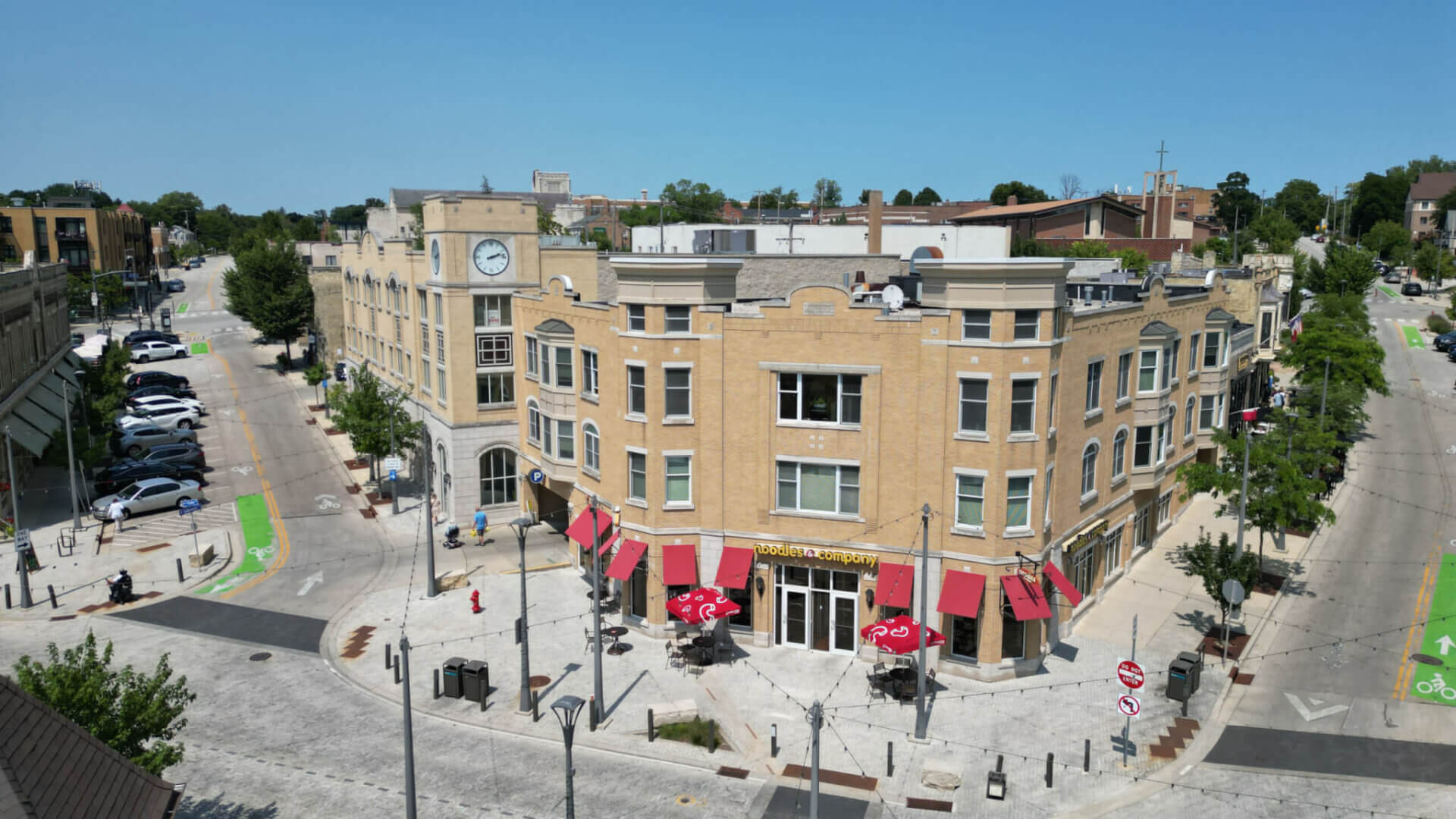
“I have had the great pleasure of working with John for over 35 years. Throughout the course of that time, John has created and designed a wide variety of projects for our firm, primarily mixed use and multi-family environments. With each project, John has always gone the extra mile. He has an extraordinary ability to take every concept to the next level. His endless creativity and experience enable him to solve a wide variety of challenges and produce both functional and aesthetically pleasing products. More importantly, John has always worked closely with our team and adhered to our economic parameters, which ultimately allowed us to complete projects on budget. I consider myself very fortunate to have worked with an individual who possesses extraordinary talent and has always gone above and beyond to achieve our design goals and parameters.” — Rich Conley, President | Metropolitan Development
“John Cronin was one of the first two architects I met on a professional basis. John didn’t mind that I was a design/construction novice, which led to endless questions. He always had answers to my questions. Not only did he take the time to educate me, but he also gave me access to the thought process that drove his approach to design. John taught me one of my fundamental leadership principles: Tell people the ‘why’. By walking me through his thought/design process, he made me realize how pulling back the curtain behind ideas can not only inspire, but it also allows attunement to develop and grow.” — Casey Adams, Client Development/Program Manager |Waypoint Strategies [formerly VP – Independent Living of Masonic Homes Kentucky]