
AG is known for designing innovative senior living communities across the country, but locally the firm has also built a reputation for designing community-focused multifamily and mixed use buildings. This history includes being part of the team on adaptive reuse projects, such as the conversion of The Blatz Brewery to apartments and then later helping create more commons area amenities as the apartments were converted to condominiums.
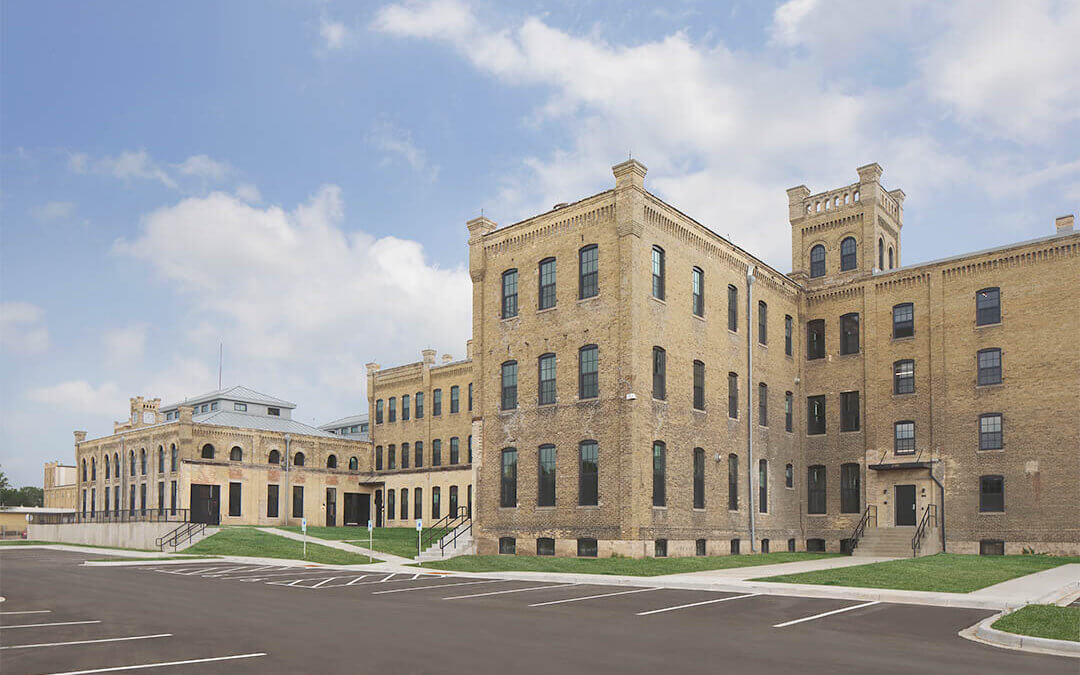
For the last few years, the AG Team has been part of the Historic Horlick Redevelopment, a transformative adaptive reuse project in Racine, Wis., with developer J. Jeffers & Co. and construction company CG Schmidt.
Jeffers & Co. embraces development challenges that pose opportunities to enhance communities. The historic Horlick Malted Milk Company, once one of the City of Racine’s largest employers, offered a complex of buildings on nearly 16 acres to be redeveloped and adapted to new uses—to reenergize this area of Racine.
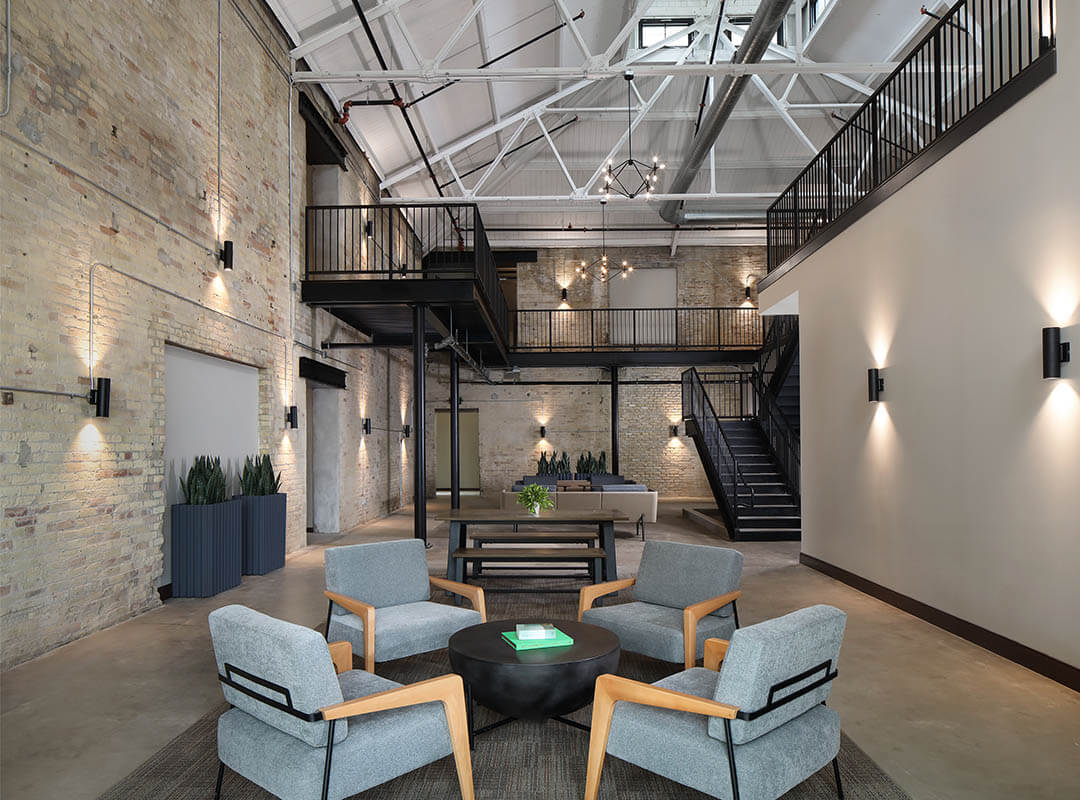
The two-story atrium in the main entrance of Arabella
A Strategic Master Planning Effort
AG’s master planning effort focused on identifying the buildings on the site most adaptable for remodeling to market rate and affordable housing. The adjacent buildings were then evaluated for use as community space or for industry specific uses, such as office, retail or light industrial. Due to this area’s long history of neglect, the intent was to create a town center and draw people into a hub of activity while providing a sense of safety and security for the residents in the new market rate and affordable living spaces.
The buildings that were identified as best suited for residential layouts were studied to find the most efficient use and rhythm of units to meet the developer’s goal of having three-bedroom direct access units for families as well as two-bedroom and one bedroom units. The intent was to include building gathering areas for socialization and position these spaces to seamlessly blend into the site’s conceptualized town center area.
Phase One & Two
Three buildings were identified for residential use. The first phase designated one building as affordable and utilized tax credits for financing. Completed in June 2021, this building—Arabella Apartments—was the catalyst to gain the momentum needed for the redevelopment of the entire site. The second phase, currently underway, is introducing market rate apartments constructed in the former office and warehouse building located across the alley from Arabella. The market rate apartments were differentiated by unit square footage and building amenities. They were designed to fit within the rhythm of the existing building and to complement Arabella.
Future Development
The master plan also includes further development around the historic district. The goal is to increase density through a more holistic approach to housing by providing an equitable mix of options for residents in the marketplace. The additional development will ensure the landscape and traffic pattern can further enhance the environment off of Northwestern Avenue. This helps provide a safe and secure access point for residents and visitors while tying into the familiar historic front entry. The momentum from the residential remodels has created interest for industrial incubators as well as additional phases of new construction for market rate apartments.
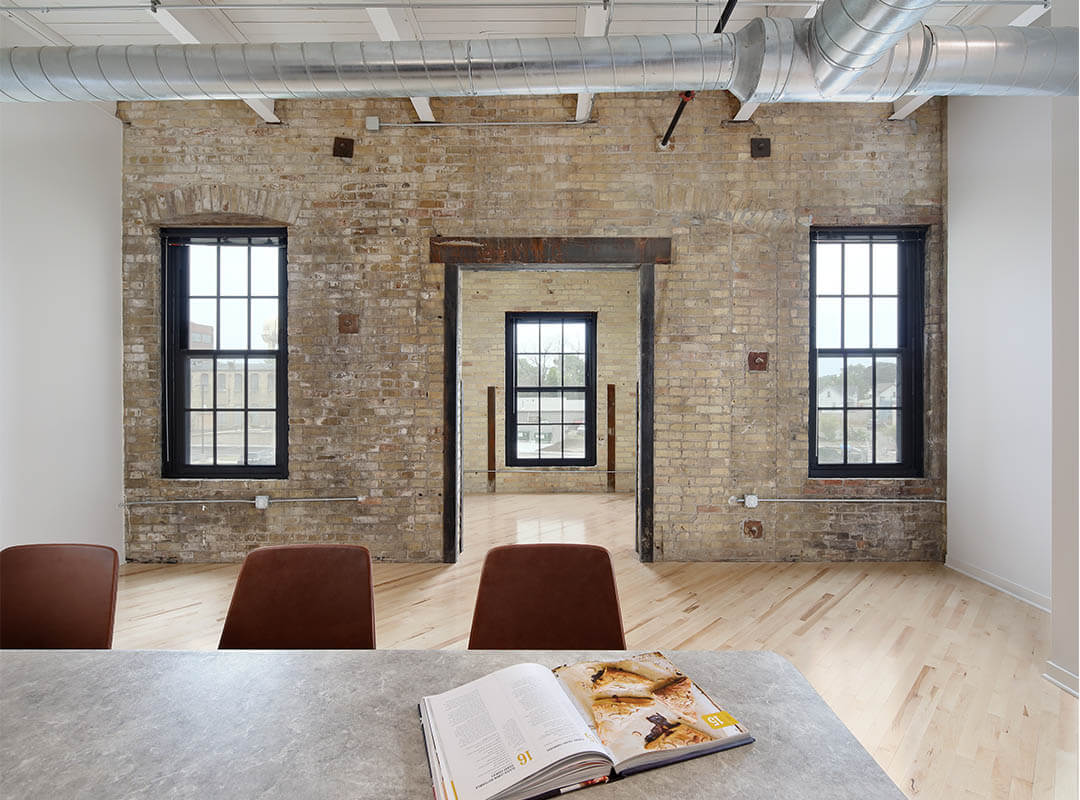
Each unit features unique original details of the historic structure
BizTimes Webcast
This expansive redevelopment effort was highlighted during a BizTimes Webcast—What’s old is new again: Why Adaptive Reuse? Why Now? AG Architecture was proud to be a sponsor and have Eric Harrmann participate in the discussion.
The discussion was moderated by Dan Meyer, the Publisher/Owner of BizTimes Media. The panelists included:
- Josh Jeffers – President/CEO | J. Jeffers & Co.
- Jim Brandenburg, CPA, MST – Tax Partner | Sikich LLP
- Joshua B. Levy – Partner | Husch Blackwell
- Eric Harrmann – Chief Design Officer | AG Architecture
- Dan Chovanec – Vice President | CG Schmidt
Topics covered include:
- Creating a vision and engaging local stakeholders
- Unique risks and common obstacles and how to mitigate them
- Tax credits, incentives, and proposed real estate tax changes that may affect adaptive reuse projects
- Inclusionary practices: promoting diversity, equity, and community through adaptive reuse projects
- Building cost savings in an era of rising material costs
- Redevelopment as a catalyst for change: how adaptive reuse can enrich neighborhoods and build community
- And more