The dominance of electric vehicles (EVs) may be inevitable, a long way down the road…but that won’t stop the government from putting onerous EV charging station regulations in place now.
Putting the Cart Before the Electric Horse
Public policy often attempts to modify behavior, such as past attempts to influence car manufacturers focused on tighter emission standards and increasing fuel efficiency targets. The latest push is to require property owners to provide more charging stations. The assumption is that if charging locations become ubiquitous, buying an EV will be an obvious choice. All these ideas may be fundamentally good, but none are free. Developers of multifamily and senior living communities may be significantly impacted by these requirements, adding millions of dollars to develop new properties.
Consumer & Political Fluctuations
Just one year ago, the media would have us believe universal production and adoption of electric vehicles was imminent. Fast forward to a new administration, and suddenly the tone has shifted dramatically. By mid-2021, the major car manufacturers were boasting that they would be eliminating gas engine cars by 2030-2035. As of early 2025, Toyota, General Motors, Ford, Volkswagen and Volvo have all dramatically delayed that timetable and admit that there will be a mix of cars produced until at least 2040. This change is a direct response to changing consumer trends. The early adopters have made their purchases, and now the next group of buyers cannot afford the increasing price tag. Or they simply do not trust the reliability of the EV technology and are holding off on purchasing.
Just as public excitement or acceptance of EVs has waned, politicians at all levels of government chose to act while they had a seat at the table, to create “environmentally friendly” laws and regulations. Several states have applied social justice principles to the notion of charging the battery of an electric vehicle by way of “Right-to-Charge” laws. According to the advocacy group Plug In America, these laws attempt to remove barriers to affordable charging for EV drivers who do not have private parking access (homeowners). These policies intend to allow renters at multifamily apartments and condominium owners to have charging infrastructure installed, making EV charging access more equitable.

What is the current impact in your market?
Many of these new requirements that are coming into effect are not well understood by the enforcing municipalities, developers, utilities, architects and engineers. Even charging equipment manufacturers seem unaware of the potential opportunity for themselves. Unfortunately, this is not surprising, or uncommon when politicians and lawyers attempt to write technical requirements without adequately consulting those tasked with implementing the laws. At the reasonable end of the spectrum, California, Colorado, Florida, Hawaii, Maryland, New Jersey, New York, Oregon and Virginia have laws that require property owners to allow tenants to have charging equipment installed. There are a variety of restrictions as to where that electrified space is located and what installation costs may be passed on to the user.
A closer look at Illinois regulations
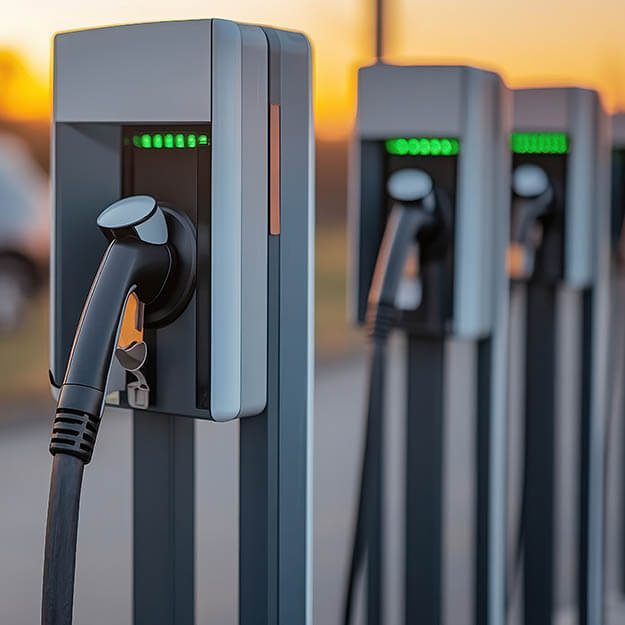
The extreme case is the State of Illinois, whose law states that 100% of parking spaces in new residential developments are required to be EV-capable. This requirement means that the infrastructure must be installed to permit any resident to have the charging equipment installed. The initial installation during building construction has to include a conduit extending from the electric service to within three feet of every parking stall. The electric service has to be designed with the capacity and dedicated circuit breakers for future chargers. The actual charger device and the wire may be installed later, as needed.
While the future-focused thinking seems like a reasonable idea, the 100% mandate is extreme when you consider that a typical suburban apartment complex often has two parking spaces per apartment. For a 350-unit development, a capacity to charge 700 cars is required! This has a huge impact on the electrical requirements of that site and, in many cases, is beyond what the utility has anticipated and may not be able to be delivered.
AG Architecture is currently working on the design of several projects facing this dilemma. We have reached out to numerous charging station manufacturers, assuming they would be extremely helpful and eager to have their systems as the basis of design. Surprisingly, none that we have spoken to have even heard of 765 ILCS 1085 Electric Vehicle Charging Act. This law should mean lots of business for them; however, when coming across the 100% parking space stipulation, all had the same response of shocked disbelief.
The financial impact
This approach is reminiscent of the idea of futureproofing living units for internet access by including extra data jacks and home runs of miles of copper wiring, only to have wireless systems become dominant. AG’s engineers are still formulating design options for these current challenges, but we have determined one thing so far…this will be very expensive.
Initial estimates put the installation of underground conduit and increased/additional electric service equipment capacity at $1,000 – $2,000 per parking stall. This can easily add $1M or more to a larger development. It may be a great marketing tool to promote the sustainable mindset of a project, but it also might translate to money buried in the ground for years with no users. Our research has not yet found any legal challenge to the 100% requirement. Perhaps some brave politician will try to insert common sense and provide a lower level of coverage or a phased approach, but until then, Illinois developers need to plan on increasing site development costs for new residential projects.
From regulatory guidelines and consumer-driven preferences to a sense of professional responsibility, numerous reasons are driving our environmental consciousness. AG is working with multifamily and senior living developers to commit to sustainable design solutions that reduce the impact of our buildings. Looking for information on EV charging station requirements in your market? Or do you have information to share on this evolving topic? Let’s connect – tjluci@agarch.com