

Summer is quickly approaching in Wisconsin and much of the country has already been experiencing warmer weather this year. Recently there have been more news stories, and more misinformation, about significant changes coming for air conditioner regulations. It appears the government has been aggressively targeting all sorts of household appliances with increased efficiency and energy-conserving mandates. Many of those rules aimed at lightbulbs, ceiling fans and swimming pool pumps seem minimally frustrating and have a dubious net impact on global energy usage. The upcoming EPA changes to air conditioning refrigerants will have a much higher cost, and hopefully a more meaningful impact on the environment.
Cool History
Air conditioning is greatly taken for granted in the United States and it is an expectation in almost all buildings. As of 2022, 89% of all American households have air conditioning. Compare that to 19% in Europe, according to the International Energy Agency. To most people, modern AC systems are a box on the roof or in a wall that produces “cold.” How could something that makes “cold” be a fire hazard?
If a compressor is the heart of an air conditioner, the refrigerant is the lifeblood. In the early 1900s, the first air conditioners and refrigerators employed toxic or flammable gases, such as ammonia, sulfur dioxide, methyl chloride, or propane as refrigerants to make “cold.” These gases could be fatal when leaked or mishandled. Most environmental harm is done when improperly installing or dismantling AC systems. Non-licensed or untrained workers may allow refrigerant gases to escape to the atmosphere while repairing or illegally disposing of old systems.
The first non-flammable, non-toxic chlorofluorocarbon gas, Freon (R-12) was invented in 1928. While it was deemed safe to handle and unlikely to harm a building by burning, no consideration was given to what would happen to the environment if large quantities of this gas were released. We have already gone through other refrigerant phase-out cycles due to sustainability concerns, most notably in 2010 with the change from R-22 (Freon) to R-410a (Puron) for AC systems.
Some Alphabet Soup
There are a ton of acronyms to keep track of in this discussion, so here’s a quick terminology guide.
- EPA – The Environmental Protection Agency is responsible for setting federal
requirements. - GWP – Global Warming Potential is an index to measure how much heat a
greenhouse gas would absorb over a given time frame after being added to the atmosphere. New refrigerants must have vastly lower GWP. - ODP – Ozone Depletion Potential is a measure of how much ozone layer damage
a chemical can cause compared to a baseline measurement. - CFC – CHLOROFLUOROCARBONS (R-11, R-12) were the original refrigerants
used in commercial AC units. These were phased out in 1996
due to ozone depletion and global warming concerns. - HCFC – HYDROCHLOROFLUOROCARBON (R-22) is a commonly used refrigerant
in AC systems that can have harmful effects on the atmosphere’s ozone layer. The HCFC phase-out began in 2010. - HFCs – HYDROFLUOROCARBONS (R-410A) do not contain chlorine, but they
have high GWPs given their fluorine content. HFCs are now being phased out globally. - HC – HYDROCARBONS are gases such as propane, methane, and isobutane
that ironically work as both heating fuel and refrigerant.
The Rise of Environmental Consciousness
Until a few decades ago, the main goals of refrigeration were efficiency and performance while environmental impact was a lesser concern. As HFCs are widely used in new air conditioning systems, concerns about their impact on climate change have led to some countries and regions considering banning certain types of HFCs.
There is some interest in “more environmentally friendly” HC refrigerants, but environmental impacts must be weighed against safety and concerns about the flammability of HC refrigerants. As a result of current climate change politics, the HVAC industry has been transitioning towards using new refrigerants that prioritize lower global warming potential (GWP) and ozone depletion potential (ODP). While concerns about the flammability of new refrigerants exist, proper training and precautions can help mitigate these risks and ensure a safe transition to more environmentally friendly alternatives.
What is the perfect refrigerant?
As regulations continue to push for the phaseout of high GWP refrigerants, A2L refrigerants are coming to market later this year. ‘A’ stands for non-toxic; ‘2’ means it is flammable; and ‘L’ means low burning velocity. The ‘2’ is what has some uninformed people worried. They believe we are putting gases in piping that could burn our homes to the ground! Yes, this is true, but we already do put highly flammable gases in most of our houses. It’s called natural gas or propane (or A3 refrigerants), and it has been safely heating us for almost a century with minimal issues.
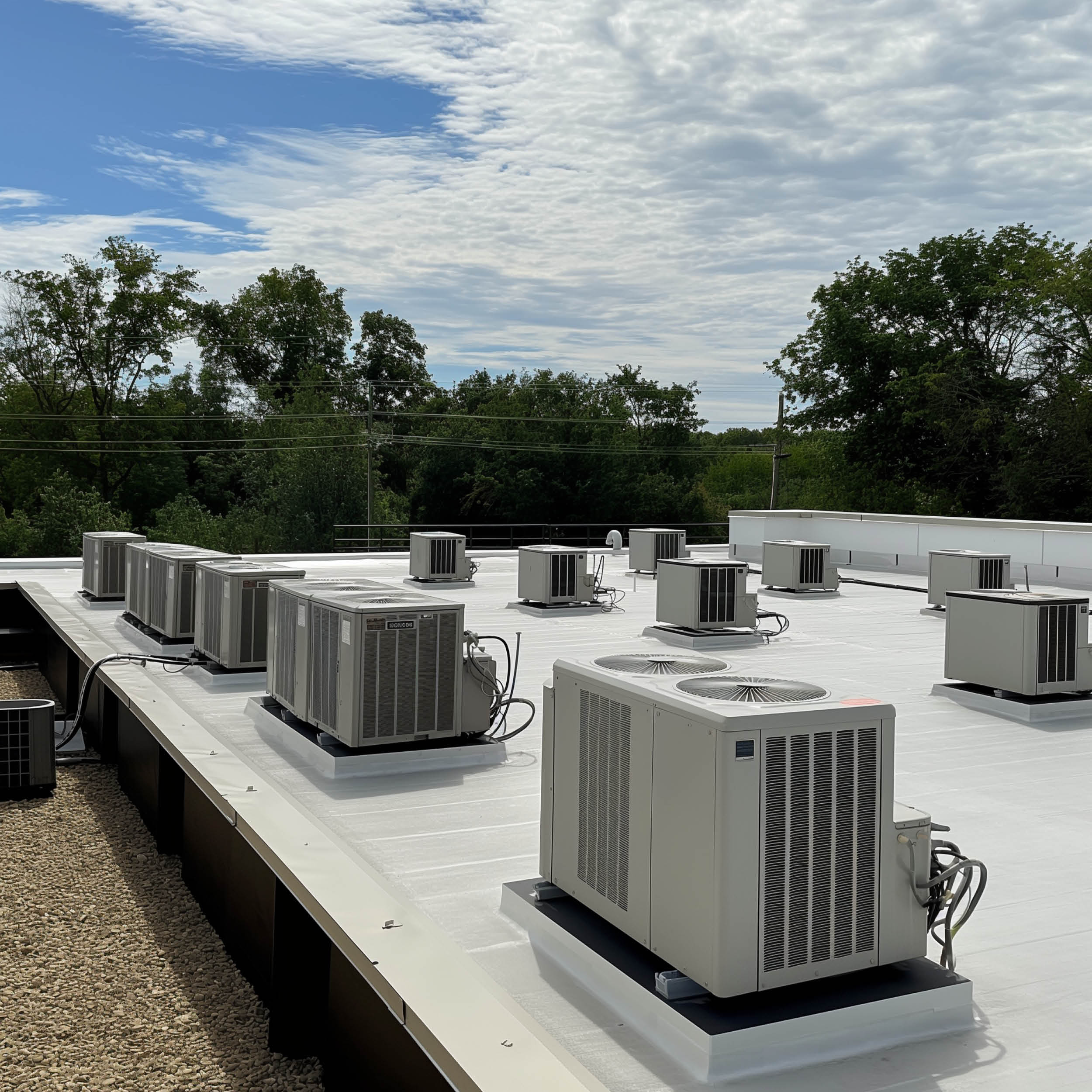
Since A2L refrigerants are still considered mildly flammable, what does this really mean? Will this burst into flames? A high concentration of the A2L that is exposed to an open flame, like a cigar torch lighter or match, will cause a slow burn like lighting a shot glass full of high-proof whisky. Sparking from nearby motors, light switches or even lit cigarettes, candles, toasters, hair dryers, or space heaters do not have the energy to cause it to ignite.
Manufacturers are also working on equipment designs with reduced refrigerant quantities to mitigate this concern. See this video for a comparison of mildly flammable and flammable refrigerants.
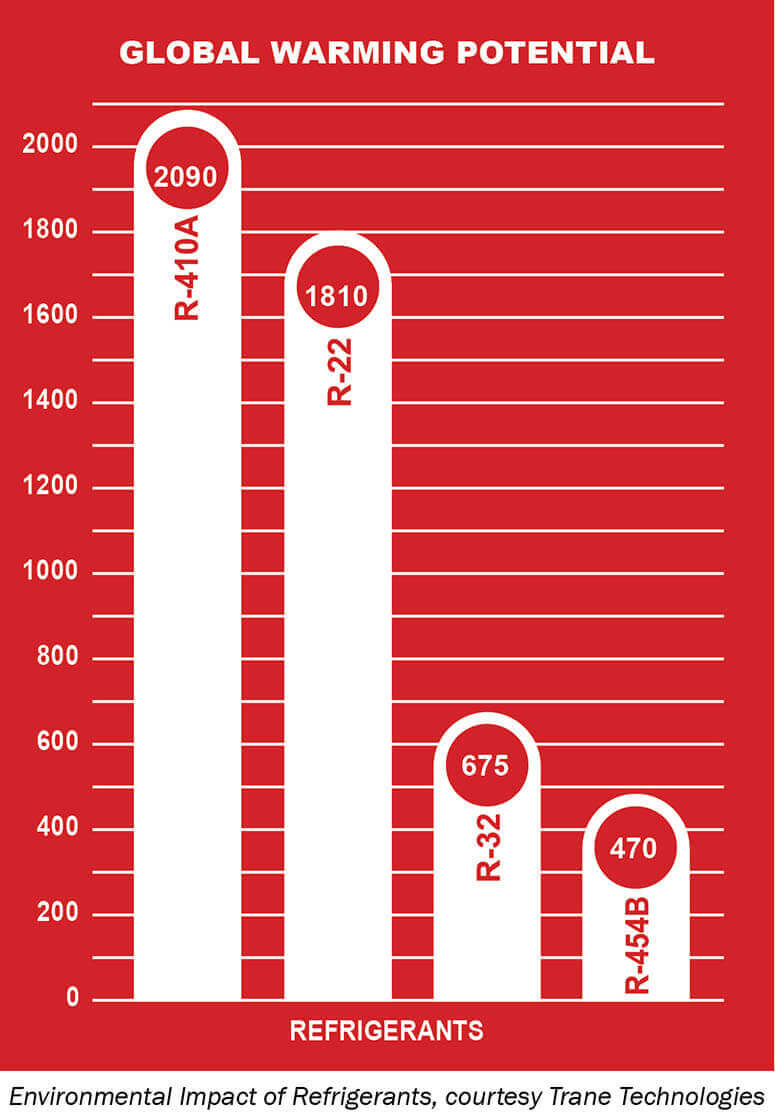
We are not going to go without air conditioning anytime soon, so we need to find something that works and doesn’t drastically harm the environment. Since the A2L refrigerants have about a 60% reduction in GWP over current products, they meet the current climate goals and pending regulations. Some of the A2L refrigerants that are available or being developed include:
- R-32: Widely used in residential air conditioning systems as a replacement for R-410A. It has a low GWP of 675 and is considered to have good energy efficiency and cooling performance. This will be common in European manufactured equipment.
- R-454B: Another replacement for R-410A in residential air conditioning systems. It offers similar performance with a GWP of 470 and will be prevalent in the United States.
Regulatory Change
Why is this suddenly such a hot topic? It becomes relevant when the EPA mandates that residential air conditioning equipment manufactured after January 1, 2025, must contain refrigerants having a maximum GWP of 700. Those companies have a three-year window to sell down inventory of the current products.
Once the new refrigerant equipment is ready for installation, how will the ‘mildly flammable’ concerns be handled? Will well-intentioned, yet poorly informed code officials have knee-jerk reactions and require substantial fire resistive construction to encapsulate the refrigerant and related equipment? Or will common sense prevail, and we will simply locate the refrigerant piping in a drywall-enclosed wall cavity? Those answers are likely to vary from one building department to another.
Hopefully, these changes will have a long-term positive impact by lessening global warming. Economically, this can be seen as a veiled attempt to stimulate purchasing in 2024 as many owners and installers would like to avoid the possible headaches of using new equipment and facing uncertain code enforcement.
Don’t let change cause you to lose your cool! These changes should not be concerning to building owners or occupants–and the products are safe.