
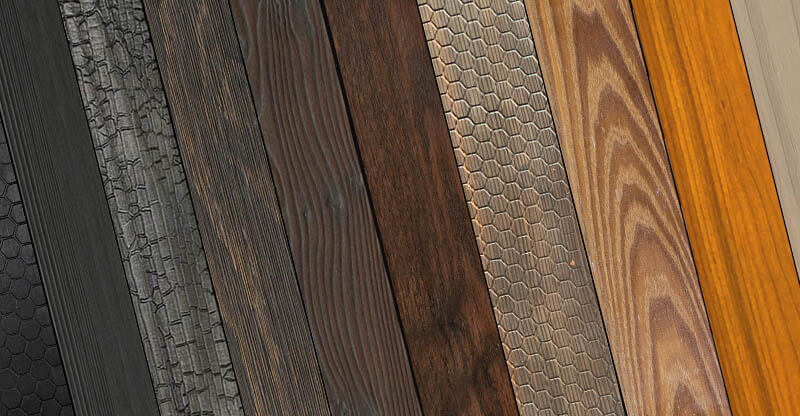
There are numerous material discussions as AG explores façade designs for clients across the country. Wood is definitely a part of those conversations. Wood and wood-look materials continue to gain popularity, but what is the right choice for your project and community?
From modern to traditional architectural styles, and everything in between, the integration of wood, composites, and faux wood materials elevate the aesthetic. A wood aesthetic infuses warmth and texture to give any style building added richness and depth. It is often used as an accent and prioritized over more common materials, such as lap siding or paneling. Wood is an old, tried and true material, but clients have a low tolerance for virgin wood’s maintenance and aging implications. As a result, a surge in wood-look and modified wood products addresses the trending material preference. No matter the composition, incorporating wood look materials continues to grow in popularity in all types of buildings from single-family homes and multifamily developments to senior living communities and mixed-use entertainment districts.
As the AG Design Team works through design development with clients, several factors contribute to material specifications and decision-making. There are pros and cons to weigh for each selection while determining what meets project goals. What is more important, the overall aesthetic or the bottom line? Are you motivated by maintenance considerations or driven by a commitment to sustainability? Here are some details to guide your decision-making process and factors to consider when evaluating the use of wood, composites, or faux wood materials.
Fiber Cement
Considered to be durable, long-lasting, and low maintenance, fiber cement siding is a composite material made mostly of recycled wood fibers and cement. As a widely available option, fiber cement is the most commonly used product in residential and commercial construction. Its quality assurance and ability to be pre-finished and painted before installation makes fiber cement popular when limiting steps in the construction process. The standard product comes with a smooth or cedar mill finish that is painted, however, there are options that take the material further to give it a faux wood appearance. Woodtone and Nichiha are two popular examples.
Woodtone
One of the most economical options, Woodtone is fiber cement siding and panels.
Pros
- It is good for large exterior coverage areas.
- It comes in a wide variety of colors.
Cons
- It doesn’t offer the best aesthetic or texture for close-up interactions.
- The two-tone appearance doesn’t mimic real wood tones and grain well.


Longevity/Sustainability
An approximately 20-year limited fade. It is made of at least 50% recycled material (Hardie board) but is not recyclable or compostable. Due to the integration of cement, it has higher embodied carbon emissions.
Typical Use
Exterior – Most often used for fiber cement lap siding on multifamily projects.
Nichiha
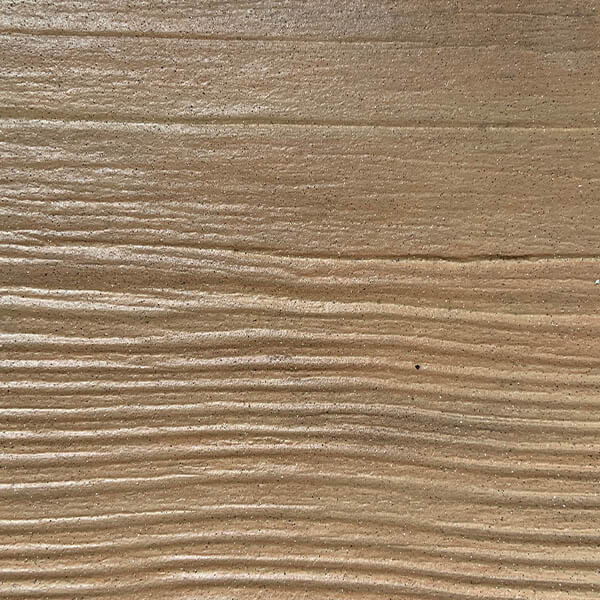
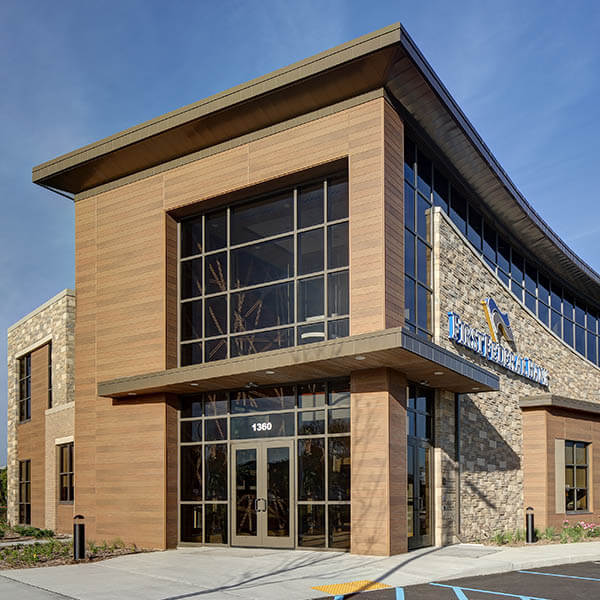
A tier above Woodtone, it is typically used for fiber cement panels. It has a more homogenous and recessed texture and comes in panels with breakpoints.
Pros
- It is good for large coverage areas.
- It offers an acceptable texture for closer viewing or touching.
Cons
- The panel break lines limit the aesthetic opportunities.
- There is a limited wood tone variety.
Longevity/Sustainability
It has a 50-year life expectancy. It is made of at least 50% recycled material but can’t be recycled or composted. Like Woodtone, it has higher embodied carbon emissions due to the integration of cement.
Typical Use
Exterior – Used for larger exterior facades and elements on multifamily or senior living projects. Can also be used for window bay accents.
Wood-Look Aluminum Siding
As a more contemporary choice, aluminum products have recently expanded to include faux wood finishes and minor textures. These products offer a sleek but long-lasting option for projects that want to stand out. It can also be used as an alternative to fiber cement when required by local design boards. Most products come in panels or planks and produce an attractive straight-lined, grid aesthetic.
Longboard and FastPlank
Architectural metal panels with printed wood surface.
Pros
- It is good for large coverage areas.
- Durable in any weather condition.
- Has a smoother face and a reflective look.
- Available in planks or panels.
- Offers a wide variety of wood-look finishes.
Cons
- Panel break lines limit the aesthetic opportunities.
- Wood grain finishes are repeated after maximum increments are achieved.
- Higher initial cost than fiber cement.
- Never achieves the same depth, shadow, and texture as real wood.


Longevity/Sustainability
The coating has a 20-year warranty with a 50-year aluminum life expectancy. It is 100% recyclable. It has the highest embodied carbon emissions of faux wood products.
Typical Use
Exterior – Used for larger exterior facades and elements on multifamily or senior living projects. Can also be used for window bay accents.
Real Wood
Whether you’re a member of the architecture and design community or someone who appreciates carpentry and craftsmanship, there’s no doubting what real wood looks and feels like. However, the demand for low-maintenance and longer-lasting building products has influenced the modification of wood in the last decade. Innovative modification technology with its larger production capabilities and lower cost, and the growing popularity of these products has increased the market demand in multifamily and senior living development. Here are a few options when it comes to long-lasting wood materials.
Thermally modified wood
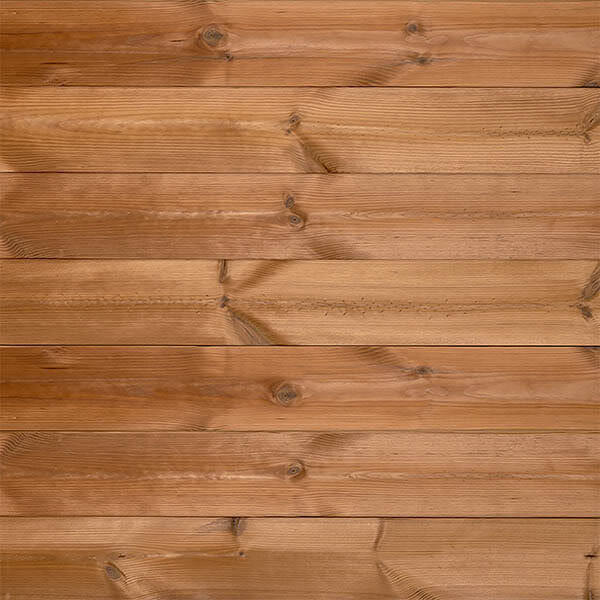
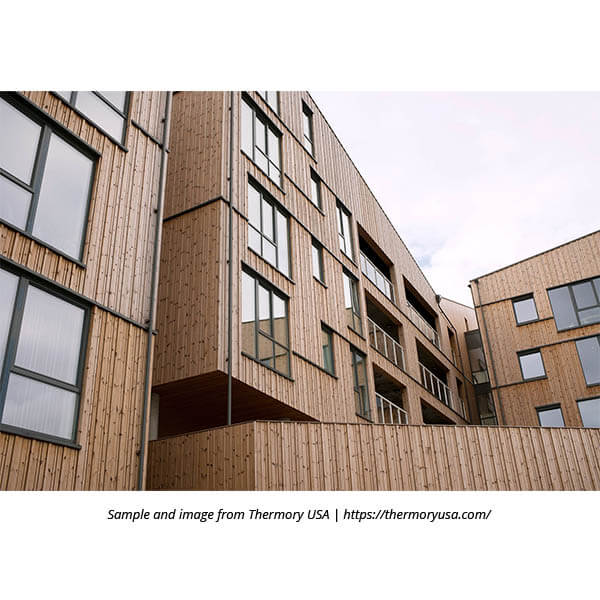
This option uses heat (around 215-350 degrees) and steam in a kiln to remove organic compounds. The modern version started in Finland in the 1990s. The origin story possibly dates to fire-treated wood used by the Vikings for rot resistance. Ash (chocolate color) and pine (honey color) are the most common species. The wood will stay gray when exposed to sunlight over time.
Pros
- The process makes the wood water, pest, and rot-resistant.
- Wood becomes more rigid due to the process, so it won’t warp as easily over time (50-90% less than regular wood).
- The product isn’t impacted by fluctuations in humidity.
- It offers a palette of rich brown tones and retains the grain of a variety of wood species.
Cons
- The process decreases the strength by 30%.
- The process browns the woods, so many of the species end up looking similar.
- Susceptible to splitting and flaking.
- Burns easier than regular wood from lack of moisture.
Longevity/Sustainability
It has a 20-25-year life expectancy. It is compostable, recyclable, and has low embodied carbon emissions.
Typical Use
Interior & Exterior – Wood accents on larger multifamily projects, such as balcony ceilings, soffits, window bays, accent walls, and decking. Currently only seen as entire facades on smaller single-family or multi-family townhome projects.
Reputable Manufacturers
Thermowood
Thermory
UFP Edge
Arborwood
Westwood
Acetylated Wood
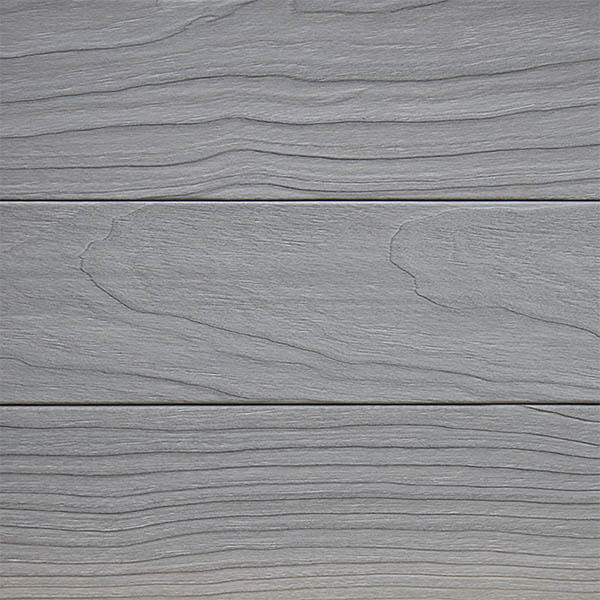
First patented in 1930, the process soaks wood in acetate to remove all living cellulose and leaves behind the lignin. The chemicals used are non-toxic and are not present in the wood after processing.
Pros
- Water, pest, and rot resistant.
- Dimensionally stable.
- Since heat is not used during the process, it does not check or split.
- Finishes and stains can be applied over the top.
- Longer paint life.
- More favorable in extreme weather conditions compared to thermally modified products.
- Retains similar color and grain to the virgin wood.
Cons
- Easier to damage and scratch than fiber cement products.
- It is the most expensive of the modified wood products.
- There is some purchase hesitancy due to the use of chemicals in the production process.
Longevity/Sustainability
A 50-year warranty. Recyclable and compostable. No toxic chemicals are used to process the wood. It doesn’t require additional heat energy, like thermally modified products.
Typical Use
Interior & Exterior – Wood accents on larger multifamily projects, such as balcony ceilings, soffits, window bays, accent walls, and decking. Currently only seen as entire facades on smaller single-family or multi-family townhome projects.
Reputable Manufacturers
Accoya
Carbonized (yakisugi or shou sugi ban)
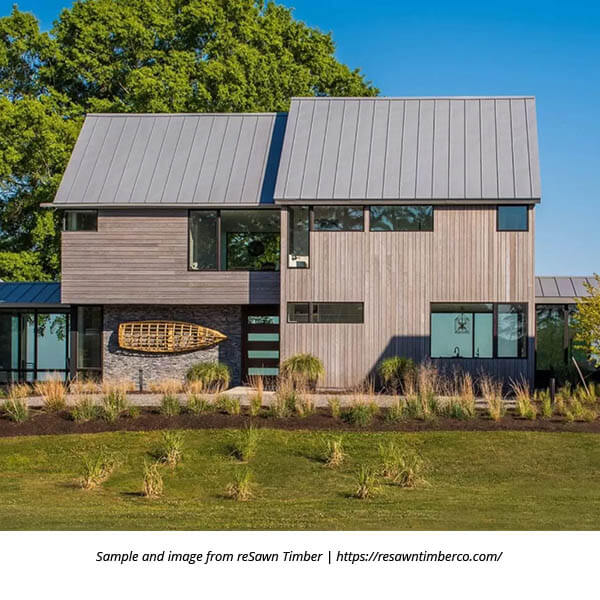
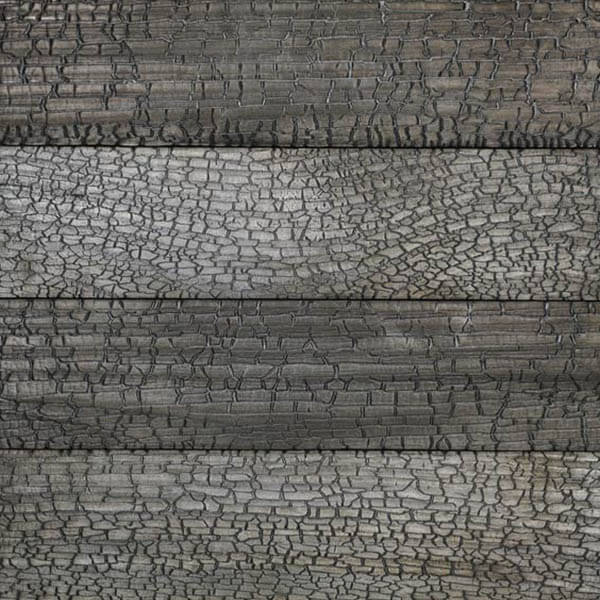
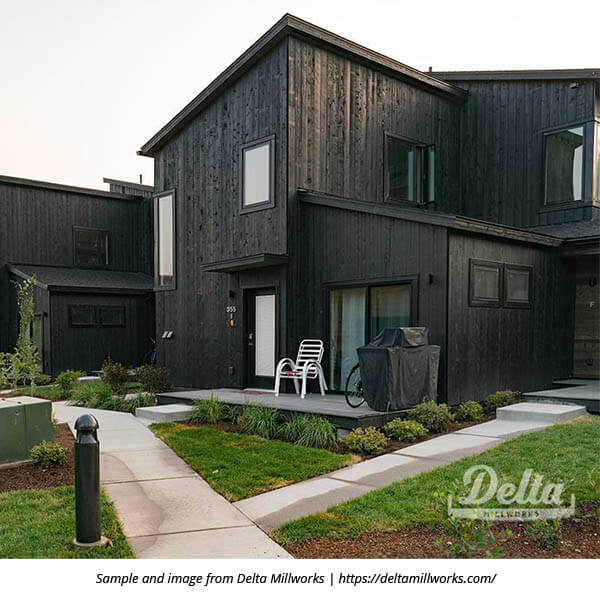
This process was started in Japan during the 18th century. The wood is charred to burn off the living cellulose and leave behind the lignin of the wood. The original process is called yakisugi. Shou sugi ban is a mispronunciation and is used in the West as the product name for any wood that has been charred to improve its function or aesthetic. It is traditionally used with cedar or cypress species. The wood is oiled or sealed to maintain a charred look. If allowed to naturally decay, the charring will weather over time to expose the wood.
Pros
- Fire resistant.
- Water, pest, and rot resistant.
- Accentuates wood color and grain on burned or brushed products.
- There is added texture when charring is left on the wood. Can look like alligator scales.
- Different gradients of the burn-look range from slightly darker grain to completely black and charred.
- Can be applied to virgin, thermally modified, and acetylated wood products.
Cons
- Charring can be easily scratched off with sharp objects.
- Requires oiling or additional sealant if the user wants to keep the charred layer (every 10-15 years).
- Requires more care during installation to limit product damage.
Longevity/Sustainability
It starts losing color around the 10-15-year mark but can last 80-150 years. Recyclable and compostable. It can extend the lifespan of recycled wood, such as barn wood and previously weathered wood.
Typical Use
Interior & Exterior – Wood accents on larger multifamily projects, such as balcony ceilings, soffits, window bays, accent walls, and decking. Currently only seen as entire facades on smaller single-family, LEED, commercial, or multi-family townhome projects. Gaining market share near the west coast and in colder climates further north.
Reputable Manufacturers
Delta Millworks
reSawn Timber Co.
Nakamoto Forestry
Pioneer Millworks
HiKara Timber (yakisugi)
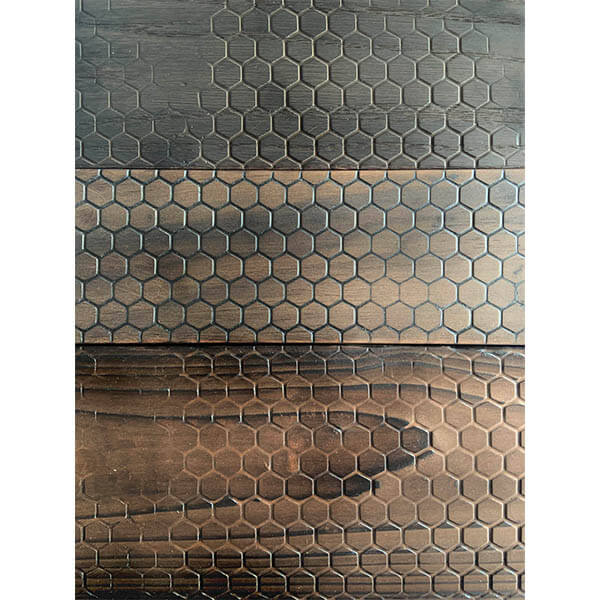
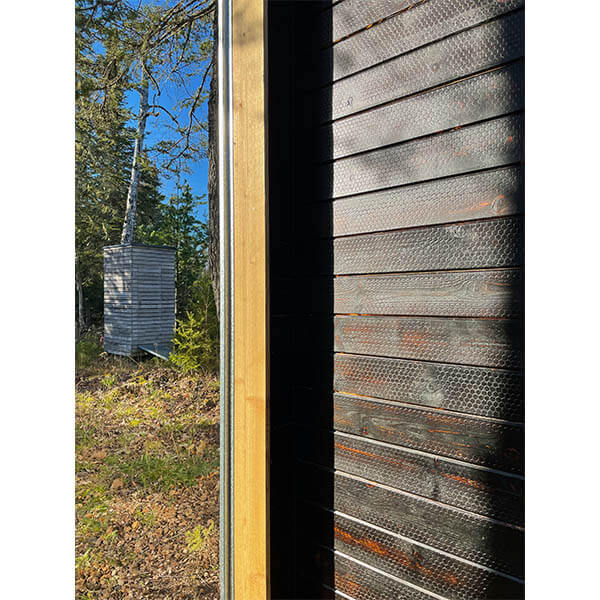
This product was created by AG’s Mitch Lampe and is an innovation to the traditional Japanese yakisugi process. Wood is burned with prescribed patterns to improve both the longevity and aesthetic qualities of the boards. Instead of using solely a radiant burn, heat is embossed into the wood conductively and exacerbates the water, rot, pest, and fire-resistant properties.
Pros
- Fire resistant.
- Water, pest, and rot resistant.
- Accentuates wood color and grain on burned or brushed products.
- Customized patterns can be added to give the wood more texture, sound absorption, and originality.
- Different gradients of the burn-look range from slightly darker grain to completely black and charred.
- Can be applied to virgin, thermally modified, and acetylated wood products.
- Boards can be entirely burned with the pattern or accentuated with just the black pattern itself.
Cons
- Charring can be easily scratched off with sharp objects.
- Requires oiling or additional sealant if the user wants to keep the charred layer (every 10-15 years).
- Requires more care during installation to limit product damage.
- Possible dust collection in deeper patterns.
Longevity/Sustainability
It starts losing color around the 10-15-year mark but can last 80-150 years. Recyclable and compostable. It can extend the lifespan of recycled wood, such as barn wood and previously weathered wood.
Typical Use
Interior & Exterior. Wood accents on larger multifamily projects, such as balcony ceilings, soffits, window bays, and accent walls. Currently only seen as entire facades on smaller single-family, LEED, commercial, or multi-family townhome projects. Typically seen as interior accent walls in the Midwest.
Material exploration is an exciting part of the architectural design process. Product introductions are continuously coming to market presenting our team with opportunities to investigate options and integrate something new and different. With each product, there are aesthetics, price, manufacturing, maintenance, longevity, and proper use considerations to evaluate. What is the best product for your project? We look forward to weighing the pros and cons together and selecting a memorable materials palette that makes a distinct impression in the market.