
We have been talking a lot lately about micro-strategies to creatively reposition existing campuses. In our eNews articles as well as presentations at LeadingAge Illinois and an upcoming LeadingAge Annual Meeting & EXPO IGNITE session, we share our thoughts on tackling “small-bite” projects one, $5-10 million expenditure at a time. We believe this is a viable alternative, a strategy that is the antithesis of New Greenfield “Big Gulp” projects. In order for existing communities to remain at the heart and soul of the industry and a leader in the marketplace, these small strategic projects will be key to the ongoing success of many senior living providers.
We don’t want you to just take our word for it. We took time to discuss this very important topic with Renѐe Anderson, president and CEO of Saint John’s on the Lake in Milwaukee, WI as well as Charlie Nelson, president and CEO of Congregational Home in Brookfield, WI. These communities recently completed small-bite projects and share insight for how to tackle capital improvements strategically to elevate the senior living experience.

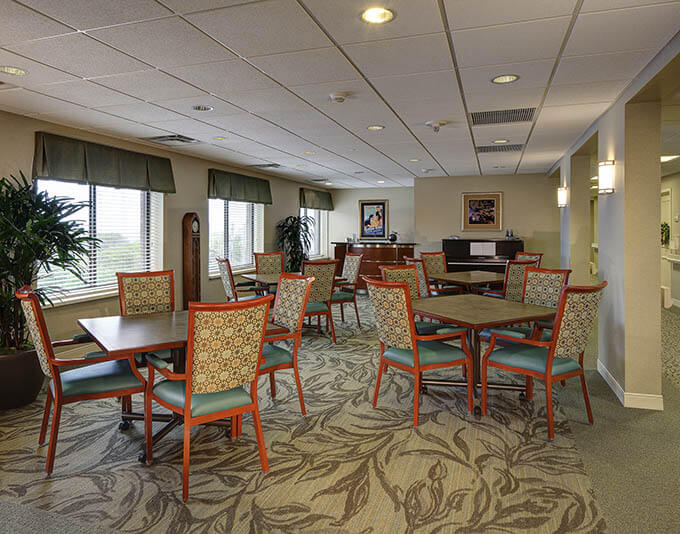
At Saint John’s on the Lake, the community added seven new CBRF suites and renovated their 17 existing suites as well as the common area serving these supportive living environments. For this provider, the decision to tackle the project was in response to a greater demand driven by their recent IL expansion as well as the documented desire for larger suites.
Note: A CBRF is a Community Based Residential Facility – a level of licensed assisted living in the state of Wisconsin.

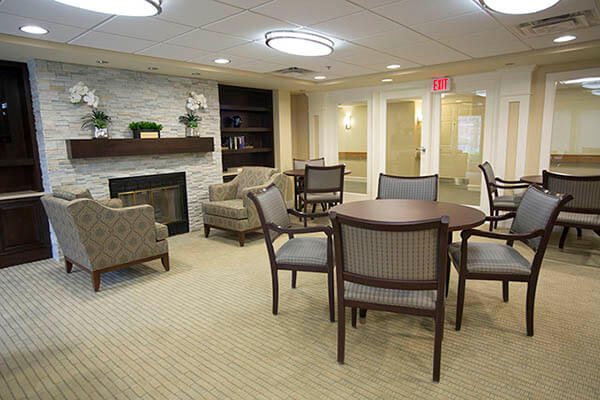
Congregational Home was feeling the need to stay relevant due to the increased pressure in the senior housing market. They embarked on a significant renovation to their 1987 independent living apartment building. Even though the units were occupied, the age of the building and the inability of the original units to meet the needs of its aging population highlighted the importance of immediate action.
Moving Forward
Even when a distinct need is identified, senior living community leaders can face obstacles if the project is too large in scope. Whether there are physical limitations on campus, funding issues or it is difficult to build consensus, providers committed to elevating the senior living experience as well as their position in the marketplace must persevere. The benefit of looking at repositioning efforts through a more focused lens, one small project at a time, makes some of these issues more manageable.
“We were fortunate to have underutilized space available immediately adjacent to our existing CBRF,” describes Anderson. “The existing CBRF finishes needed to be refreshed as well and the opportunity to combine these two needs created a project of a size manageable using operating cash that completely renewed the look and feel of the space.”
Whether large or small, communication is important. Building consensus is key to the success of any project. “To move forward you need the support of the staff, Board of Directors and most importantly the residents of the facility as this is a major disruption to their daily life,” says Nelson.
While physical space and building consensus are important, it takes adequate funds to make a project happen. The strategy behind the small-bite projects eases the stress and financial burden of projects. Communities embracing this mentality can plan for the future in new ways.
“Small projects can be funded from operating cash,” says Anderson. “Small projects can also produce dramatic results quickly and aren’t nearly as disruptive as new construction or a larger scale remodel.”
Nelson agrees, “One smaller project at a time allows for greater ease in self-financing and reduces the disruption to residents and staff.”
Positioned for the Future
Repositioning efforts are all about strategic analysis.
- What are the current needs of the marketplace?
- How is your existing community lacking?
- What can you do to address and satisfy those needs in order to attract new residents or elevate the experience for existing residents?
If a community honestly answers these questions and makes capital improvements accordingly, then the results will speak for themselves.
“Increasing the size of the suites and adding showers was necessary to satisfy our residents transferring from IL,” says Anderson. “This decision also allowed us to remain competitive with newer projects in the greater community.” A need was identified and addressed. The results – the new suites were all spoken for well before the project was complete. Now there is a waiting list! “Residents love the fresher finishes, the improved lighting, and the more open common spaces,” comments Anderson.
At Congregational Home, the upgrade of the 1987 building to a more modern design and energy efficient product better positions the community in the marketplace. “When the project, which took almost a full year to complete, was finished we had 12 units available,” describes Nelson. “Within 3 months they were occupied or spoken for.”
What’s Next?
Tackling one small project at a time allows providers to keep looking ahead in the short term instead of figuring out how many years until the community can financially be positioned for the next $50 million project. This strategy requires prioritization. Providers must look to their organizational mission and make decisions of how to work on one part of the campus while still evaluating the greater impact on the community as a whole.
At Saint John’s on the Lake, the leadership always looks at the quality of the resident living space first, followed by common space and lastly employee space. “Fortunately, our resident and common space has all been brought current within the last 2 ½ years,” describes Anderson. “We now have an opportunity to improve employee and some “back of house” space. We feel it is important for not only operating efficiency but to acknowledge our team and provide tangible evidence of their importance to the organization.”
While Saint John’s is in the position to improve staff environments that ultimately will impact the operational efficiency of the community as a whole, Congregational Home is focused on enhancing services for specific care needs. “We believe that our short term (5 year) future is in dementia care and the short term rehab product. We will be placing our emphasis there,” says Nelson.
Teamwork
Successful projects, whether large or small, take teamwork.
“We find it helpful to use contractors familiar with our building and building systems; it makes the job go more quickly and avoids potential pitfalls associated with the “discovery” stage of renovation,” comments Anderson. “Small projects occur in the midst of community life so having contractors who are already familiar with residents and staff, their habits and expectations, typically results in a smoother project with better outcomes.”
Architects, contractors, developers, consultants and community leaders need to work together to make every project a success. Partners committed to providing vision, building consensus and bringing certainty and predictability to the construction process will meet or exceed project expectations and become team members that you as a provider will feel confident relying on time and again no matter the size of the project.