
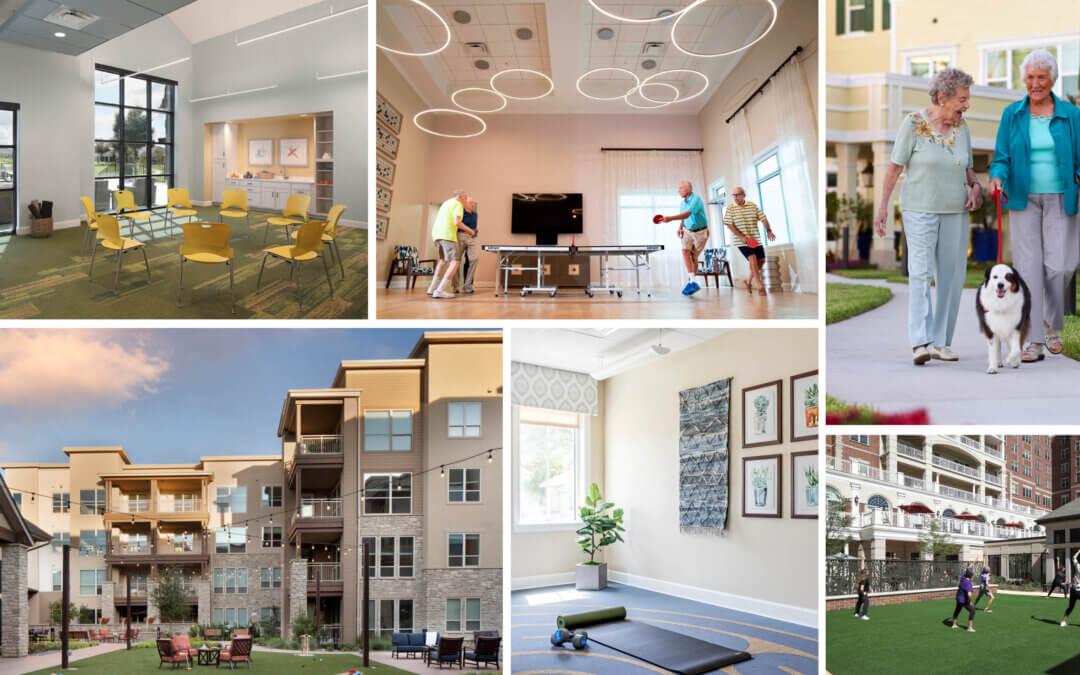
With slogans, programs and commitments to “Living Your Best Life,” “Enjoy Life Lifestyle Programming,” and “Active, carefree, friendship-rich,” it is clear that senior living providers are going all-in on health and wellness. While this has been a trending topic influencing amenity offerings and design decisions for several decades, the momentum continues with a new layer of priorities and personalization.
The senior living industry continues to emphasize the importance of addressing multiple dimensions of health and wellness. According to the International Council on Active Aging (ICAA), “Wellness is derived from our ability to understand, accept and act upon our capacity to lead a purpose-filled and engaged life. In doing so, we can embrace our potential (physical, emotional, spiritual, intellectual, social, environmental, vocational) to pursue and optimize life’s possibilities.”
Whether through a comprehensive master planning process or thoughtful discussions about a remodel or addition, the AG Team works with providers and key project stakeholders to understand existing conditions and market demands. Together, we prioritize programmatic needs, the right mix of amenities, and the physical spaces needed to best serve residents, staff and visitors at every level of care.
While design solutions respond to the unique parameters, goals and community context, we continue to see common health and wellness objectives among providers nationwide. Current expectations highlight the desire for spaces and programming to foster personalized care, a sense of belonging and community, lifelong learning, intergenerational interactions, fitness, mindfulness and mental health, and nutrition. Furthermore, conversations and solutions look for ways to leverage technology to support these health and wellness goals.
A Robust Dining Program

When discussing wellness initiatives in the senior living industry, dining is typically a priority of any project. Just as the kitchen is the heart of a home, dining venues are the heart of senior living communities. Not only do a variety of dining options support nutrition and physical health, but these spaces also deepen
a sense of community. From cafés, bars and fine dining to grab-and-go and al fresco settings, venue options entice residents out of their homes to engage and interact. Whether enjoying reading the paper over a cup of coffee, meeting friends for happy hour or inviting family members for a meal, dining
is a shared experience with many health benefits. Providers continuously look for ways to elevate
the dining experience at every level of care as a marketable amenity to satisfy existing residents and attract prospects.
As we explore dining solutions, every community offers unique challenges and opportunities. The following considerations provide best practices and conversation starters for this comprehensive topic.
- How will service drive the experience? (from efficiency to style)
- How can the dining experience support the overall wellness initiatives of your campus?
- How can the indoor dining spaces build in flexibility as the program changes throughout the day?
- What engagement do you want to offer residents as part of the dining experience? (from learning about the dishes and cooking the food to enjoying the finished product)
Multipurpose Activity Rooms
As communities strive to provide more choice and independence for residents and address staffing challenges, design solutions respond by creating highly flexible spaces. A strategically located room can support overflow dining, serve as a group meeting area, suit a yoga or chair stretch class, and provide a classroom for lifelong learning. A special activity room can accommodate a variety of art and creative programming or hands-on hobbies. Furthermore, multipurpose areas provide the perfect spot for all types of club activities and game-focused groups. Well-designed multifunctional settings also provide destinations for people to nurture their spiritual health.
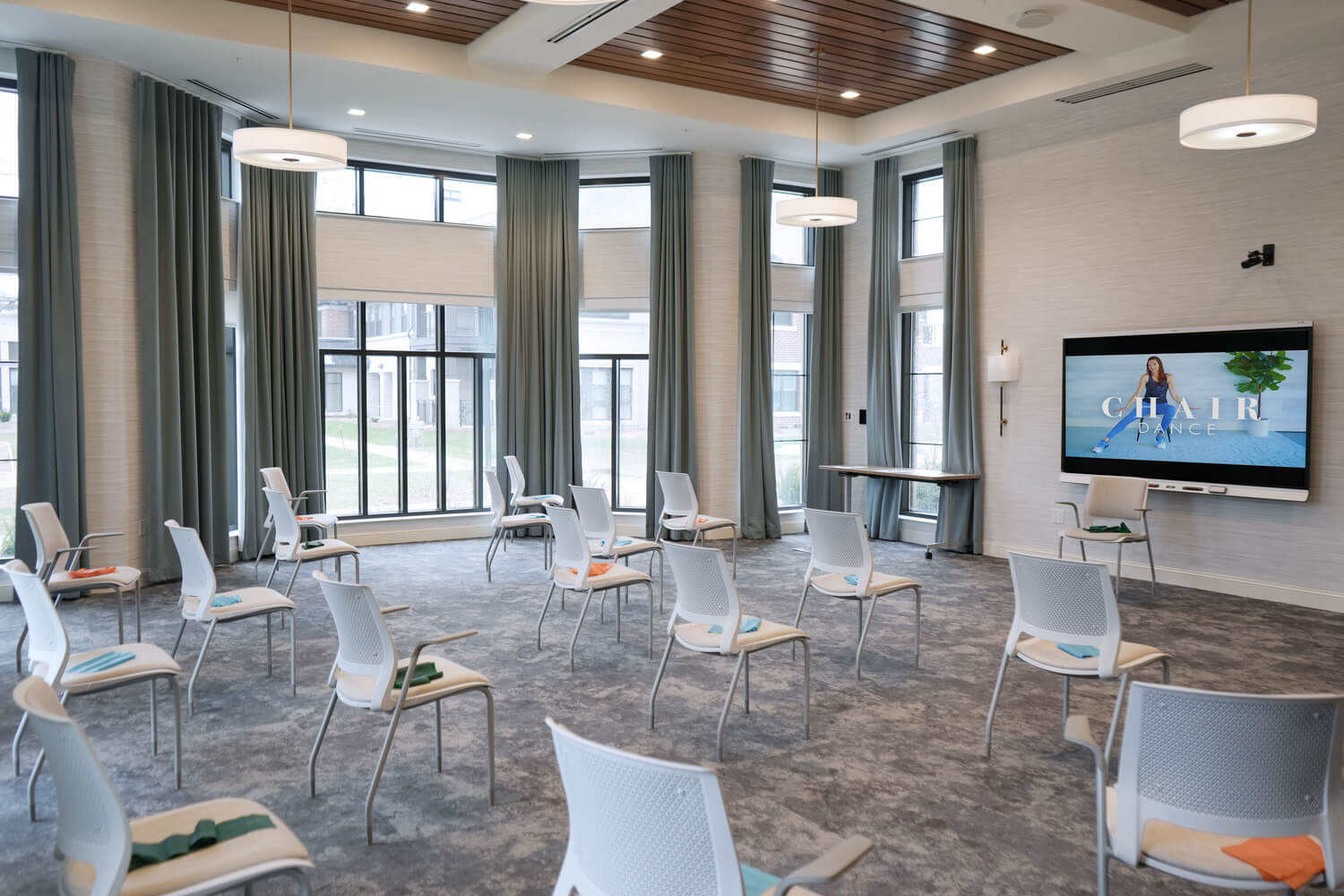
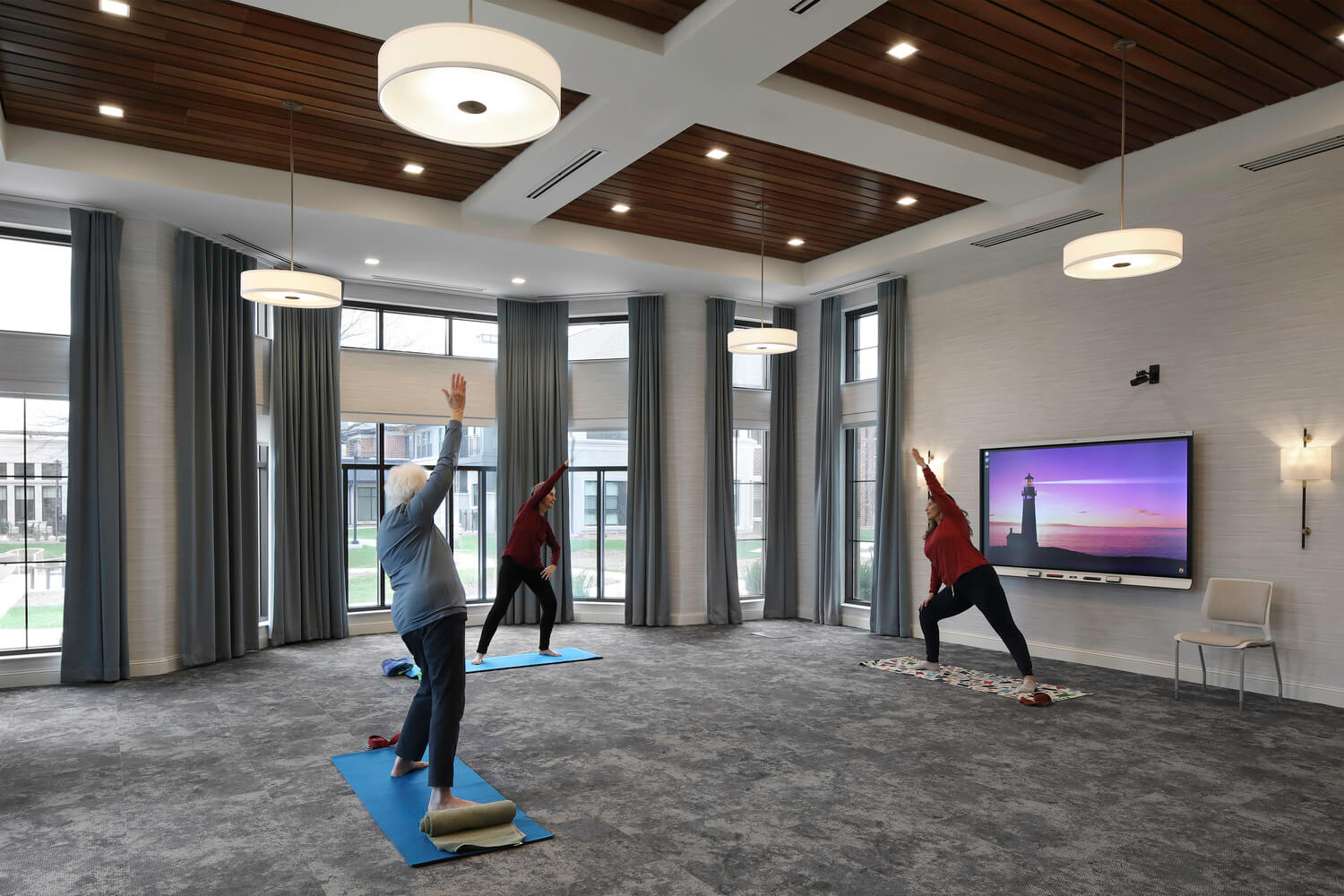
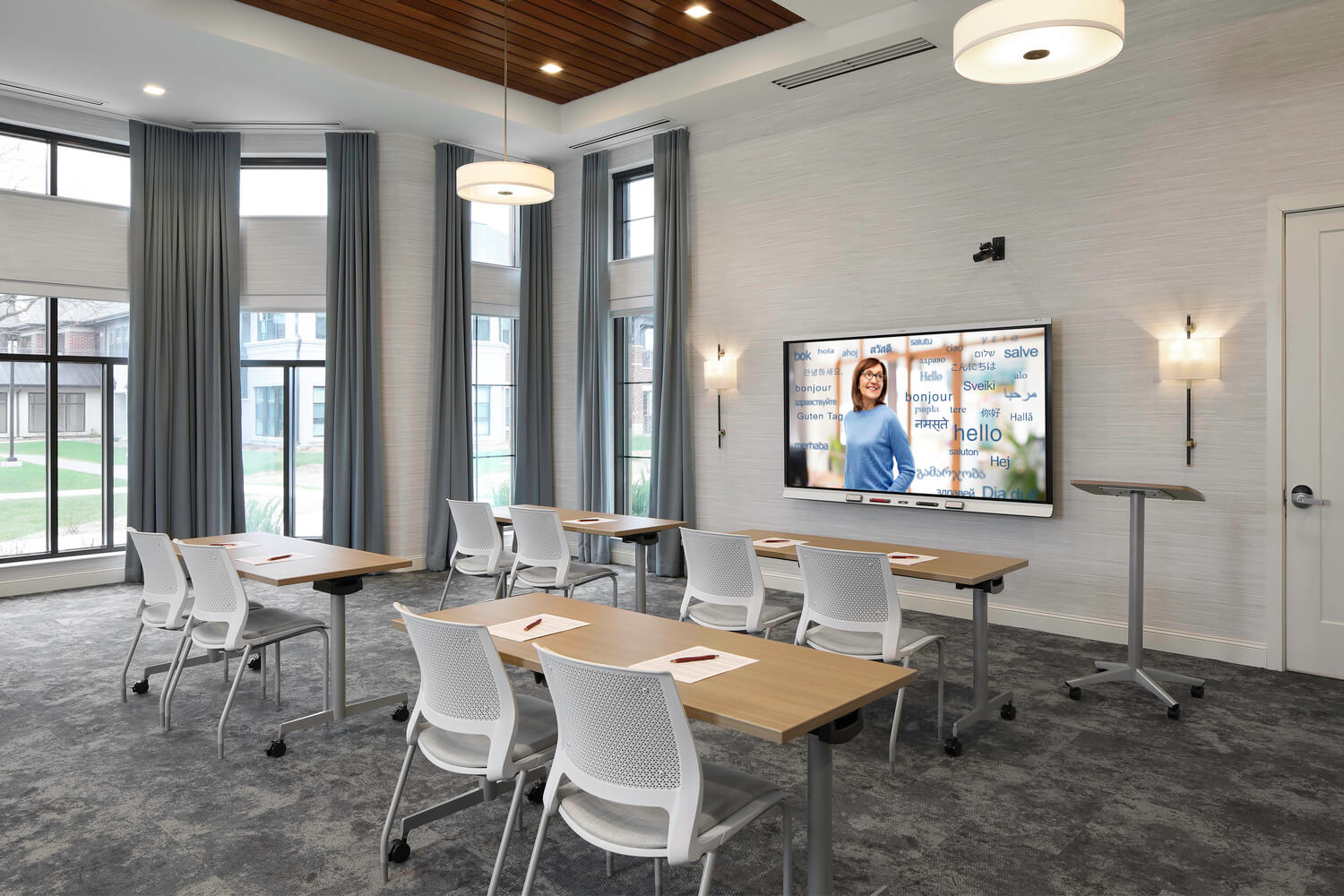
Not only do these types of adaptable spaces provide choice and flexibility for residents, but they streamline operations and support staffing efficiencies. This effective multi-use planning can be especially useful in assisted living and memory care households.
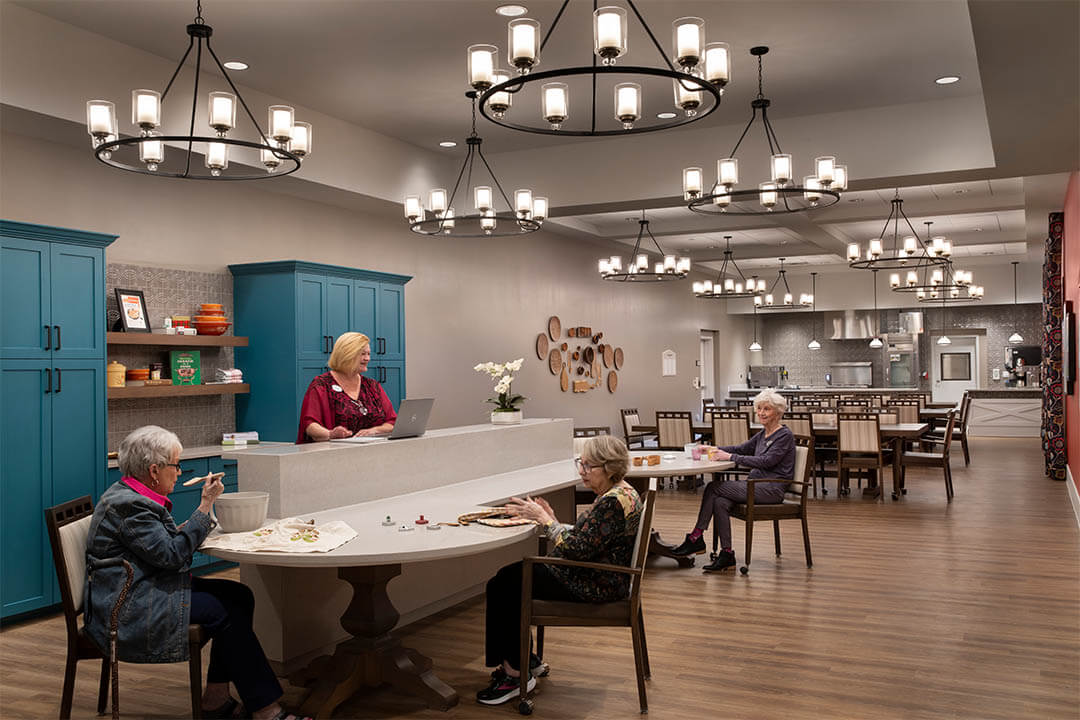
Planning for adaptable spaces requires detailed conversations with the provider to understand all of the possible uses. Optimal environments offer smart environmental and lighting controls (both access to natural light and adjustable artificial light levels). Direct access to an outdoor area can add another layer of flexibility. Special consideration should be given to flooring and other finishes to best suit the possible programming. Furthermore, easy-to-move furnishings allow for maximum flexibility. Last but not least, technology plays an important role in the success of these spaces. From hosting a remote guest lecturer to playing the right music for a dance class, does the room support all audio/visual needs?
Adaptable spaces expand programming possibilities for providers and are a means for deepening connections with the greater community. It provides a space for outside organizations to host a board meeting or a place for youth from local schools to come interact with residents. An example from Plymouth Place in La Grange Park, Illinois, exemplifies programming that strengthens community ties and fosters meaningful relationships. Residents are teaching English as a second language to Spanish-speaking employees.
Intentional Outdoor Spaces
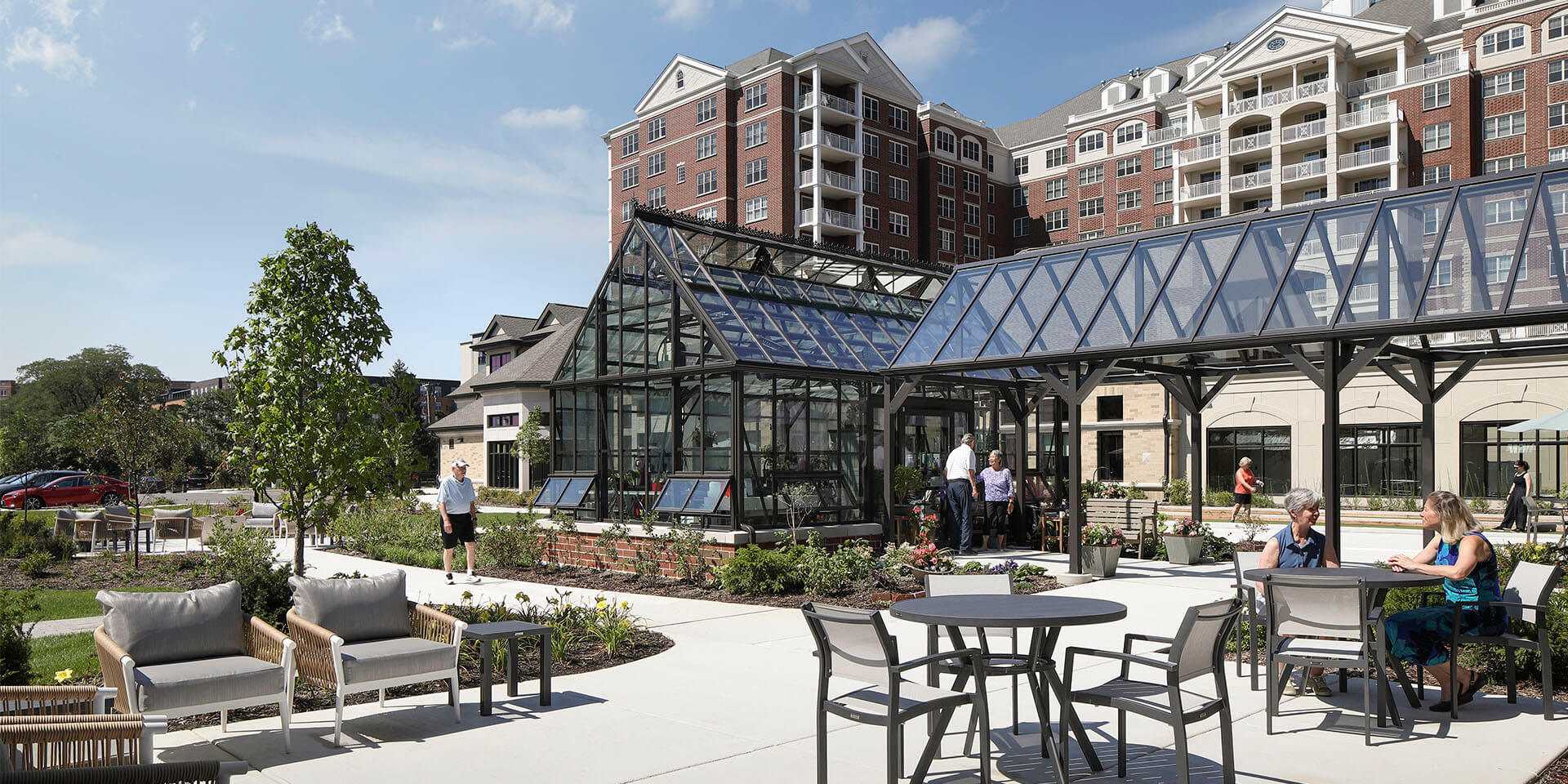
Addressing choice and flexibility is equally important for outdoor areas. Planning should support casual use as well as planned activities with opportunities for both individual and group enjoyment. For some, access to the outdoors provides support for mental health, while for others, it creates opportunities for engagement and fosters community. The success of outdoor areas relies on well-placed support spaces incorporated into adjacent buildings for convenience and ease of access to supplies. This allows group activities to be efficient while also supporting spontaneous uses. For example, think about minimal travel distances to restrooms, resting points along the path of travel and covered areas for comfort.
Courtyard areas are a prime example of intentional outdoor spaces that benefit the health and wellness of residents at every level of care. These areas may offer dining and lounging opportunities or could be focused on specific activities like gardening, golf, tennis or pickleball. Walking paths add another layer of activity and are often used as a means to connect different destinations. Outdoor spaces also provide a prime location to incorporate focused activities. Basketball courts and playground space introduce areas to support a variety of games—a location to engage with grandchildren or area daycare and elementary school programs.
More and more communities are investing in garden areas and greenhouses to meet the needs and wants of residents and infuse biophilic design elements. Gardening offers multiple health and wellness benefits, and when planned properly for the area climate, it can be enjoyed year-round. In some cases, this design consideration supports community dining initiatives and nutrition goals, such as farm-to-table menu offerings.
Learn more about Enhancing Lifestyle with Outdoor Amenities.
Performing Arts Centers
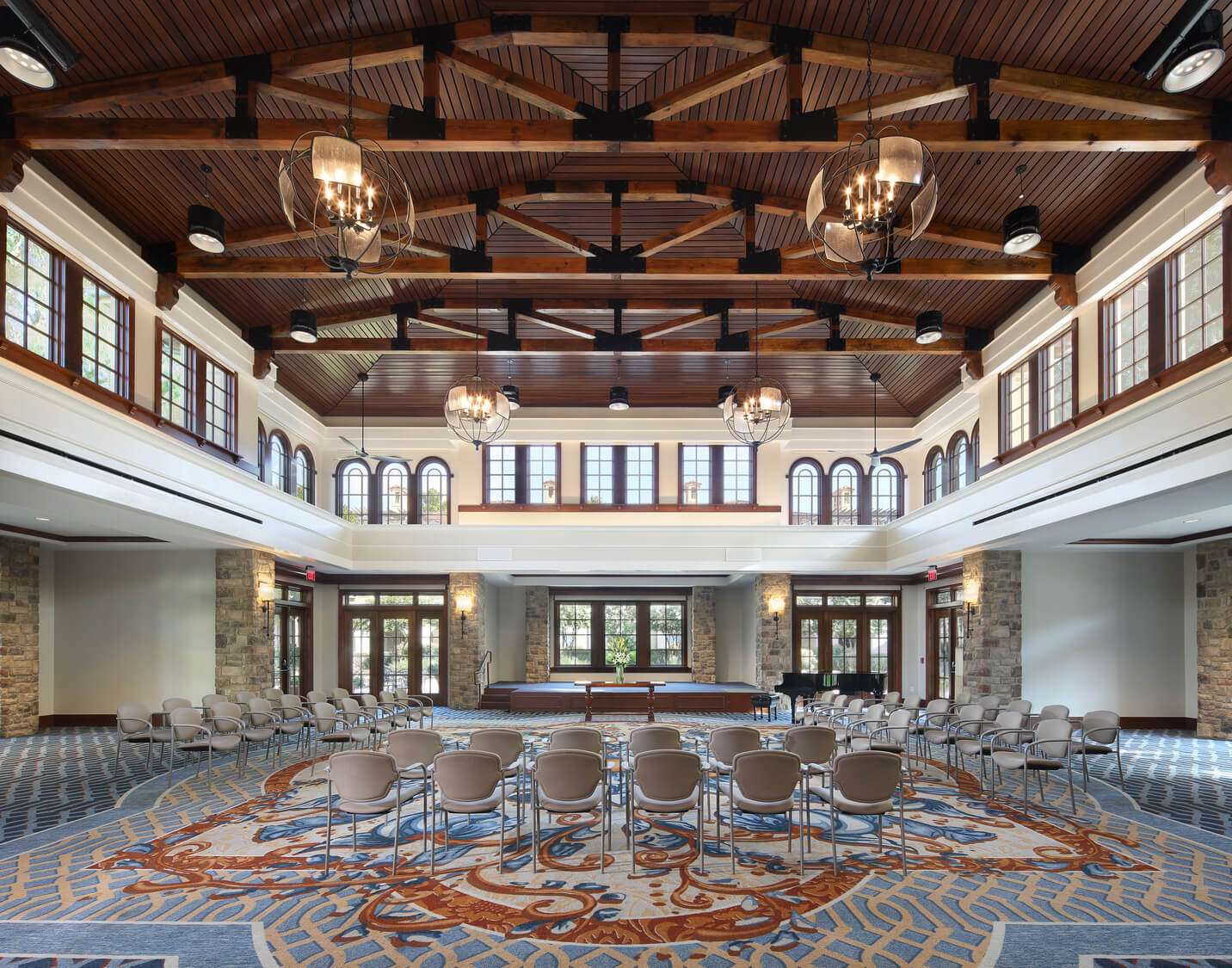
As providers continue to expand their wellness offerings and look for ways to deepen connections to the greater community, performing arts centers garner more attention and consideration. From remodels to expansive additions, these spaces provide an opportunity for diverse cultural programming. Whether for theatrical plays, musical concerts, comedians or fundraising events, these spaces require extensive technology, audio/visual, lighting and acoustical considerations. While some providers may want to invest in a signature auditorium setting, others prefer a more flexible environment. If so, furnishing decisions need to balance comfort with flexibility. Can residents enjoy sitting for an hour or more? And can the space be easily reconfigured to accommodate different-sized audiences and arrangements?
Furthermore, pre-function areas provide space for displaying artwork or hosting gatherings before and/or after performances. Some providers’ cultural commitments include collaborations with local artists or even artists in residency programs. At Plymouth Place, the artist in residency program includes space to perform and create—and a unit in the building. Programming supports lectures, discussions and shared dining experiences with the artist.
With a sense of belonging and community, lifelong learning and intergenerational interactions as priorities for today’s active adults, the performing arts center is an investment where some providers see a lot of market potential.
Wellness Centers
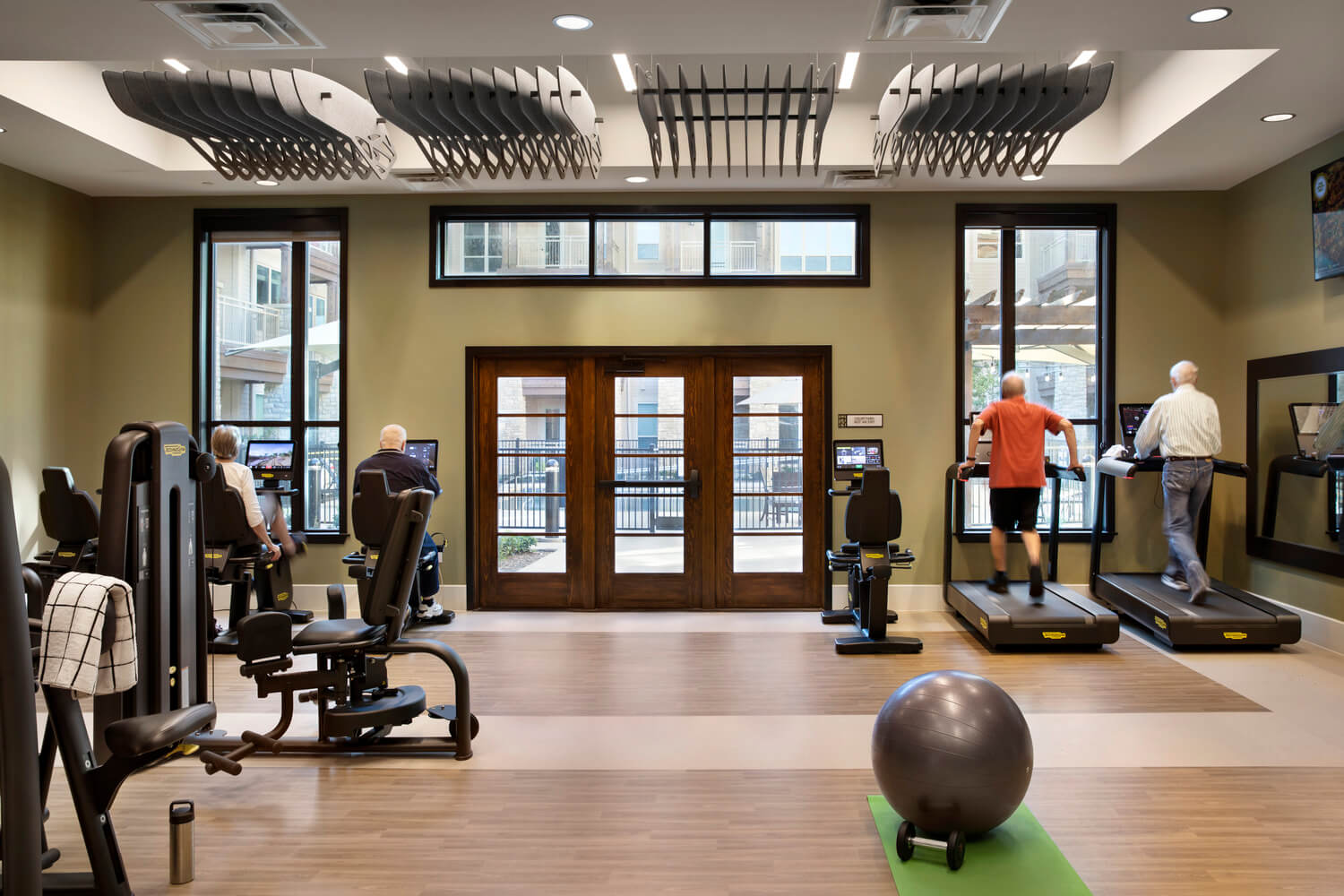
From a designated room with some fitness equipment to an enviable health club experience, wellness centers in senior living communities continue to evolve. They are a symbol that residents can live life to the fullest at a community. Design expectations for these spaces include:
- Wide open areas (plenty of room between equipment)
- High ceilings
- Ample lighting (daylight and artificial)
- Orientation to the outdoors when possible (and other biophilic elements)
- A palette of light, bright or bold finishes
- Design details that create a branded destination
- Materials that can withstand high traffic
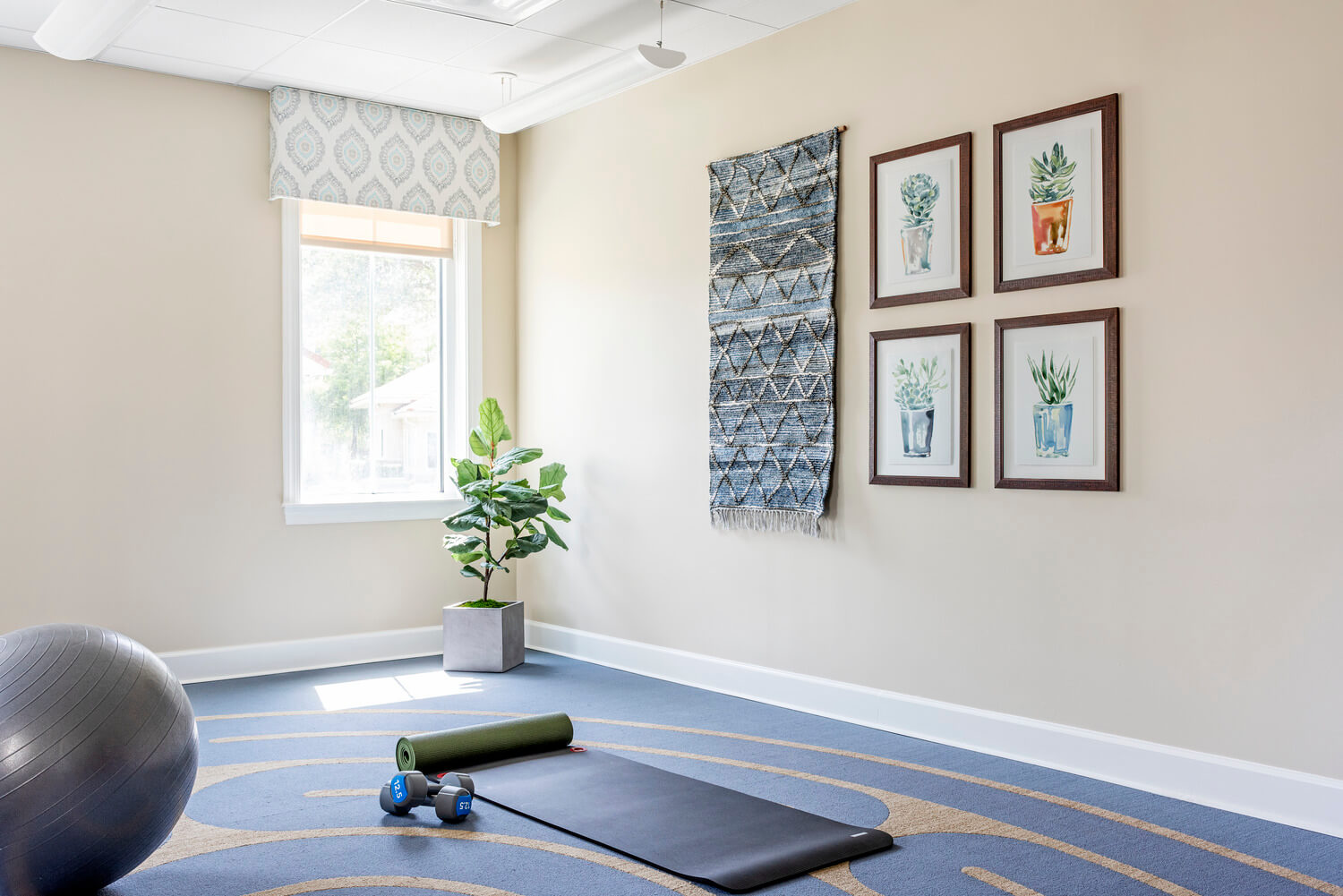
Today’s wellness center experience is about choice and personalization. In addition to areas for exercise equipment (machines and free weights), plans accommodate studio space for classes, such as aerobics and yoga, or areas to work with a personal trainer. Individual fitness and therapy plans can benefit from the studio space, but as technology increases, communities can leverage on-demand classes and utilize virtual coaching within a private space. As such, the design of these areas now considers more privacy elements to address expectations for one-on-one experiences.
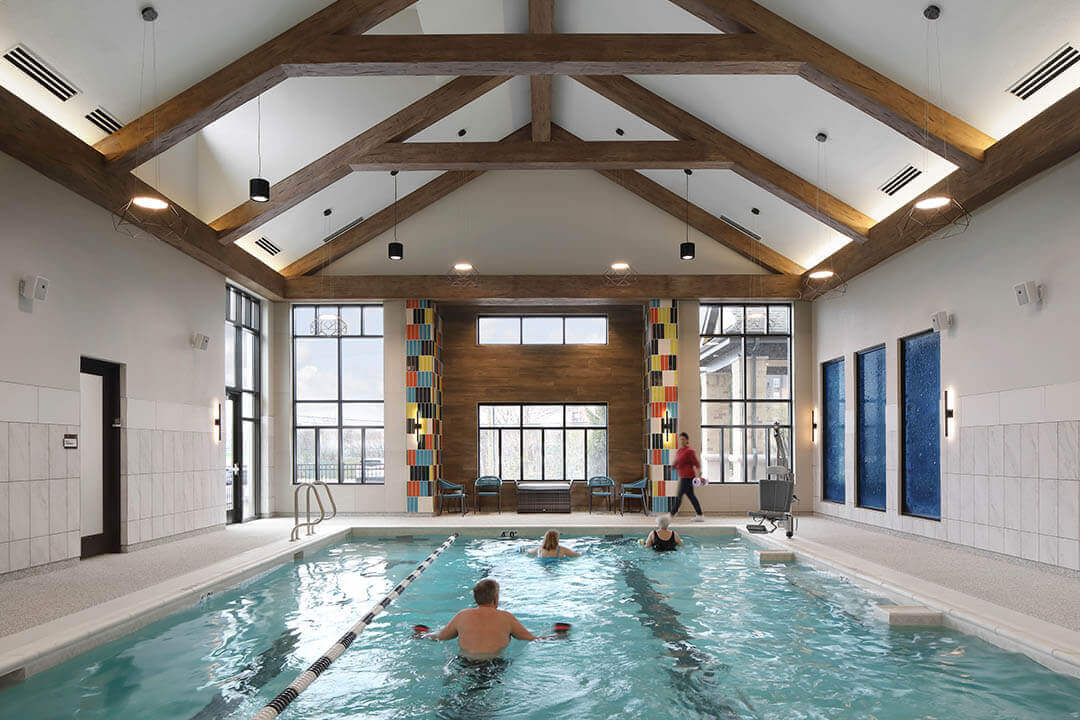
A well-considered aquatics program includes a pool and hot tub to support exercise, rehabilitation and relaxation. In aquatic centers, where space is at a premium but options are desired, communities are looking at resistance pools. This smaller footprint pool includes a resistance jet to accommodate the swimming enthusiast; therefore, it does not conflict with the depth and temperature requirements of a fitness pool configured for aquatic-based exercise classes. Furthermore, health club or spa-inspired locker rooms provide ample showers and changing accommodations and may include a sauna.
To further create a sense of place, these wellness centers may include:
- Areas for socialization (lounge seating, Wii gaming, etc.)
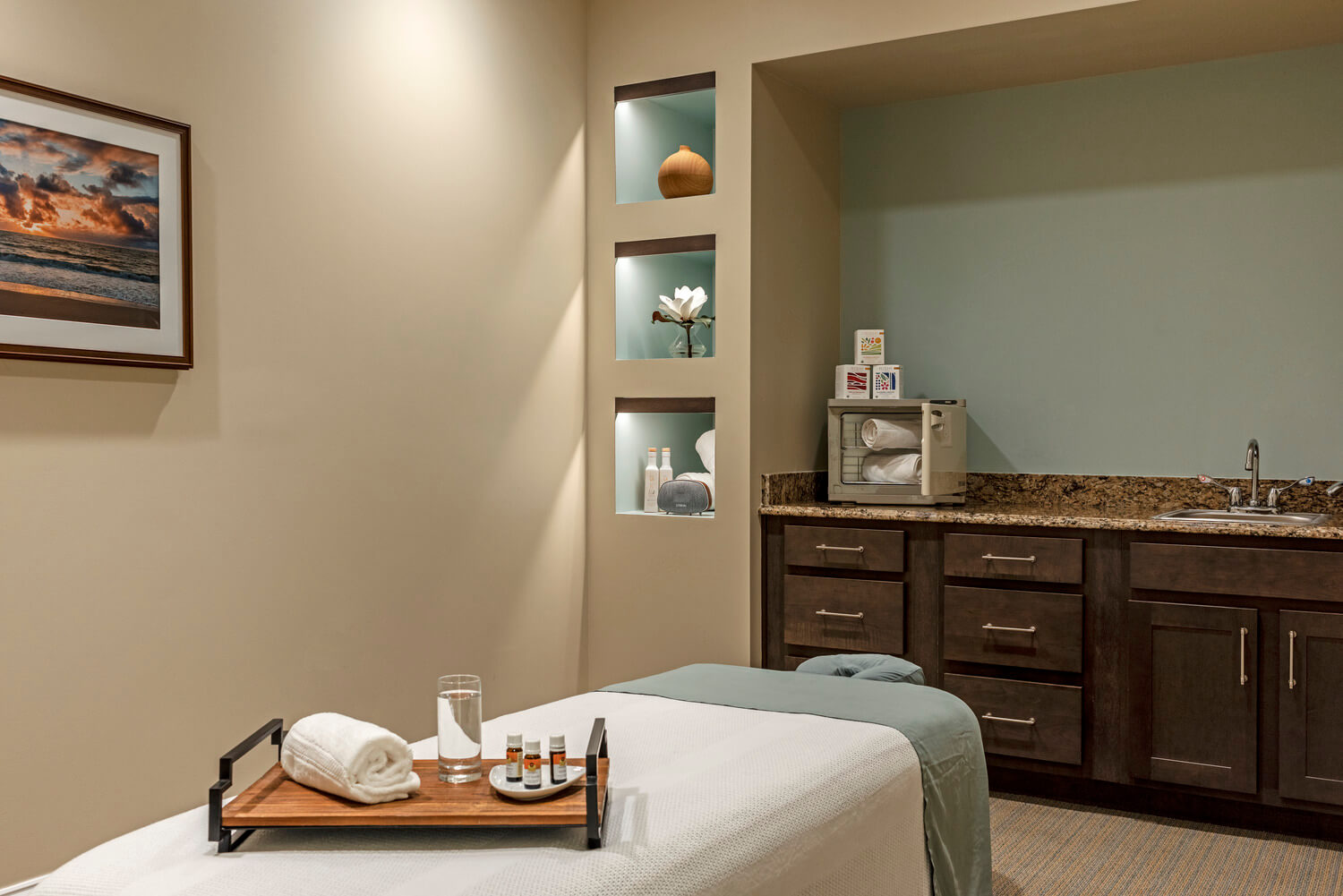
- Additional spa elements (a beauty salon, massage area or other treatment rooms to promote “pampering” oneself)
- Casual dining venues nearby (to facilitate pre or post-workout socialization)
- Healthcare services
While some communities find efficient ways to provide this desirable component in more modest applications, other communities lead with this symbol of active, vibrant living, giving it a primary position on campus immediately visible upon entering the community.
Project Highlight
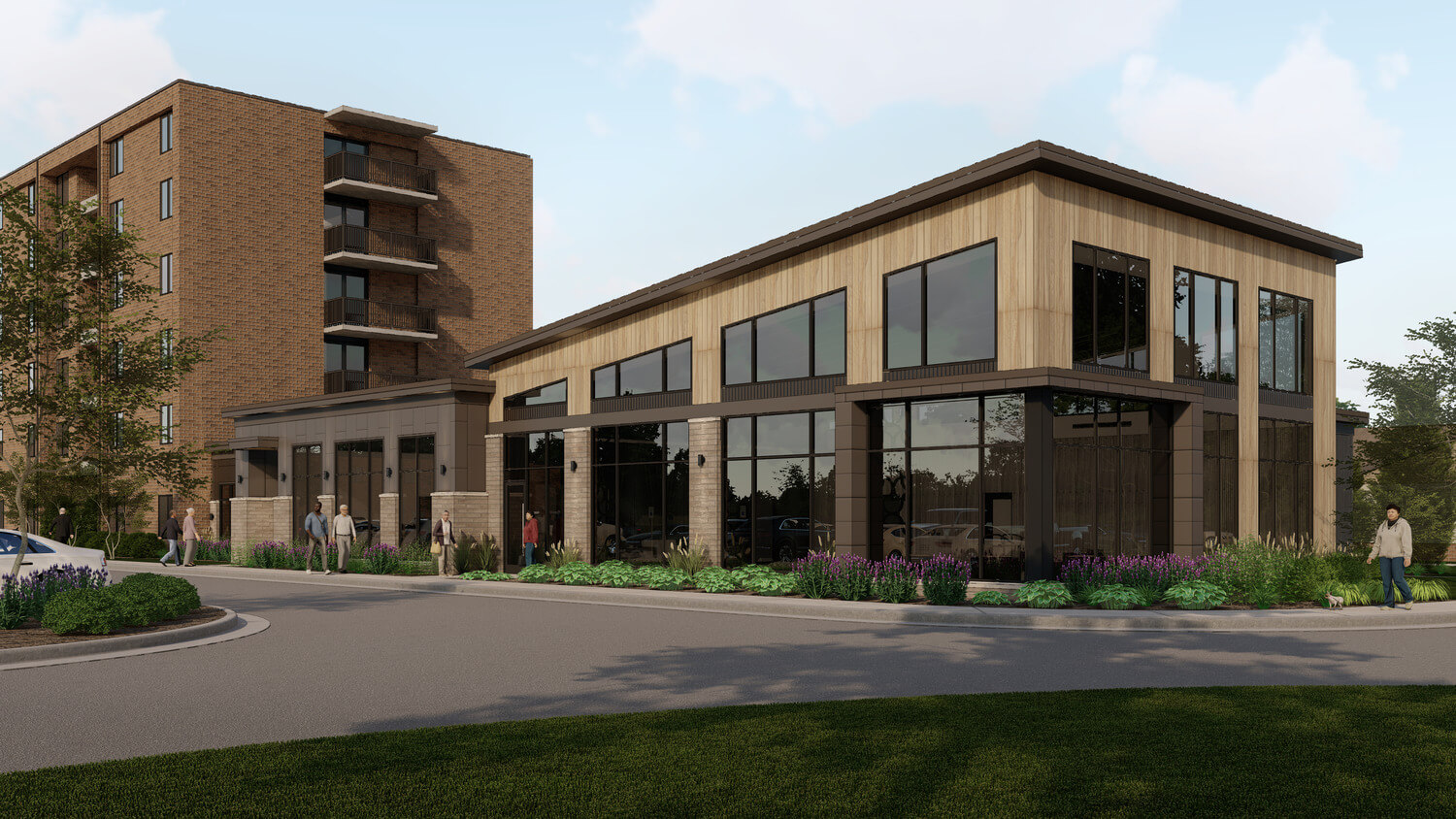
“Embracing Healthy Living” at Salina Presbyterian Manor
Multi-site providers like PMMA (Presbyterian Manors of Mid-America®) continuously invest in their communities to maintain market relevance and improve the resident experience. A study with residents and families in their Salina community revealed the need to update physical spaces and programs. To ensure their residents live and age well, they are investing in a major renovation, which includes adding a wellness center and enhancing amenities and services.
Programming and design decisions were driven by the desire to enable residents to maintain a lifestyle that supports healthy aging, strong social connections, and personal choices. The project, which is close to reaching fundraising goals, includes:
- A complete redesign of the main entrance and lobby
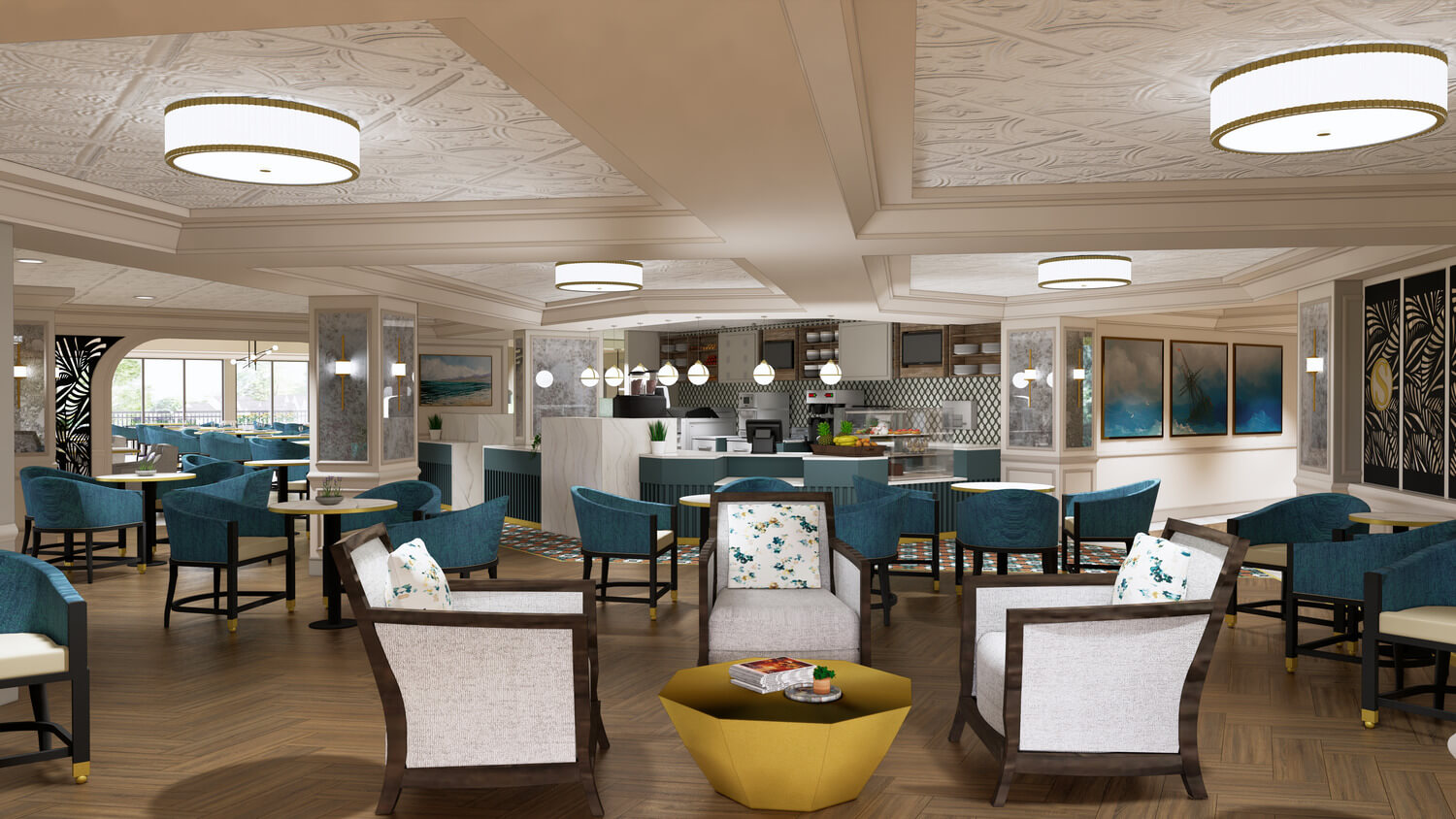
- Reimagined dining with more choices: a bistro, lounge, and main dining room
- A new wellness center for swimming, exercise, and therapy
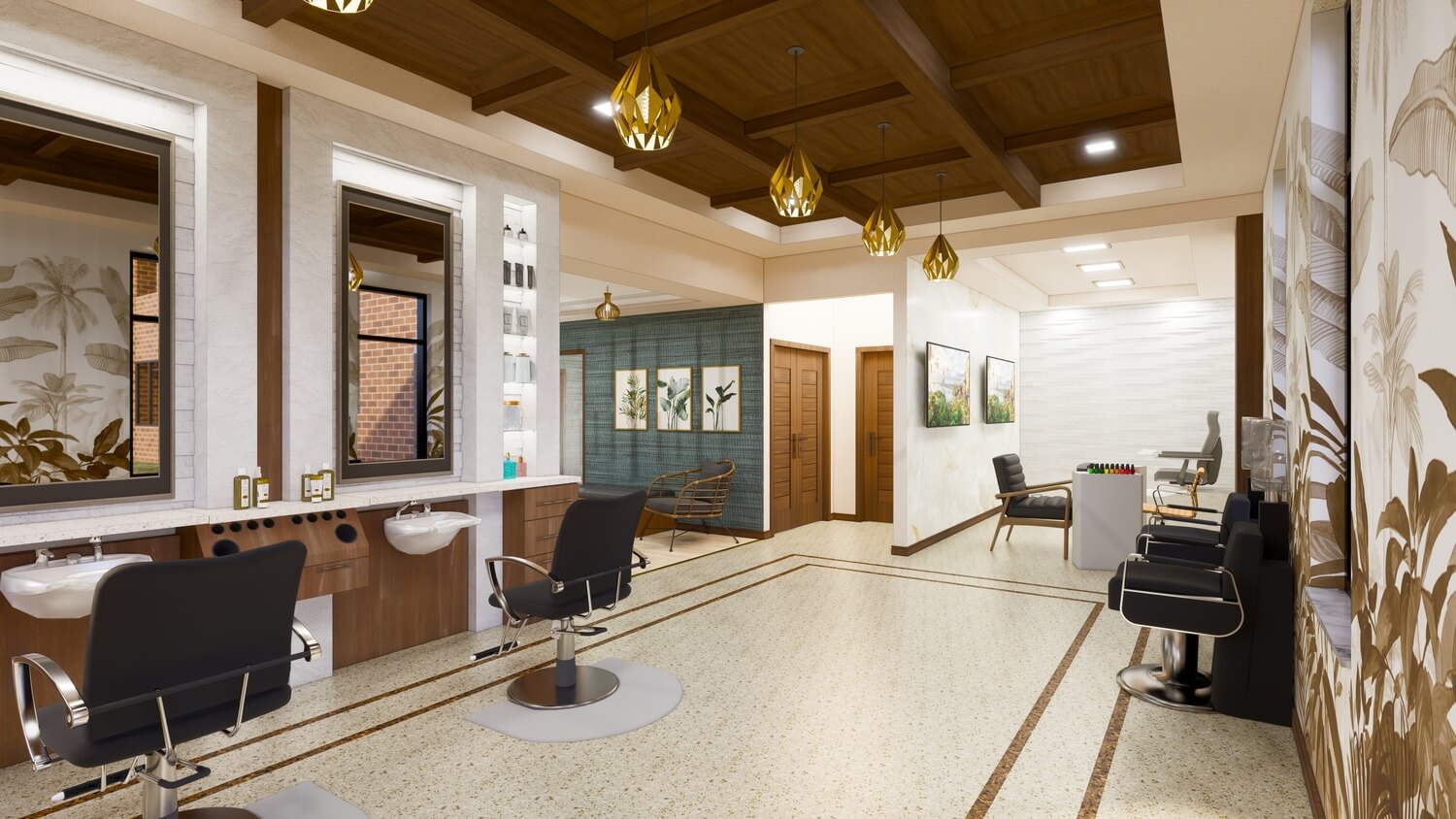
- A new beauty salon, with pedicures
- A new arts and crafts center
- A lounge for social connections prior to dining or a casual place to watch local sports
- Redesigned multipurpose and learning space on the lower level
- A new parking lot with more spaces
- A new employee lounge
“Wellness is a lifestyle in Salina and all our communities,” says Bill Taylor, PMMA’s Chief Operating Officer. “Investing money to improve the spaces and programs that keep our residents healthy and strong is investing in our current and future residents themselves. This financial decision is ultimately aimed at improving resident satisfaction, increasing retention, and lowering health-related costs—a wise strategy for any senior living community.”
Is your community a place where residents can live life to the fullest? Or are you looking to go all-in on new health and wellness programming? We welcome the opportunity to help evaluate your current amenity offering and explore new ways to promote multiple dimensions of wellness in your community. Contact Katie Miller at kmiller@agarch.com to discuss further.