
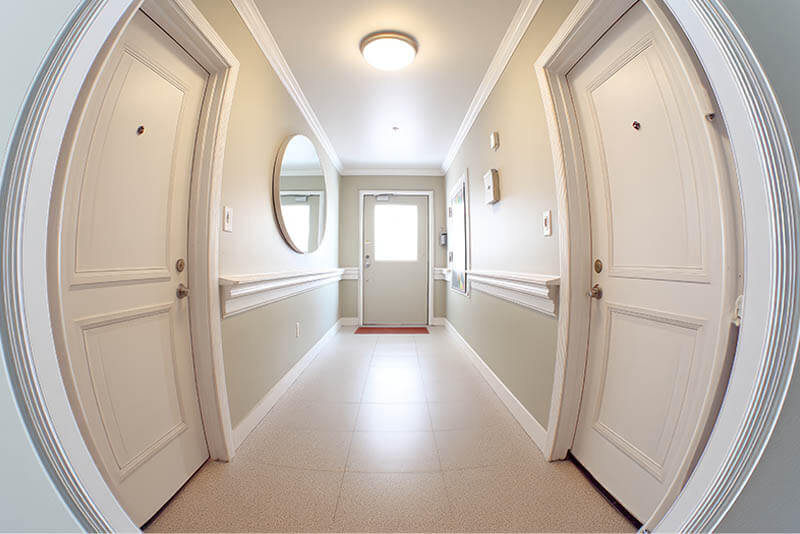
Knock, Knock, Who’s There?
The most fundamental aspect of living independently is your sense of security, and there is no place safer than home. Whether in a freestanding villa or in a dense apartment building, it can be very unnerving to answer the door when someone comes knocking. An old-fashioned peephole may be difficult for anyone with mobility limitations to even reach. And, then there are concerns with vision and lighting when looking through a small fisheye lens. Smart doorbells ease anxiety by showing who is on the other side of the door before ever leaving the bedroom. The major tech companies Amazon and Google have made Ring and Nest video doorbells quite common. Applying these to senior living has many benefits, but there can be some challenges to wide application in a large community.
Modern updates
Prospective residents for new senior living communities are becoming more tech-savvy than ever, and some may have experience with these products. Most communities want to be perceived as forward-thinking and aim to modernize operations. Simply adding a smart doorbell might not seem like a big deal, but it can be. Before jumping in with any particular product, the community operator needs to create a roadmap to prepare, implement, educate users and staff, and maintain these systems.
Assess existing conditions
One of the first steps is to assess other current technologies in place. The biggest trend in tech is interoperability. Is there a help call/emergency call system, communications systems, or anything else it may want to connect to? If the smart doorbell is the starting point, then discussions should follow about what other smart devices might be added to the home. Numerous platforms and devices have varying levels of “smarts,” which may or may not play well with other components. Research available technologies, including smart lighting, thermostats, security systems, voice assistants, and health monitoring devices for future addition.
Evaluate resident tech comfort
Some new residents may resist using phone or tablet apps, but the majority will see it as an exciting amenity and a modern evolution. Conduct surveys or focus groups with current and prospective residents to learn about their tech comfort and preferences. Just as some people feel strongly about Coke or Pepsi, there are those firmly entrenched in either Apple or Android. Residents may have strong feelings about these companies and systems.
- Create a wish list beyond the doorbell to investigate future compatibility needs.
- How will the image of the visitor be viewed? On a smartphone or tablet?
- Do the residents have phones capable of running the app?
- Does the device need to be connected to a secondary controller?
- If there is a central hub, what other smart possibilities does this offer? Can this offer voice-activated, two-way communication from building management to each resident?
Ensuring installation success
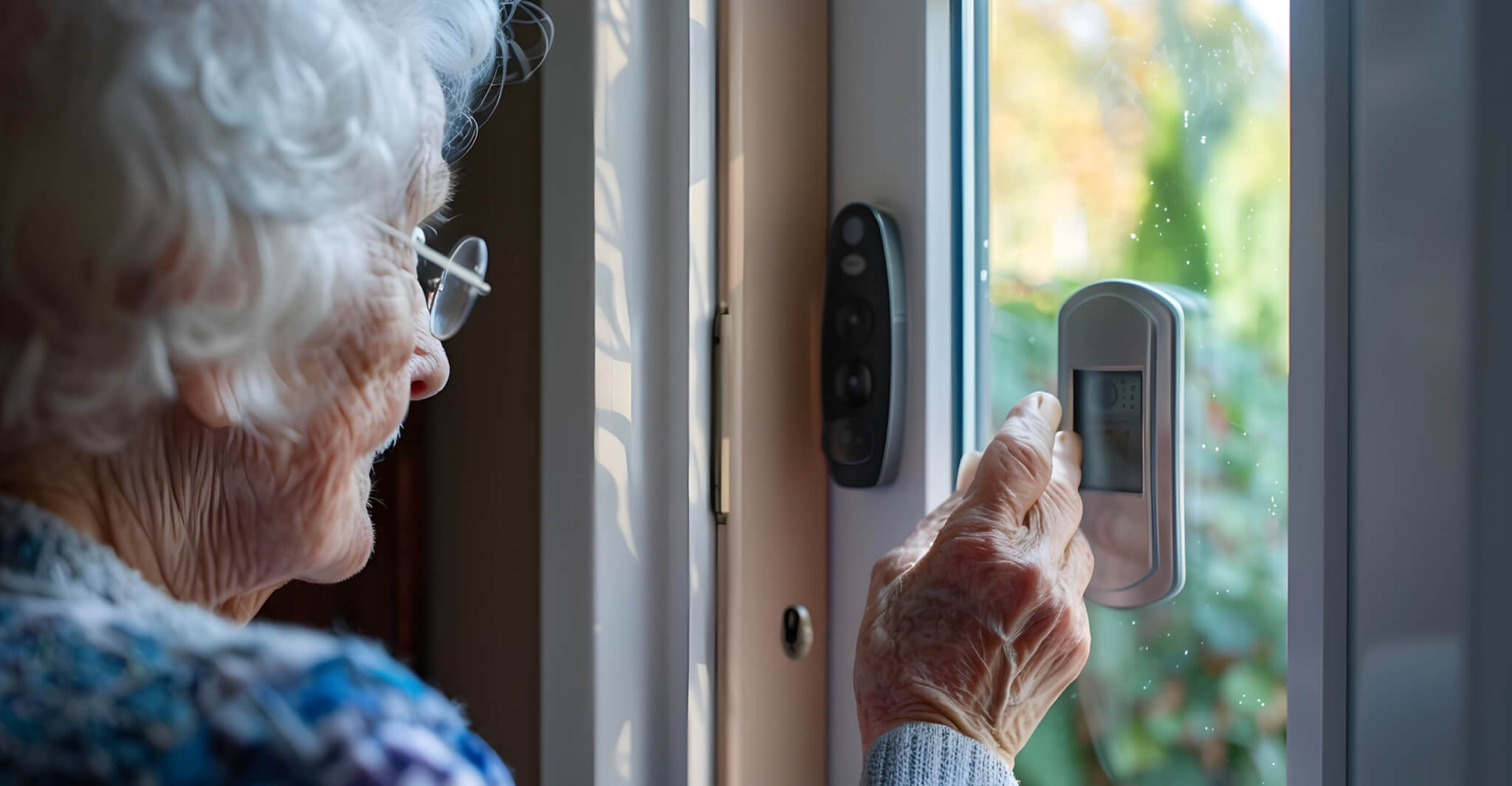
When considering the installation of smart doorbells, strong Wi-Fi coverage provides the critical backbone to making this work. Most communities address Wi-Fi coverage due to resident and family demand, but additional coverage testing should be carried out. Another decision is how to power the devices. Some can be hard-wired to the building’s electrical system, but that can include receptacles and transformer plugs that are difficult to conceal near the front door. The vast majority of these require batteries that are either recharged or regularly replaced, typically every 4-6 months, which adds another task to maintenance staff.
Test tech before scaling community-wide
After weighing options and selecting a system, begin with a sampling of units for a pilot project to manage cost and maximize effectiveness. Then, provide training sessions for staff to familiarize them with the hardware, software interface, and troubleshooting. Also, allocate tech staff time for individual account setup for each resident. Next, organize workshops for residents to learn how to use the new devices and ensure they feel comfortable. Equally important is to implement an ongoing support system for both residents and staff to address issues that arise after installation. Consider having a dedicated smart-help team or resources available to assist residents. Continuously assess the effectiveness of the implemented technologies via resident feedback, and be open to adjusting and updating technologies as necessary.
Assuming positive resident feedback, the community can now consider scaling up and expanding beyond the test group. Set a plan for a phased rollout to additional apartments within the community. Be sure to have staff periodically monitor the chosen platform to stay informed about new advancements and updates from manufacturers. Also, be prepared to have IT staff discuss any possible concerns about the Wi-Fi network security and camera privacy issues.
Enhancing residents’ lives
In addition to safely and easily letting friends, loved ones, and caregivers enter the apartment, thoughtful adoption of a smart doorbells may literally open the door to other tech tools that enrich residents’ lives. Use this as an opportunity to engage with residents to keep them excited and not feel left behind by new technology. For example, simple voice-activated outlets and light switches can be easily added for bedside lamps and nightlights. Or, hands-free calling can make communication less stressful. By following these steps, a senior living community operator can create a smart living environment that enhances the quality of life for its residents while also improving operational efficiency.
Do you have questions about integrating smart doorbells into your community? Let’s connect – tjluci@agarch.com
Learn more about AG Engineering.