Whether in a university setting or on a healthcare campus, students have distinct housing needs. The design of these environments must support their educational pursuits, reinforce a healthy and balanced lifestyle, provide a safe and affordable living space, and foster camaraderie and a sense of community. From senior living campuses and multifamily complexes to student housing, AG understands the intricacies of designing places where people live. The opportunity to collaborate with the Medical College of Wisconsin (MCW) on a student housing project allows the AG Team to showcase their expertise and support the vitality of a campus within the community they call home.
MCW’s Commitment to Student Housing
When it comes to its commitment to “pioneering pathways to a healthier world”, MCW is taking its vision and the full student experience to the next level. In addition to providing the learning, research, and patient care that shape the future of medicine, MCW is committed to integrating housing to support where and how students live.
“This project is unique for MCW because student housing is a new endeavor for us. We have been exploring on-campus housing as a way to move beyond being a commuter school and create better opportunities to house our growing student population on campus,” says MCW Vice President of Facilities and Operations Brian Cowperthwaite.
With academic programs at its core, MCW’s 250-acre campus supports comprehensive healthcare services and research. However, the site constraints of the master plan offer limited space and no room for incremental expansion of student housing. As such, the development and design challenge for this project was to create a solution that would:
- Serve current and future student needs
- Integrate seamlessly with the existing medical campus
- Provide a compelling, affordable alternative to off-campus market-rate apartments
MCW knew project success relied on a development-minded approach. To meet these goals, a team with deep local roots and specialized expertise was assembled. Through an RFP response, General Capital, AG, and The Sigma Group, along with Creative Business Interiors and Rev Pop, were selected to assist MCW.
“It’s a more collaborative, developer-led model—and, unlike our other projects, it’s also exploring new partnership and equity structures to make a major, on-campus housing initiative possible,” says Cowperthwaite.
The collaborative process is in motion, and concepts and plans are being finalized for the student housing development at MCW. The team knows the stakes are high to achieve the clear mandate: get it right the first time.
“With much of the campus plan reserved for future hospital expansions and parking needs, there isn’t a lot of land available to grow student housing, which means this first project has to meet both their current and future needs,” says AG Chief Design Officer Eric Harrmann. “The entire team is energized and committed to getting the design right.”
Creating an Identity & Meaningful Connections
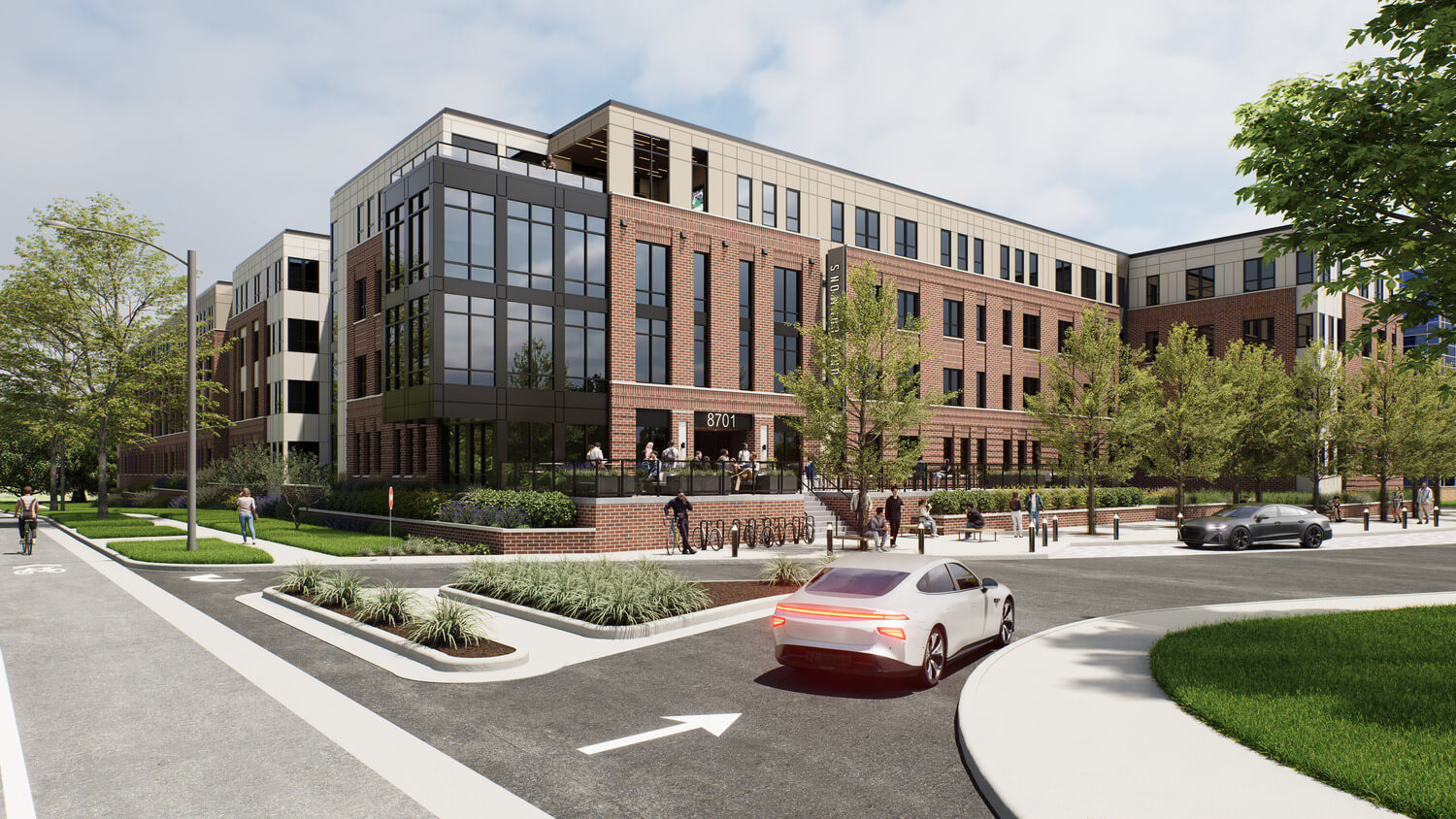
Located on an existing parking lot at the corner of the highly trafficked Watertown Plank Road, the project needed to offer an enticing environment for student life while connecting to the medical campus and respecting the adjacent residential area.
With current and future needs in mind, the building area was maximized to meet MCW’s scope and programming requirements. Thoughtful design strategies were then applied to break down the scale, define the street edge, and create a clear tie to the institution’s established identity.
Key design strategies include:
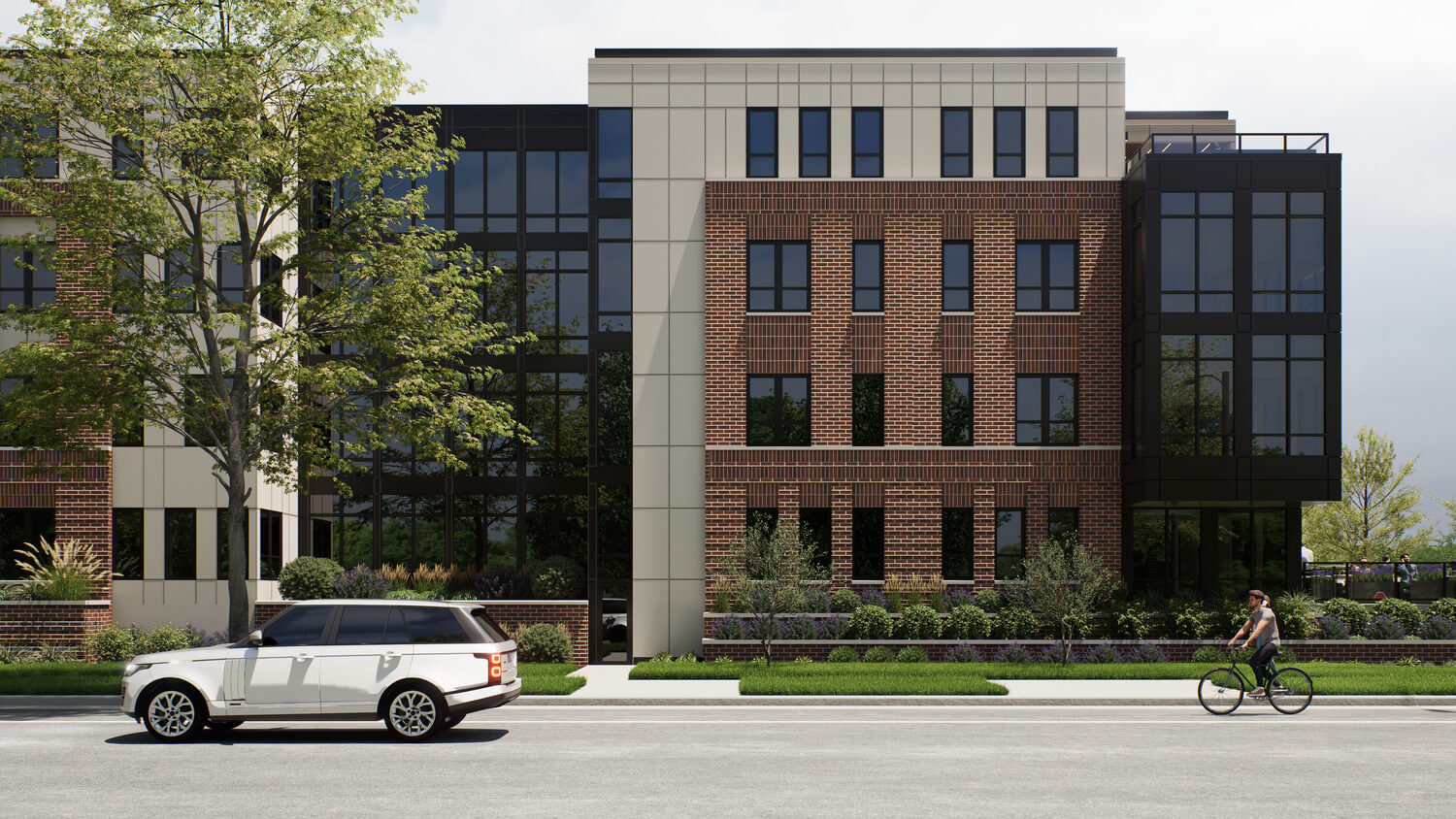
- Manipulating the form by vertically breaking the building to reduce the overall scale, allowing it to read as separate masses or buildings. This decision begins to define and activate the street edge along Watertown Plank Road.
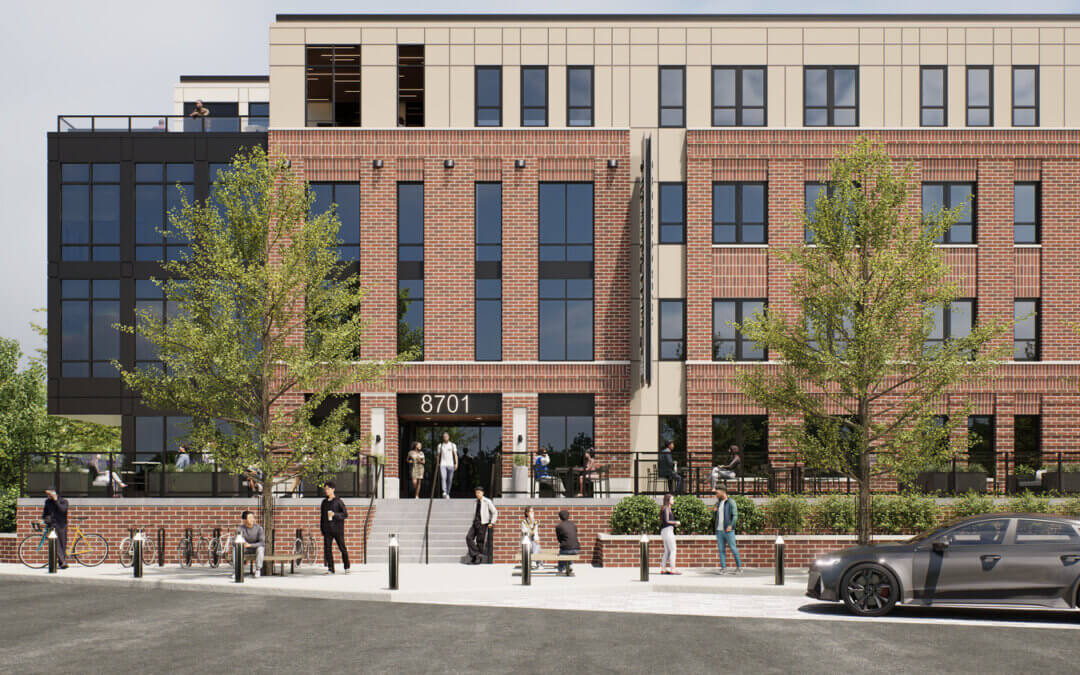
- Raising the building to enhance the entry plaza experience, which highlights socialization space and creates a separation between public and private zones.
- Selecting a material and color palette that draws from the existing campus buildings—red brick, cream and tan fiber cement panels and lap siding, burnished block, and prominent storefront glazing.
- Overlapping and layering materials for depth and texture, including establishing horizontal datum lines across the building and brick detailing to enhance the pedestrian experience.
“Architecturally, we’re speaking the same language as the existing campus while clearly announcing that this is a place for student life,” describes AG Design Architect Benjamin Chung.
A key feature of the façade is the corner glass element, envisioned as a visually striking marker to identify the building as a gateway to the medical campus. Furthermore, it signals the presence of student life and serves as a bridge between the residential community and the medical campus.
“We worked with the Sigma team and the landscape team to create a more prominent, collegiate-style entry, because that portion of the building looks back to the MCW campus,” says Harrmann. “The corner element is our opportunity to capture the public’s eye on Watertown Plank Road and tie the residential experience back to campus.”
Apartments Tailored to MCW Students
The maximized building plan delivers 264 units and 304 beds, all configured as apartments rather than traditional dorms. The mix addresses the needs of a diverse range of students with two-bedroom, one-bedroom, and junior suite options.
Two-bedroom units comfortably support two unrelated roommates, the most economical option in the building. Likewise, the layout suits couples who may use the second room for an office or a young child. This offering responds to the fact that many graduate-level students are further along in life than typical undergraduates and may have needs that extend beyond traditional student housing. Meanwhile, junior suites and one-bedroom units represent the highest unit count, planned for single occupancy, which appeals to students who prefer more privacy.
Spaces to Relax, Recharge & Study
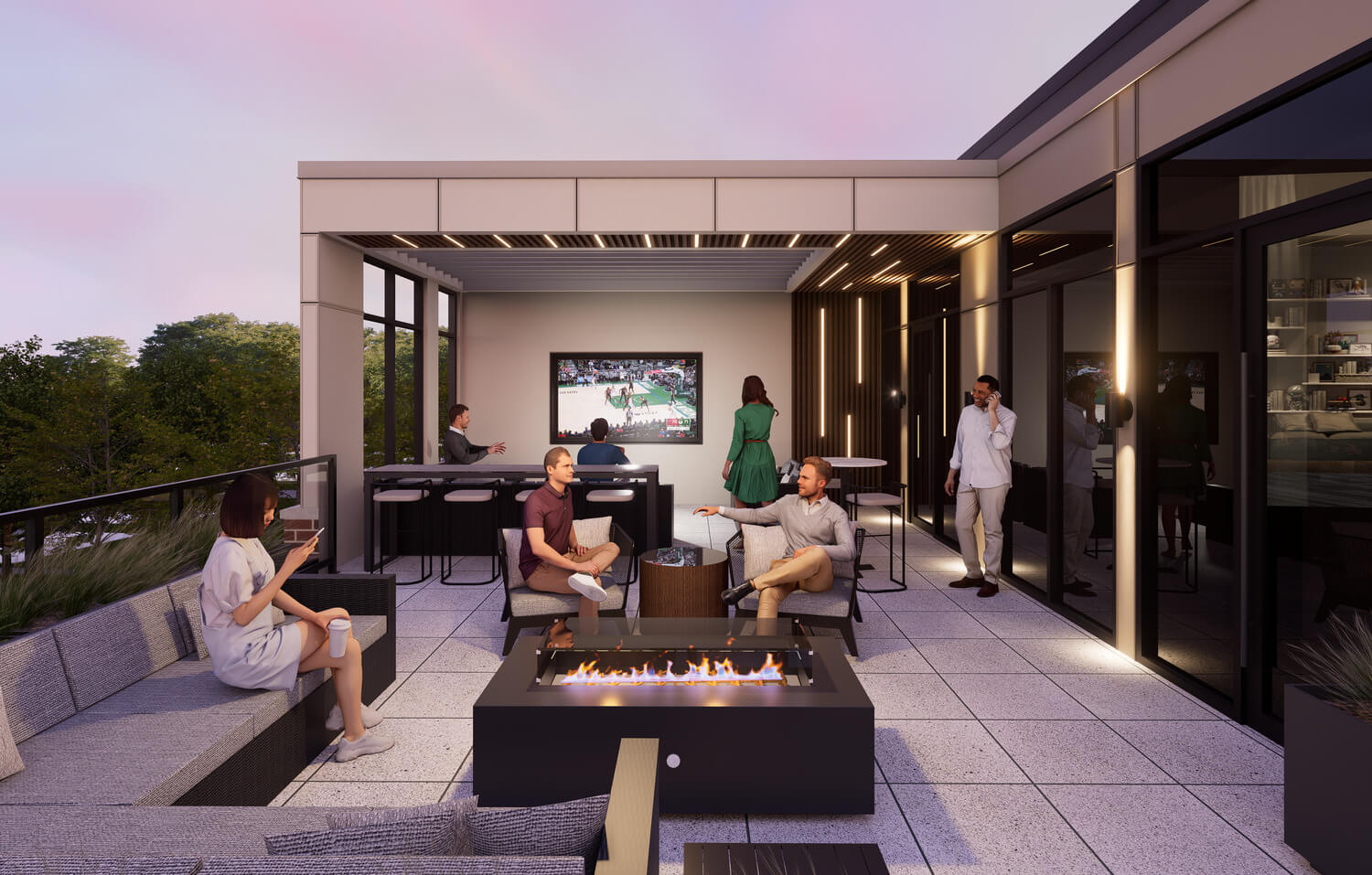
MCW students spend much of their time in highly structured, clinical and research environments—labs, classrooms, and clinical spaces that put their minds and bodies to the test. The new housing project is intentionally designed as a counterpoint to that experience. The design directive for shared spaces was to create energy and excitement and less structured, more flexible environments for gathering, studying, fitness, and unwinding.
“A central spine of amenity spaces activates the corner and flows through the building, and out to the courtyard,” describes Chung. “On the upper floors, the plans consist primarily of units with some socialization and study spaces in the inside corners of the building and a larger gathering area to the northwest. The fourth floor offers a clubroom with access to a rooftop patio.”
Choice and flexibility were a priority throughout the planning, providing options for small clusters of students in the same footprint. Rather than designing rooms for single uses, the team is creating multi-functional social and study spaces that can adapt throughout the day and accommodate evolving needs semester after semester.
“So many of the spaces we create are designed for large groups,” says Harrmann. “One of the unique challenges here is designing larger rooms that still feel comfortable for groups of two or three sitting near each other. You’re not just designing a room for 15 people—you’re designing for five groups of three and figuring out how to break that up.”
Design strategies include areas with pod structures and movable furniture to support easy reconfiguration. The team is also integrating conference rooms that flex between classroom-style presentations and collaborative sessions, cubbies for small group projects, and quiet rooms for individual study.
Well-Considered Outdoor Space
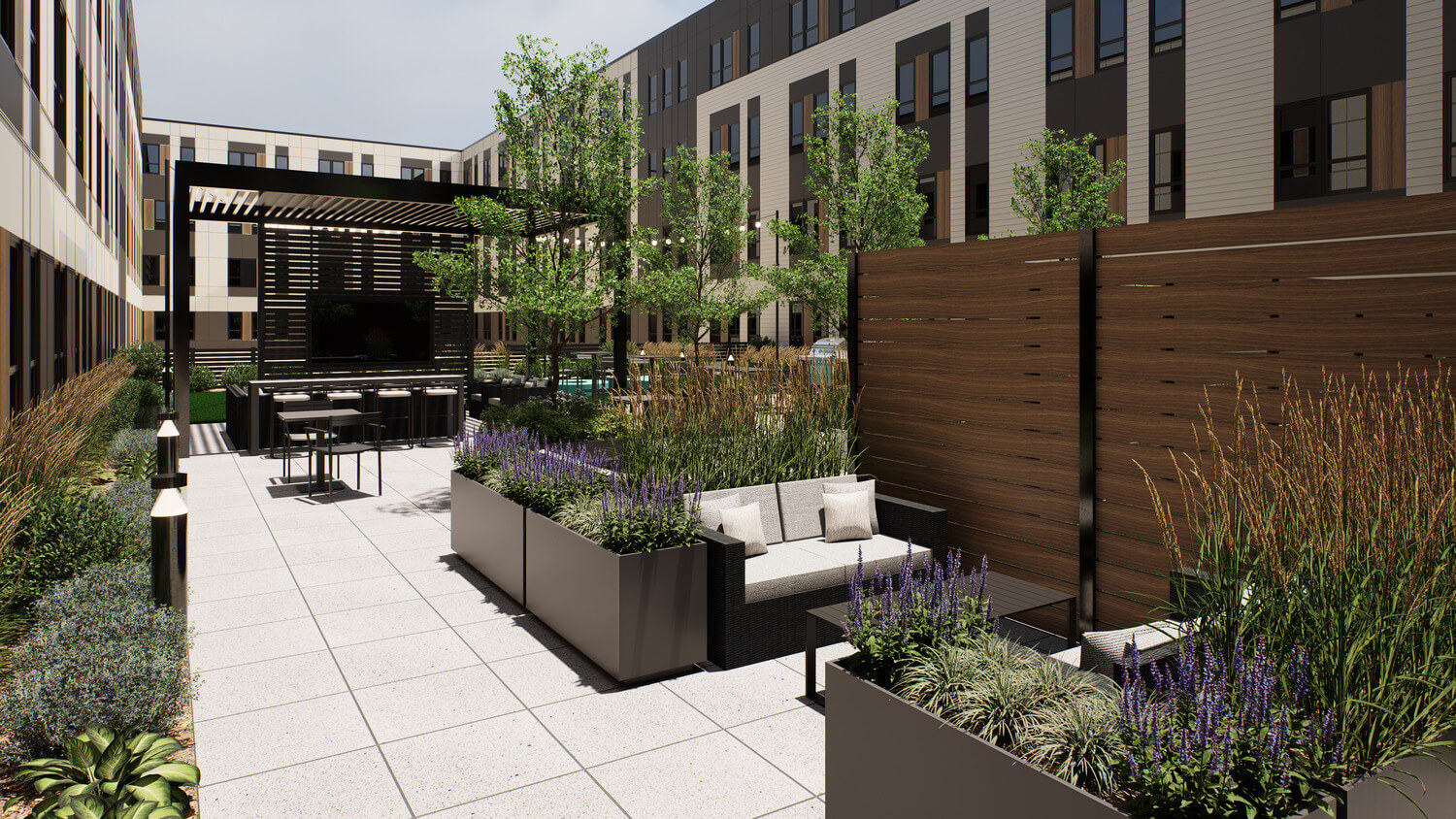
Creating connections to nature enriches the residential experience and supports student well-being. While individual units provide ample daylighting, the design encourages direct access to the outdoors via a well-considered interior courtyard. Integrating the dedicated area within the plan creates privacy for the students while also respecting the surrounding neighborhood.
“The courtyard became our way to create a secure outdoor space for student life,” says Harrmann. “With a residential neighborhood directly adjacent, we wanted to minimize the impact on the neighbors, so the interior courtyard became a real focus.”
As students decompress from work and study demands, the courtyard provides an environment to recharge and prepare for what’s next on their busy schedules. The space serves as an outdoor living room rich in amenities, including lounge space, a fitness area, a shade structure, a bocce court, grill stations, and turf for lawn games. By offering a variety of outdoor experiences in a vibrant setting, the design encourages active student life while being neighborly.
Supporting the Future of Health Sciences Education
As health sciences education continues to evolve, campuses like MCW are recognizing that supporting students extends well beyond the research, classroom, and hospital facilities. Purpose-built housing—designed with flexibility, affordability, and well-being in mind—can be a powerful tool for recruitment, retention, and student success.
“As MCW continues to grow, this housing project has become a critical piece of our campus master planning. More students commuting to campus means more traffic and parking pressure, so creating on-campus housing is essential to support our long-term growth in a thoughtful, sustainable way,” says Cowperthwaite.
By combining locally grounded development expertise, student-centered design, and a strong visual connection to the existing campus, the MCW student housing project is positioned to elevate student life on campus—today and into the future.